We’ll be happy to help via online chat or at: orders@premiumbarefoot.com
Have you found barefoot shoes on our e-shop that match your vision perfectly, but choosing the right size feels like a superhuman task? Because we want to make your choice as easy as possible, we've put together a practical guide. Sizing can vary slightly between brands, so you'll find a size chart under each model on the e-shop. With it, you can easily compare your measured foot length, and get the right shoe size right the first time.
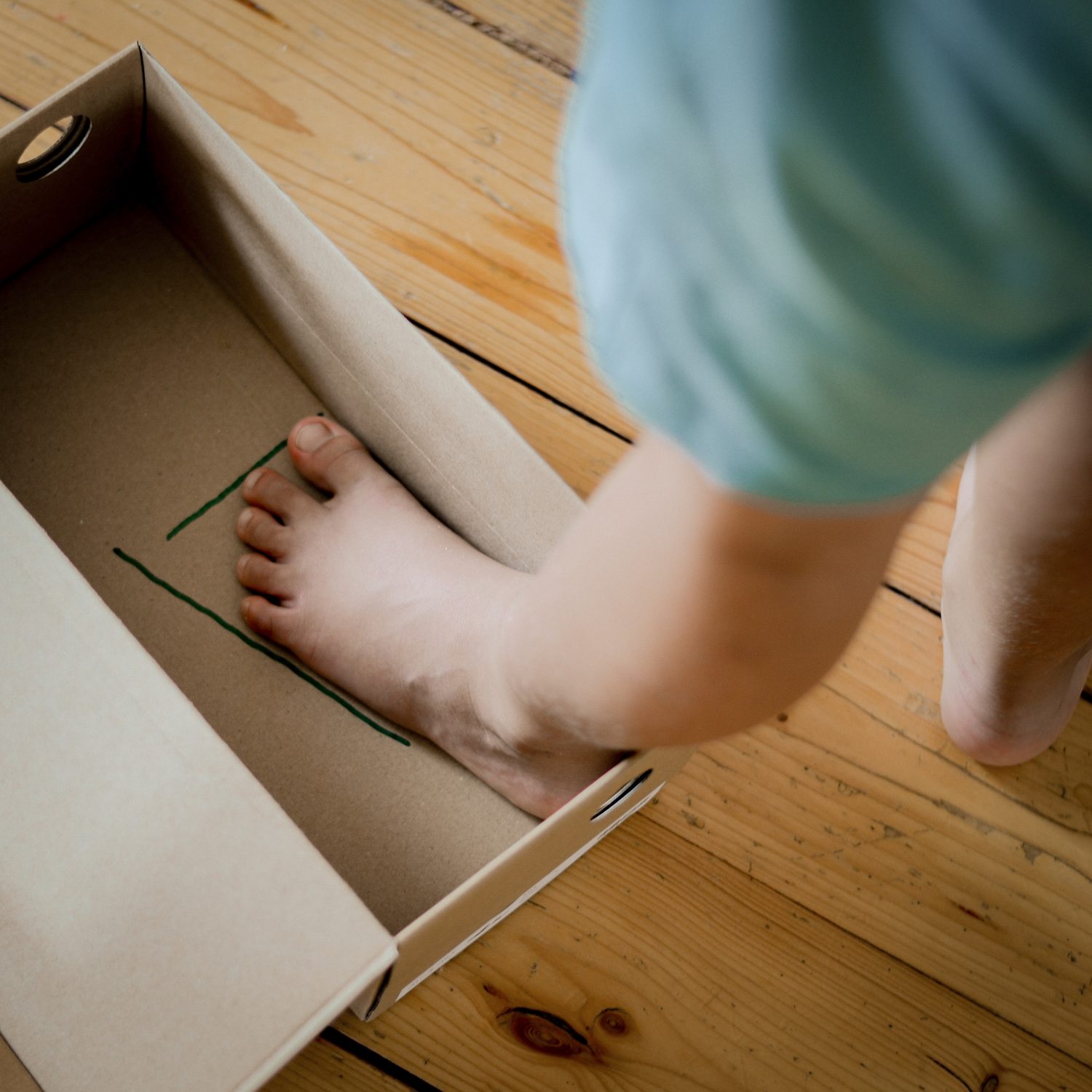
Accurately measuring the length and width of the foot is the foundation for choosing a perfectly fitting shoe that won't restrict the healthy development of children's feet. At Premium Barefoot, we recommend all parents get a PLUS12 measuring device, which lets you measure children's feet accurately and easily – and also check the internal dimensions of shoes. Given how often you'll use it over the coming years and how much hassle it will save you, it's an investment that pays off.
This method is a more accurate alternative to tracing around the foot, where a pencil held at an angle can add or take away several millimetres from the foot's dimensions. So how does it work?
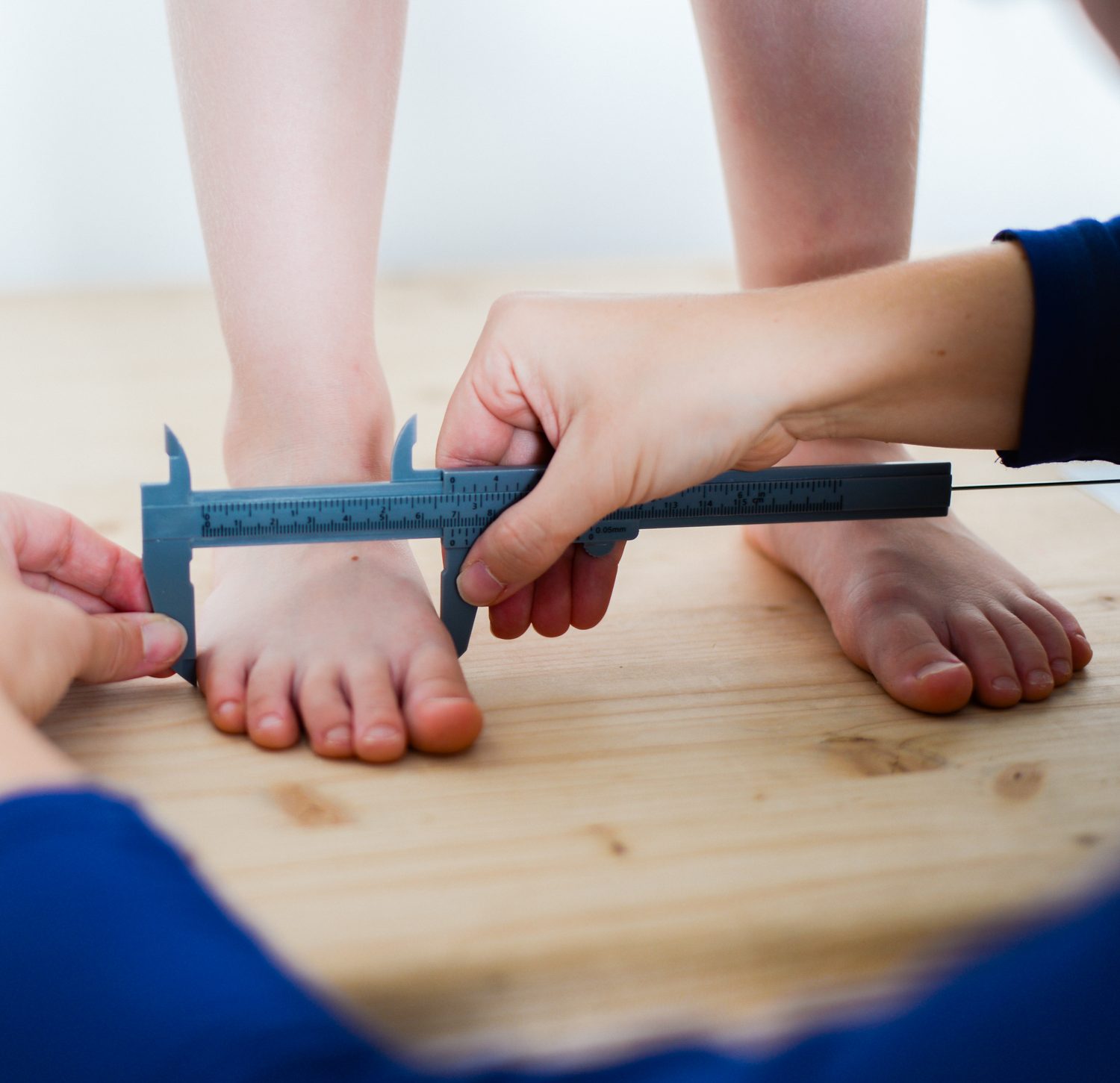
The correct shoe width is just as important as the length. A shoe that's too narrow will deform the toes, while one that's too wide will cause chafing.
Please note! Measuring width at the toe area makes sense if you want conventional shoes – to give children's feet a chance to fit into these narrow shoes. With barefoot footwear, a wide toe box is the standard, which is why we always measure width at the joints – for both the foot and the shoe.
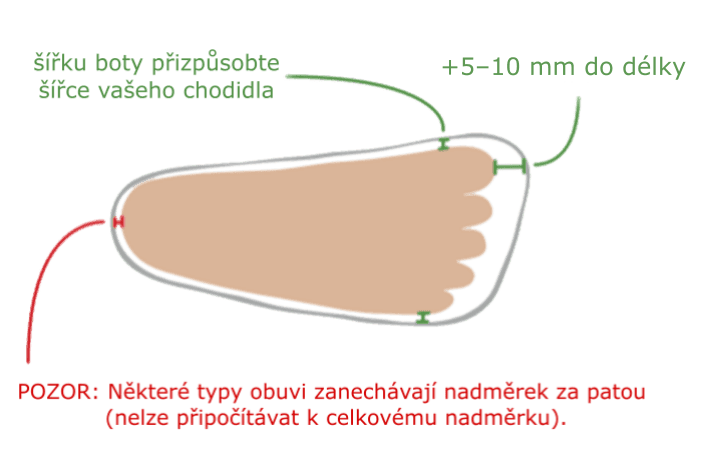
Foot length is not the same as the internal length of the shoe (here you may commonly come across the term "insole length"). When choosing barefoot shoes, you need to add toe room to the foot length (i.e. to the space inside the shoe that your measured foot will fill). This is essential for the foot to work correctly while walking, without the toes hitting the front of the shoe. The exact amount varies – partly depending on the type of shoe, and partly on what's comfortable for the individual. In general, though, toe room should be between 5 and 10 mm (9–12 mm for children). We cover this topic in more detail on our blog.
Just as the size of your left and right foot can differ, size charts vary between brands. That's why you won't find a single universal chart here – instead, it's provided directly under each model on the e-shop.
How do you use the chart?
The length in the size chart corresponds to the internal length of the shoe in mm. Once you've measured both feet and added the desired toe room (5–10 mm) to the length of the larger one, you'll get the shoe size that's right for you. So if your longer foot measures 235 mm and you want around 6 mm of toe room, a shoe with an internal length of 241 mm would suit you. If, on the other hand, you'd like more room inside the shoe, choose a size with an internal length of 245 mm.
If you're not sure about the right size, drop by our store, where our experienced staff can help you choose the right size and model, and advise you on caring for your new barefoot piece.

As you can see, measuring your foot correctly isn't as tricky as it might seem. Now that you know how to choose the right size, nothing's stopping you from stepping into the world of women's, men's and children's barefoot shoes. Happy walking and healthy feet.


 € - US
 Čeština
 English
 Slovenčina
 Magyar
 български
 Polski
 Dansk
Dansk
 Nederlands
 Svenska
 Suomi
Suomi
 Español
 Français
 Slovenščina
 Română
 Português
 Deutsch (DE)
 Deutsch (AT)
 Deutsch (CH)
