We’ll be happy to help via online chat or at: orders@premiumbarefoot.com
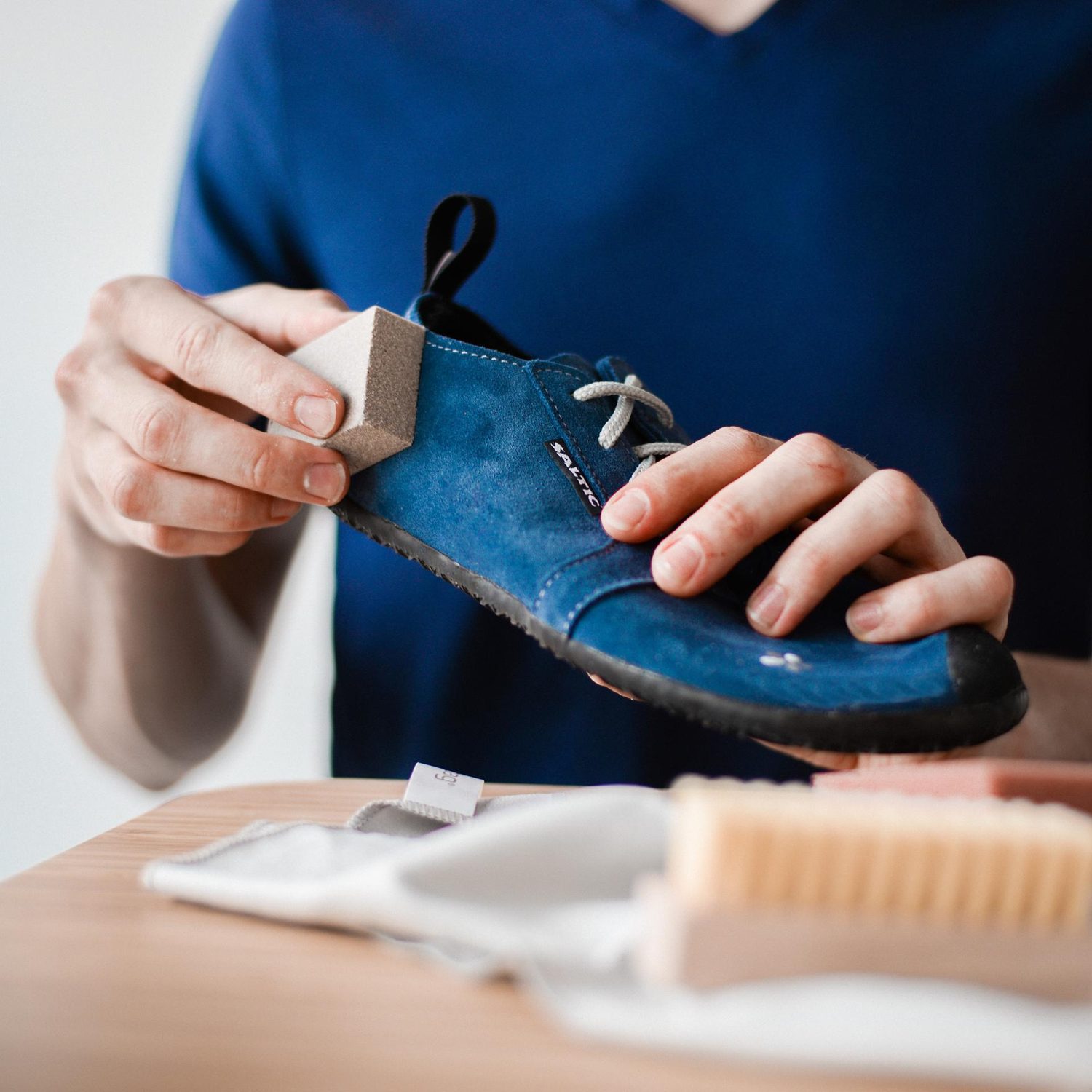
When choosing footwear, it is important to select the correct type, size, and width according to your individual needs. The internal length of the shoe should always be slightly longer than your foot length.
There should always be extra room in front of the toes and enough width for natural toe movement. Barefoot shoes should never squeeze your feet or restrict toe splay. Your toes should not touch the front of the shoe while walking.
For children, additional space also allows room for healthy foot growth. Choosing the wrong shoe type, size, or shape cannot be considered grounds for a later complaint or warranty claim.
Please also consider the intended use of the footwear and choose suitable materials and sole types accordingly.
Different activities require different types of footwear. The intended use affects the construction, materials, durability, and maintenance requirements of the shoes.
• Always wear shoes properly fastened or laced to avoid damaging
the heel or insole.
• Put shoes on and take them off carefully. Never remove shoes by
stepping on the heel of the opposite shoe. Use a shoehorn whenever
possible.
• Alternate your shoes and avoid wearing the same pair every
day.
• Waterproof and treat shoes before first use and continue
maintenance regularly as needed.
• Dark leather colours may temporarily transfer colour when exposed
to moisture or excessive perspiration. This is harmless.
• Natural leather variations such as wrinkles, scars, or colour
differences are natural characteristics, not defects.
• Winter road salt and de-icing chemicals can damage shoe materials
and cause light stains or surface damage. Wipe shoes clean after
exposure and maintain them regularly.
• Damage caused by road salt or chemicals cannot be claimed under
warranty.
• Do not machine wash shoes unless explicitly allowed by the
manufacturer.
• Do not tumble dry shoes or place them directly on heaters.
• Only wear dry shoes. After exposure to moisture, dry shoes
thoroughly as soon as possible.
• Remove insoles before drying whenever possible.
• If unsure about care products, consult our staff for
recommendations.
Remove the insoles (if removable) and stuff wet shoes with newspaper or paper towels. Let them dry naturally at room temperature. Do not wear the shoes again until they are completely dry.
Modern footwear is made from a wide range of natural, synthetic, and textile materials. Proper care significantly extends the lifespan of your shoes.
Leather is one of the most commonly used natural materials in footwear production due to its breathability, softness, flexibility, and comfort. However, leather is not fully resistant to moisture and requires regular care.
Complaints or warranty claims can be submitted together with proof of purchase or another valid document (e.g. bank statement).
Please report defects immediately after discovering them. Delayed complaints may not be accepted.
For hygiene reasons and in accordance with Czech health regulations, claims may be temporarily rejected if the returned goods are excessively dirty, wet, or unhygienic. Once cleaned, the complaint can be resubmitted.
The assessment and processing of complaints may take up to 30 calendar days from receipt.
Warranty claims apply only to manufacturing or material defects. Normal wear and tear, improper use, or unsuitable care are not considered defects.
Section 2107 of the Czech Civil Code: If the defect represents a minor breach of contract (repairable defect), the customer is entitled to repair, replacement of the defective part, or a reasonable discount.
Section 2106 of the Czech Civil Code: If the defect represents a substantial breach of contract (serious or irreparable defect), the customer is entitled to:
How can I submit a warranty claim?
The warranty period should not be confused with the overall product lifespan, which depends on frequency of use, proper maintenance, and intended purpose.
Your shoes arrived, but you'd prefer a different size or model? No problem — simply withdraw from the purchase contract and return the goods. It’s easy. See how to return your order here.
Call us on business days between 10 AM and 4 PM at +420 228 224 478 or email us at orders@premiumbarefoot.com.
Address: naBOSo s.r.o., Českomoravská 2517/13a, Prague 9, 190 00, Czech Republic
You can also visit our stores in Prague, Brno, Beroun, and Zlín.


 € - US
 Čeština
 English
 Slovenčina
 Magyar
 български
 Polski
 Dansk
Dansk
 Nederlands
 Svenska
 Suomi
Suomi
 Español
 Français
 Slovenščina
 Română
 Português
 Deutsch (DE)
 Deutsch (AT)
 Deutsch (CH)
