
 € - US
 Čeština
 Magyar
 Slovenščina
 Română
 български
 English
 Slovenčina
 Polski
 Dansk
 Nederlands
 Svenska
 Suomi
 Español
 Français
 Português
 Deutsch (DE)
 Deutsch (AT)
 Deutsch (CH)


Great shoes, I’m absolutely thrilled with them.


Bundgaard
More from this brand


Give your little one the best foundation for their first adventures in the Prewalker model from BUNDGAARD. These boots are the ideal choice for beginning and confident walkers alike. The reinforced toe area protects little feet, while the Velcro straps adjust beautifully around the ankle.
The sole features a subtle pattern for excellent grip. Handcrafted from soft, toxin-free leather.
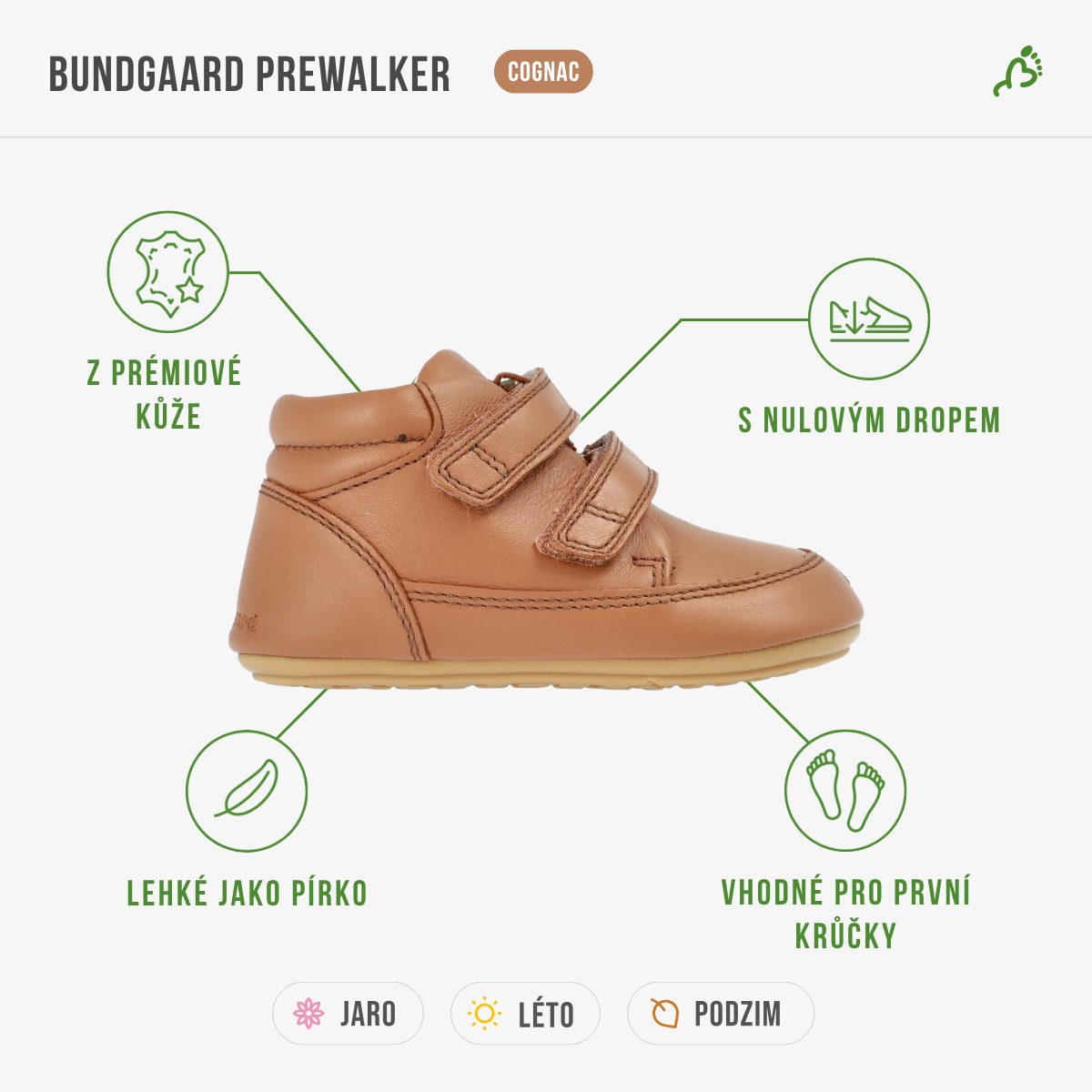
 No breaking in
comfortable from the first wear
 Wide toe box
room for your toes to spread
 Light and flexible
your feet work naturally
 Zero drop
heel and toes on one level
 They are sooo
irresistibly comfortable
Didn't find your answer? We're happy to help.
 Customer service is here to help
If you cannot wait and want to buy your child their first shoes anyway (especially in winter), choose soft booties. Their advantage is not only the soft sole but also the fact that they do not hold the ankles, so the foot can move freely.
The first real shoes should only be bought once the child walks independently without support, can take a few running steps, no longer holds their arms up (does not sway) and has been moving this way for at least two months. After that, choose prewalker-type shoes such as Froddo Prewalker, Bobux Xplorer or Marvel, depending on the shape and dimensions of the little foot. At this age your child does not yet have enough strength to bend the shoe, which is why we choose extremely soft and flexible models.
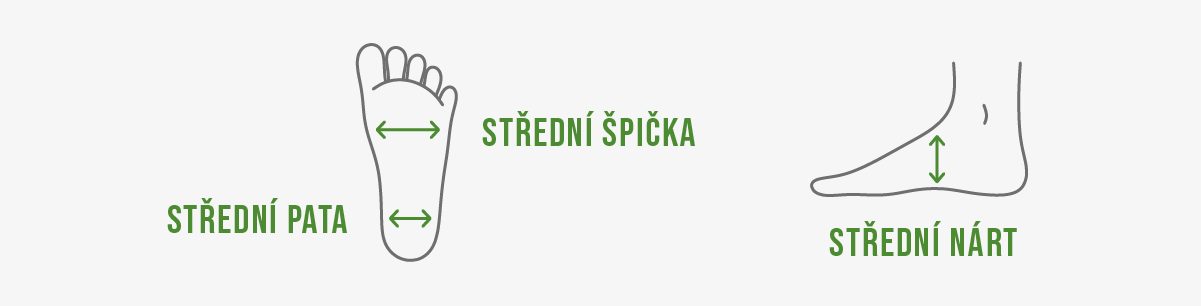
You need to measure both of your child’s feet, as they are not necessarily the same size. You can measure them with the PLUS12 measuring gauge or with the help of a box. Measure the length of the foot from the longest toe to the edge of the middle of the heel. Measure the width at the widest point (behind the toes), at right angles to the axis of the foot.
To choose the right size, you need to know the length and width of the little foot as precisely as possible, ideally the height of the instep too, and you must not forget the toe allowance. For beginner walkers we choose an allowance of 8 to 10 mm, for more experienced walkers up to 12 mm. It always depends on the child’s abilities and on how their whole body moves when walking.
In width, choose a shoe that is 2 to 3 mm wider than the foot, and for winter shoes add another millimetre or two.
A child’s foot grows quite quickly, so measure it regularly to make sure the shoes do not start to pinch.
Ideally, the child should not feel that they have shoes on at all. Good barefoot shoes are ultra-light and flexible in every direction, which lets the foot move naturally, as if it were completely bare. They follow the anatomical shape of the foot and so give little toes plenty of room. The shoe has no heel, which would distort the body’s upright posture. The thin sole lets children feel the ground they are moving on.
 Customer service







Enter your email, spin the wheel and we will send your prize to your inbox too.
We have also sent the code to your email. Valid until .
No worries, you have one more try.
No worries, try again next time. Meanwhile we will send you news and offers by email.
