


Leather barefoot ankle boots for your child, with a zero drop sole, a non-slip outsole and easy velcro and elastic lace fastening for spring to autumn. More about the product
 Season
autumn, spring, summer
Leather barefoot ankle boots for your child, with a zero drop sole, a non-slip outsole and easy velcro and elastic lace fastening for spring to autumn.
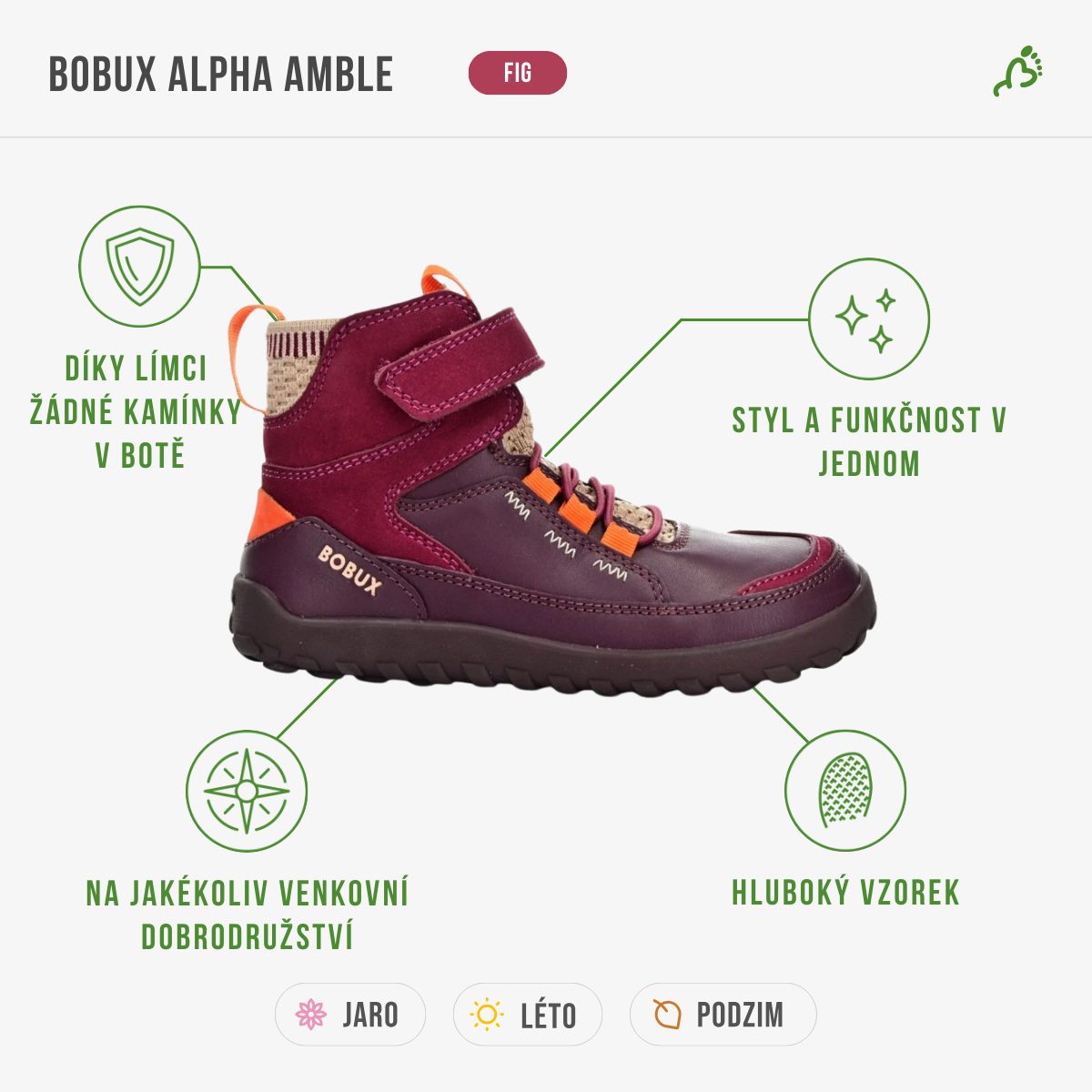
With the Amble, your little explorer can take on any terrain. These higher outdoor boots are made from durable yet comfortable leather. A soft knitted cuff around the ankle fits snugly and helps keep out dust, small stones and twigs.
The adjustable strap and elastic laces make the boots easy to put on and keep the fit secure. The sturdy non-slip sole with a deep tread gives excellent grip, both on the playground and on nature trips.
 No breaking in
comfortable from the first wear
 Wide toe box
room for your toes to spread
 Light and flexible
your feet work naturally
 Zero drop
heel and toes on one level
 They are sooo
irresistibly comfortable
Didn't find your answer? We're happy to help.
 Zákaznický servis will help you
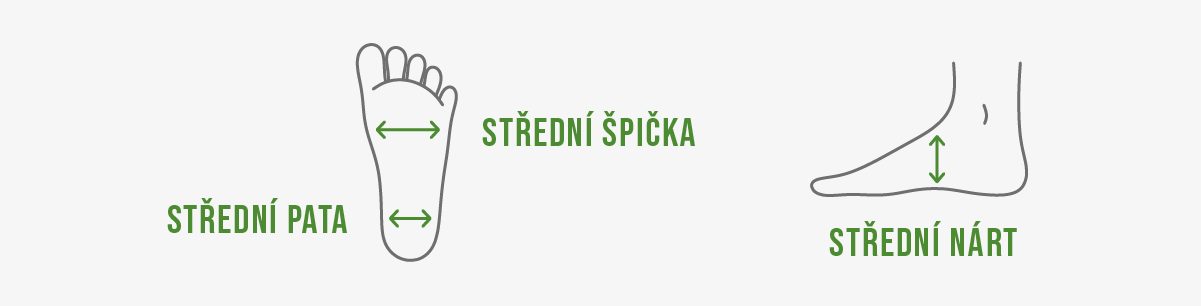
You need to measure both of your child’s feet, as they are not necessarily the same size. You can measure them with the PLUS12 measuring gauge or with the help of a box. Measure the length of the foot from the longest toe to the edge of the middle of the heel. Measure the width at the widest point (behind the toes), at right angles to the axis of the foot.
To choose the right size, you need to know the length and width of the little foot as precisely as possible, ideally the height of the instep too, and you must not forget the toe allowance. For beginner walkers we choose an allowance of 8 to 10 mm, for more experienced walkers up to 12 mm. It always depends on the child’s abilities and on how their whole body moves when walking.
In width, choose a shoe that is 2 to 3 mm wider than the foot, and for winter shoes add another millimetre or two.
A child’s foot grows quite quickly, so measure it regularly to make sure the shoes do not start to pinch.
The younger the child, the faster their feet grow. When walking, the foot needs about 4 mm of space in front of the toes. So if the allowance in length is 4 mm or less, it is time for new shoes.
For toddlers, we re-measure the feet every month, for preschool children every two months and for schoolchildren once every three months. That may sound frequent, but toe deformities caused by shoes that are too small or badly chosen are common even at preschool age – so prevent them.
Ideally, the child should not feel that they have shoes on at all. Good barefoot shoes are ultra-light and flexible in every direction, which lets the foot move naturally, as if it were completely bare. They follow the anatomical shape of the foot and so give little toes plenty of room. The shoe has no heel, which would distort the body’s upright posture. The thin sole lets children feel the ground they are moving on.
With proper care, barefoot shoes will last you for years. You just need to know how.


 Zákaznický servis







Enter your email, spin the wheel and we will send your prize to your inbox too.
We have also sent the code to your email. Valid until .
No worries, you have one more try.
No worries, try again next time. Meanwhile we will send you news and offers by email.
 € - US
 Čeština
 Magyar
 Slovenščina
 Română
 български
 English
 Slovenčina
 Polski
 Dansk
 Nederlands
 Svenska
 Suomi
 Español
 Français
 Português
 Deutsch (DE)
 Deutsch (AT)
 Deutsch (CH)


