We’ll be happy to help via online chat or at: orders@premiumbarefoot.com

Children Barefoot Walking, Movement and Health
Most babies are born with healthy feet. How should you approach clothing, footwear and everyday care so it truly benefits your child?
The role of the foot – and the whole lower limb – matters long before your baby takes their first steps. It’s worth paying attention to children’s feet from birth.
It’s not a good idea to interfere unnecessarily with psychomotor development by encouraging your baby to skip individual stages – so no early sitting up, standing, using baby walkers and similar aids, where a child may look as if they’re standing but in reality is more likely hanging awkwardly by the crotch and overloading their developing spine and joints.
It’s also not right to pull a baby by the legs, drag them across a mat, or lift them up by their feet “for fun”. The hip joint is still immature, largely made up of cartilage, and it can be damaged or the joint head can slip out of the socket.
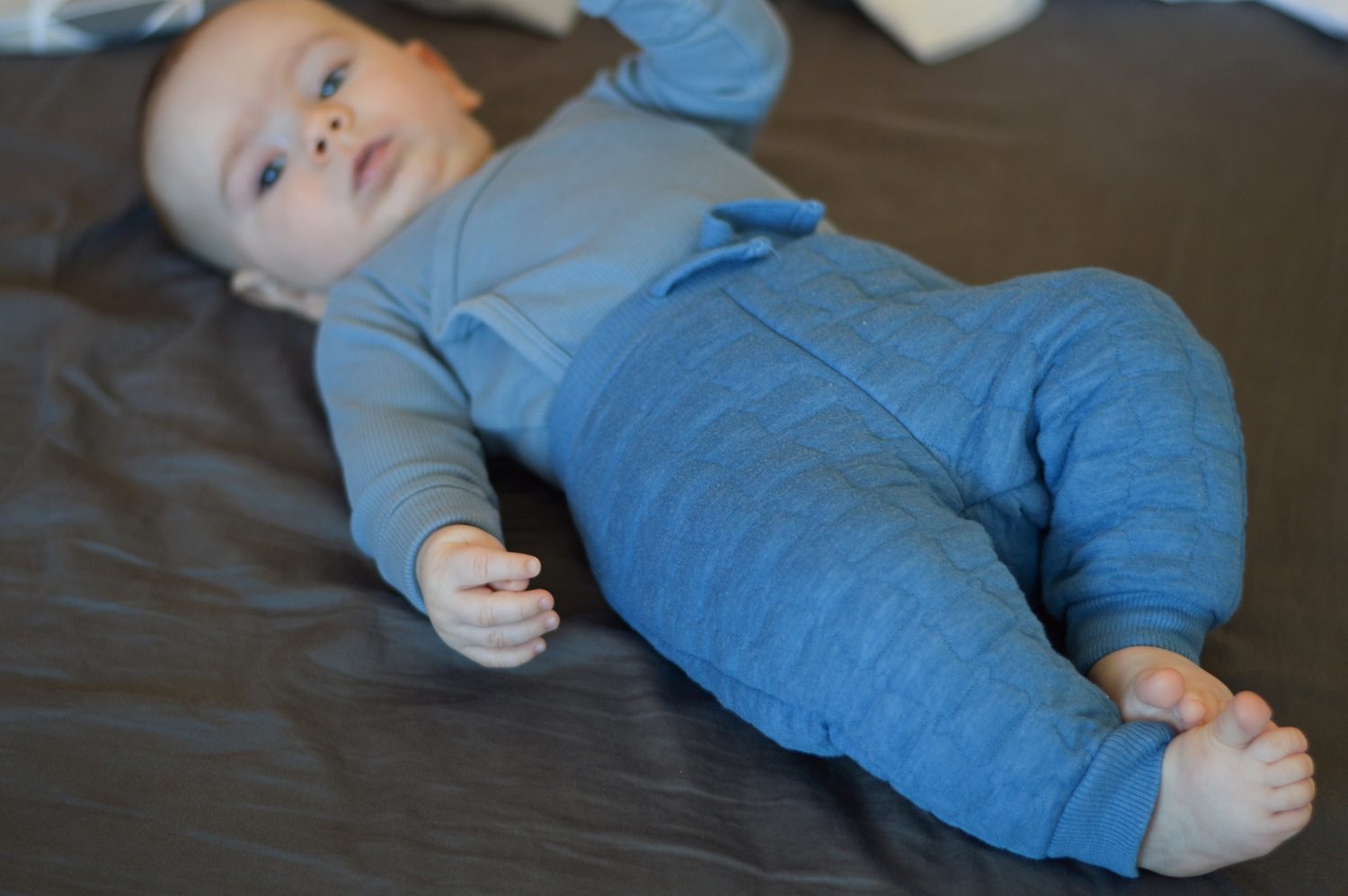
Tight socks and tights, sleepsuits with too little room for the feet – all of this forces the toes to curl. It’s better to choose socks that are a bit bigger and looser; every baby suits a different brand.
They shouldn’t constrict around the calf either. You’ll recognise this if the skin is left marked after you take the socks off. Don’t buy special “sock holders” designed to stop socks slipping off either – they also restrict movement at the ankle.
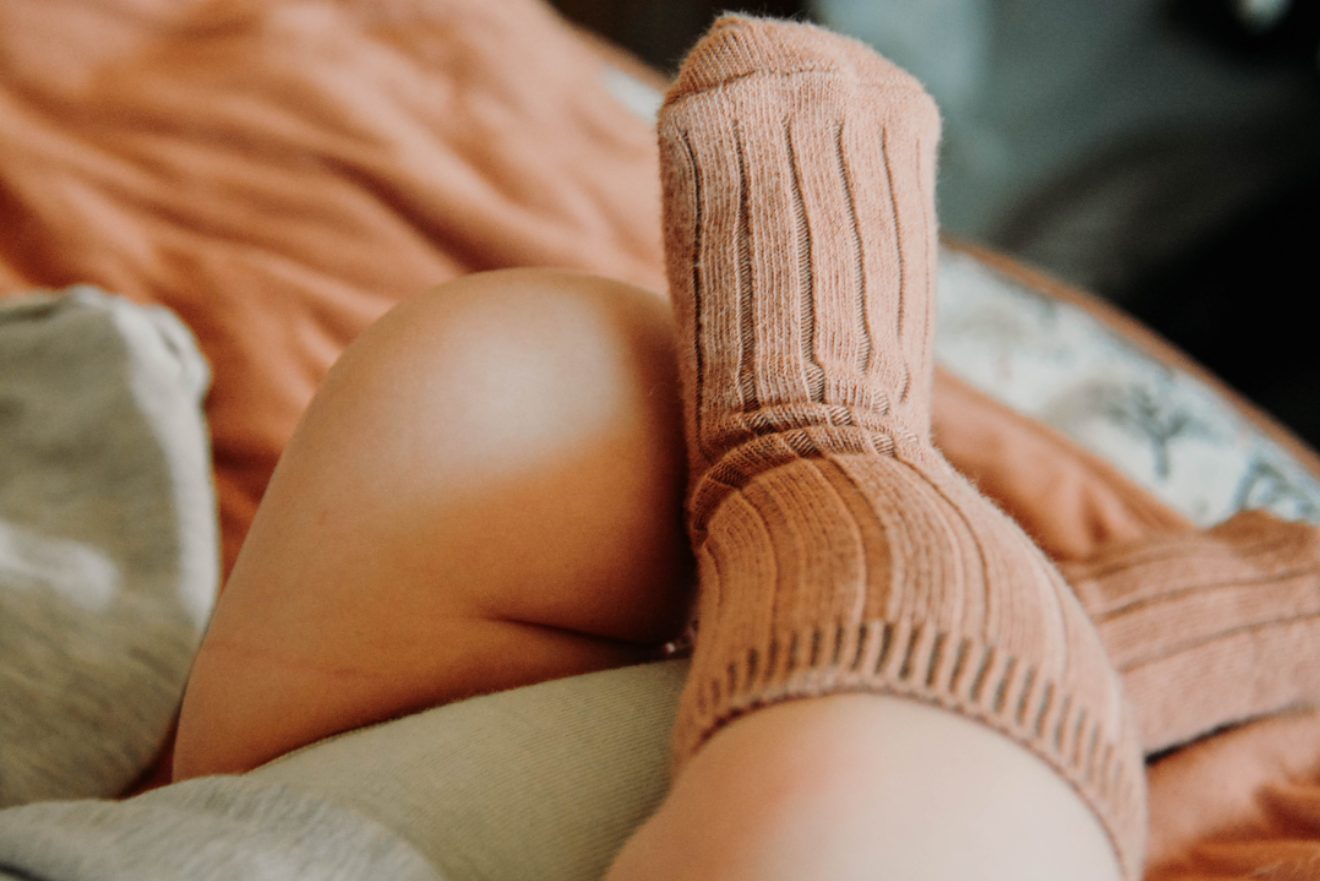
“Restricted movement leads to less muscle activity. The muscles then aren’t strong enough to help the ligaments keep the joints and foot in the correct position, which can make the foot more vulnerable in the future.” Bc. Hana Tonarová, paediatric physiotherapist.
Branded trainers or pretty ballet flats for non-walking children are unnecessary too. If you put them on for a family photo or a wedding, nothing will probably happen – but if your child spends long hours in them in the pushchair, it won’t do their feet any favours.
These little shoes usually don’t provide enough warmth either; in cold weather, the ideal option for non-walking children is booties/overboots (softshell or wool).
Nor are tight leggings or baby jeans suitable. Your baby needs to be able to move their whole lower limbs freely, including the hip joint. Sucking their big toe isn’t just cute – it’s also an important developmental milestone. And they won’t manage that in jeans.
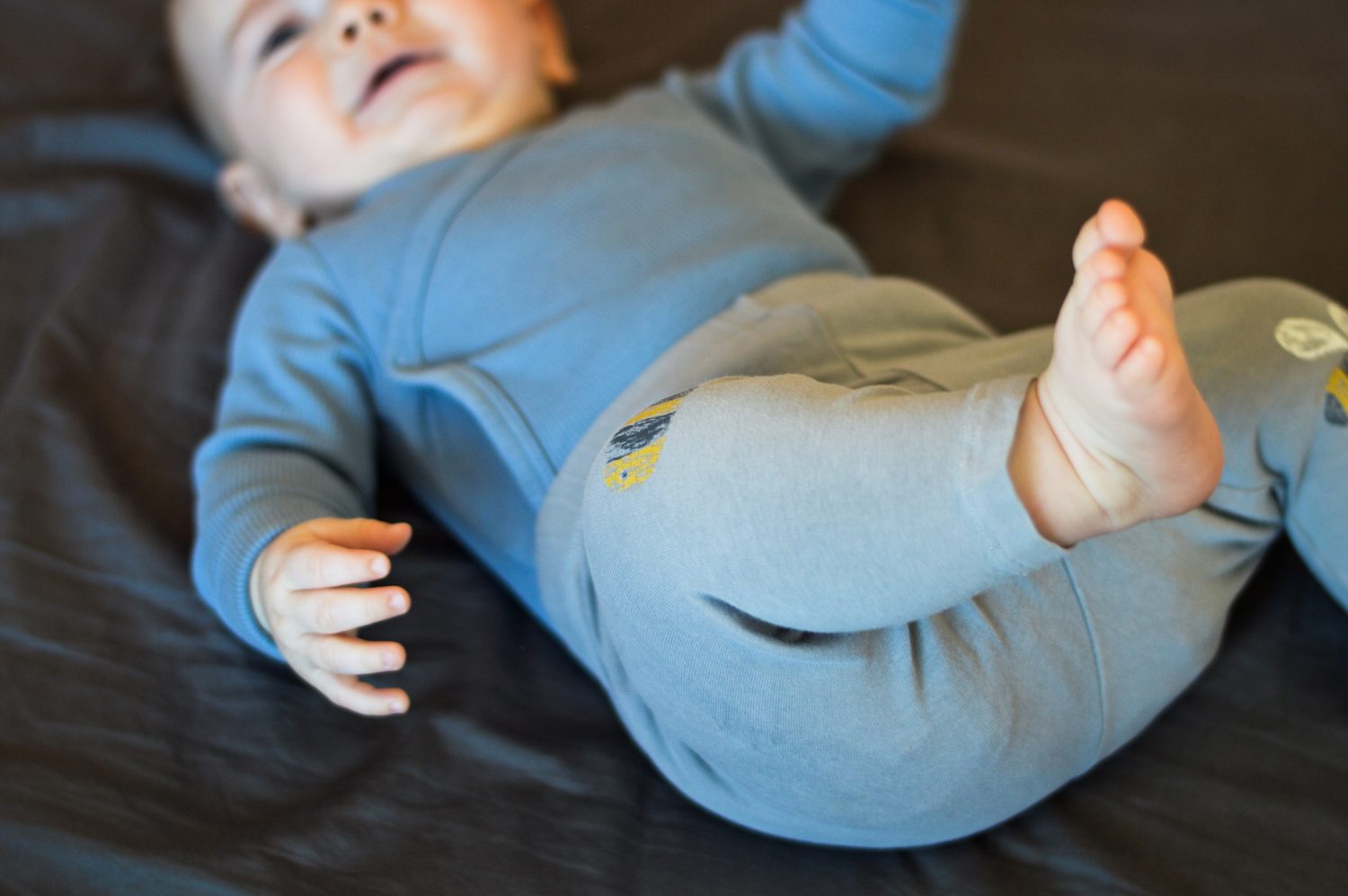
If the temperature allows, let your child be barefoot as often as possible. You’ll see how they “perk up” once the socks come off. Babies lying down start taking more interest in their feet, and with older children you may notice they suddenly become more agile. If you’re worried your baby might get cold, dress them more warmly on their body and check the temperature of their feet regularly.
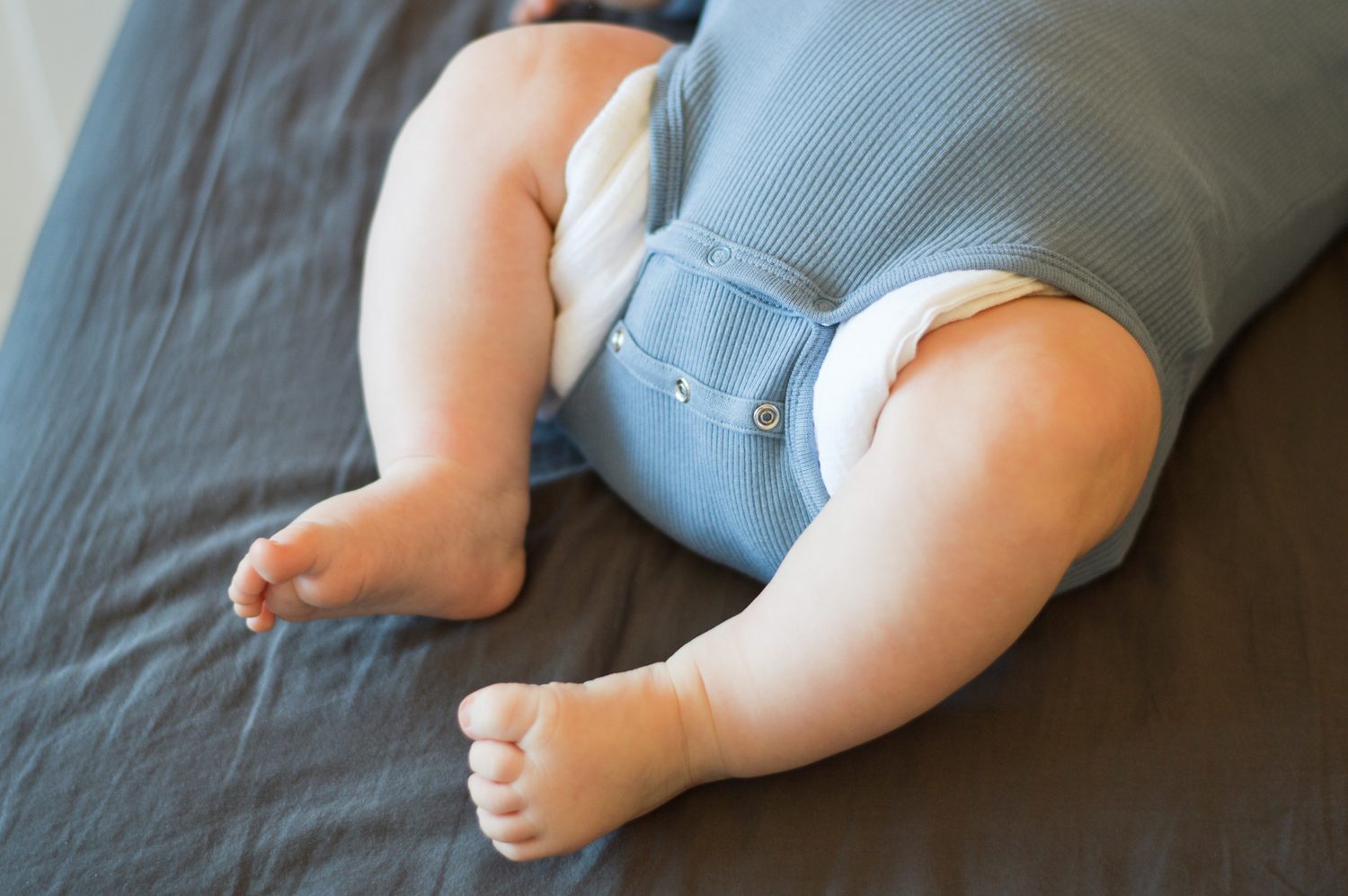
“Cloth nappies tend to be much wider than disposable ones, so in older children who are already walking they can cause increased rotation and abduction of the hip joints and make the legs look bow-legged at first glance. In that case, it’s genuinely a good idea for the child to run around without nappies as much as possible.” Bc. Edita Prošková, podiatrist.
From the newborn stage, it’s a good idea to place your baby on their tummy too – but only when they’re awake.
The safest sleeping position is on the back. It’s not suitable to use swaddles that prevent free movement of the lower limbs or hold them in a straightened position. A well-fitting sleeping bag can be a helpful and safe option for sleep.
During the day, under supervision, you can also position your baby on their sides. However, this position isn’t suitable long-term from a safety perspective (during sleep, the baby may roll onto their tummy, which is a risk factor for sudden infant death syndrome), and also because of pressure on the hip joint.
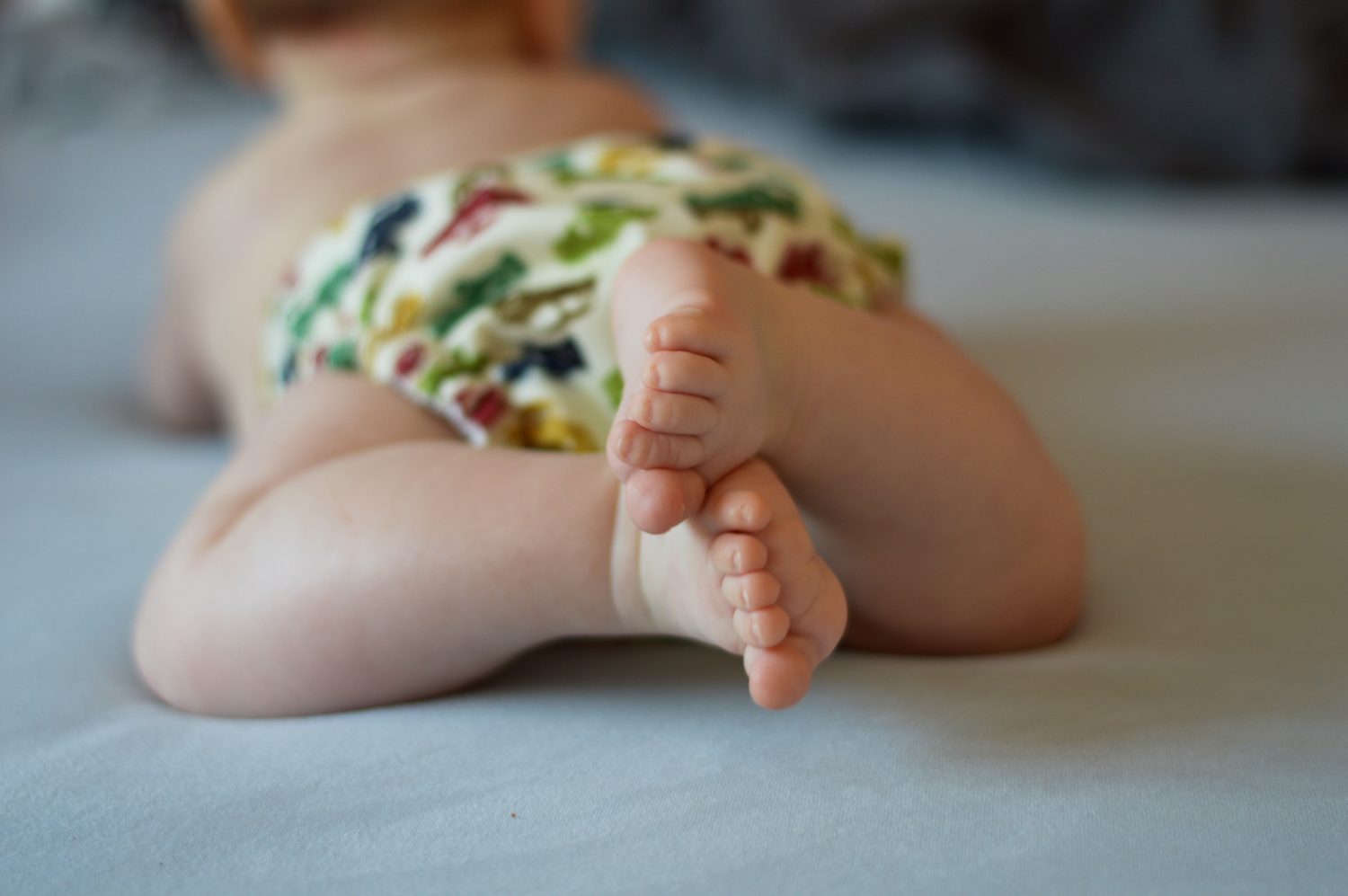
So keep changing positions repeatedly throughout the day.
For older children, you can set up different obstacle courses at home, using everyday household items (toys, foam puzzle mats, cushions, different yoga mats).
A great addition is also sensorimotor mats and pads. You can use them even for children who are only crawling – the varied surface brings new challenges they have to work through.
“It’s very important to support healthy, correct psychomotor development. You can use various baby exercise classes led by instructors, choose stimulating toys (for example, high-contrast board books, etc.), and for older children aids such as balance pads, stepping stones and other sensorimotor tools that develop not only deep sensation (proprioception) but also all-round ability. Playgrounds with climbing-wall elements and climbing frames (or even rope courses) are excellent too.” Bc. Edita Prošková, podiatrist.
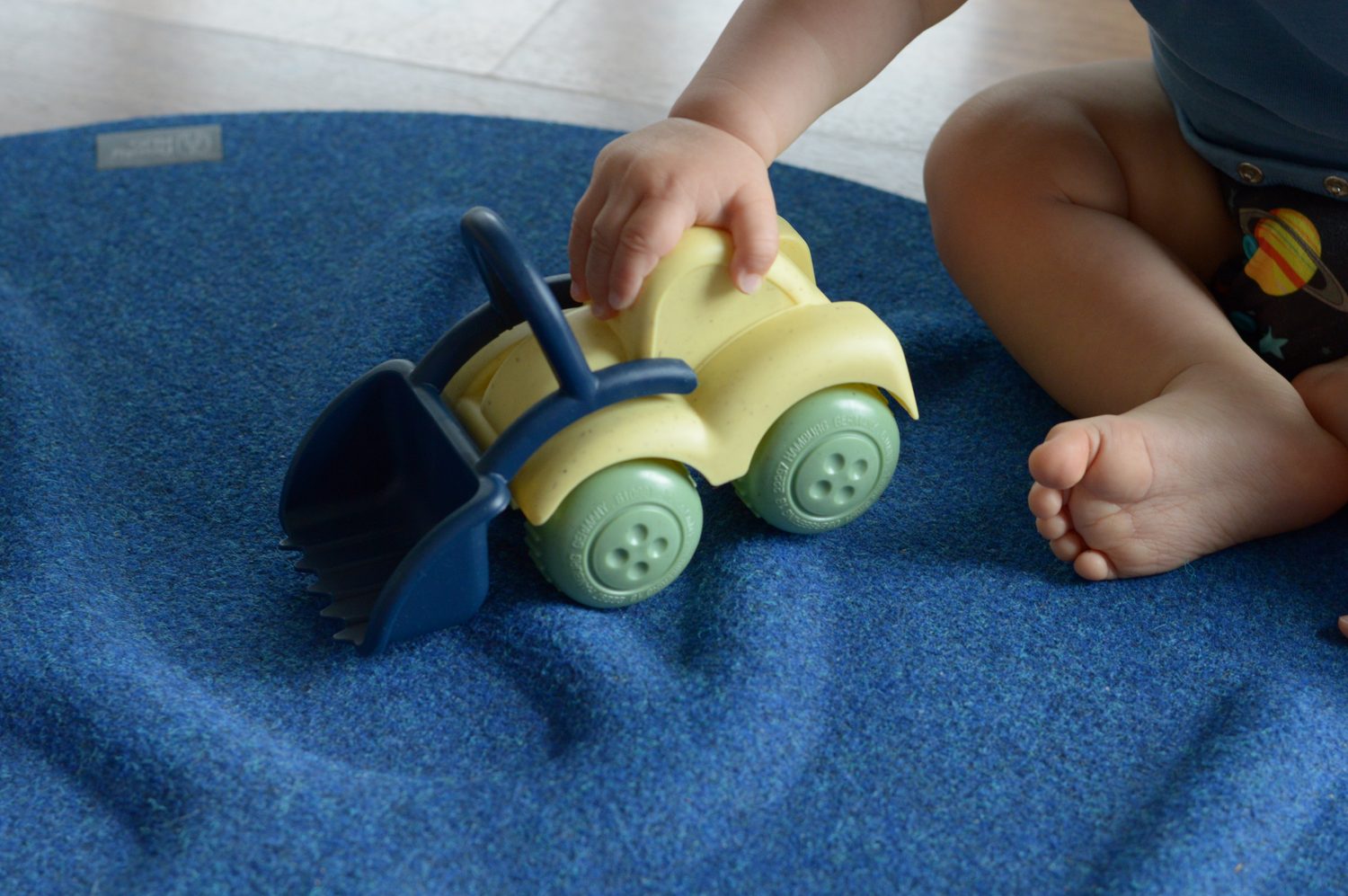
For children who belly-crawl, a rougher surface can motivate them to push up into an all-fours position. For toddlers, a little “monkey” course can be a lovely way to brighten up a rainy afternoon – and at the same time they’ll practise their skills naturally and improve coordination and balance.
Don’t worry – it’s enough to give your baby freedom, a variety of movement, and resist the advertising for all sorts of “improvements”. And that doesn’t apply only to your child’s feet. A healthy baby is so perfectly designed that they don’t need any special gadgets – they tend to make life easier for us parents, but they don’t always benefit children.
Above all, your baby needs our loving arms and trust.
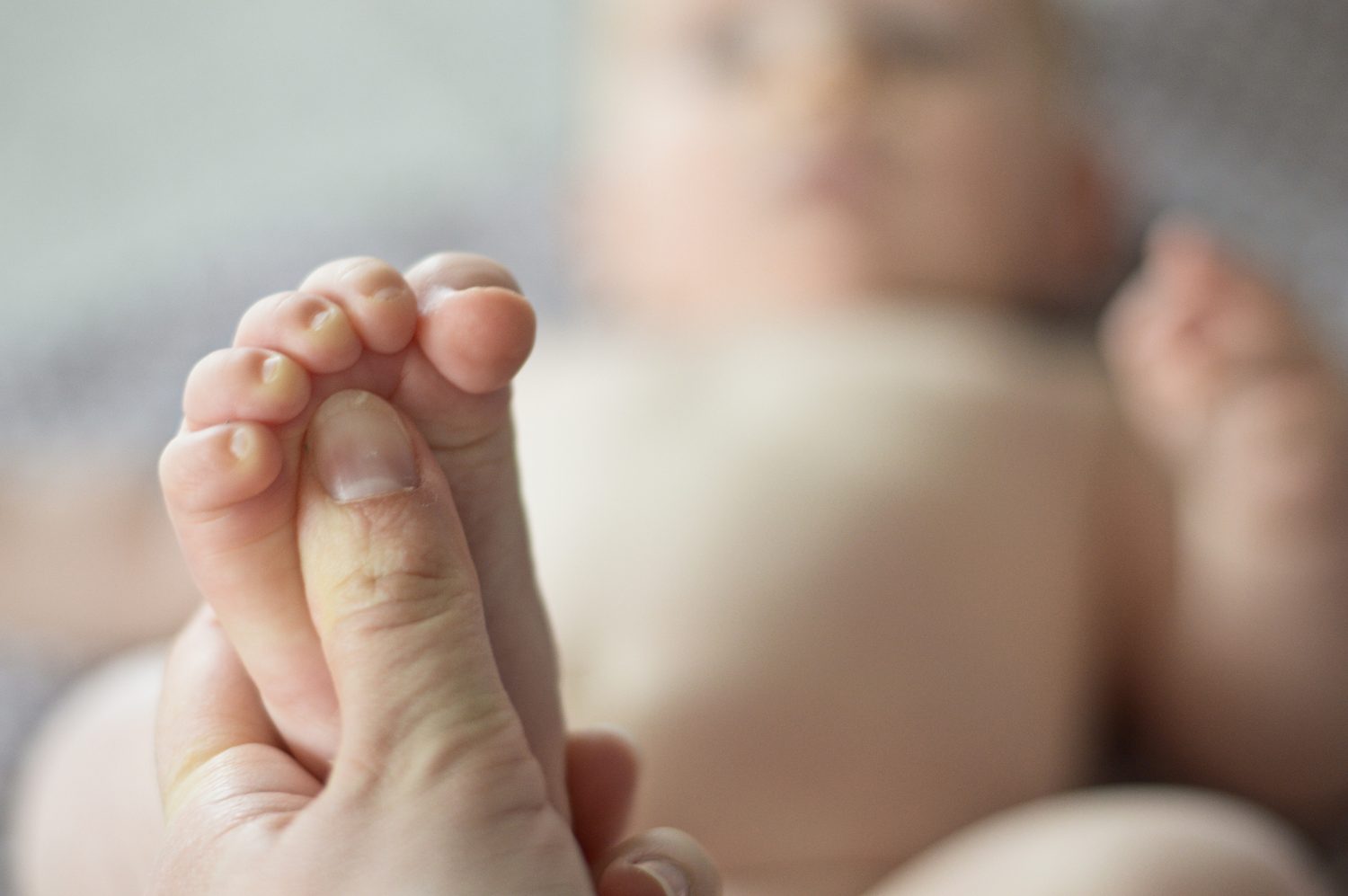
As soon as your little one stands up for the first time, many of you will have a warning light go on in your head: “Shoes!” And if not you, then definitely someone around you.
Try to ignore this advice and hold off. A child’s foot mainly needs freedom, not to be strapped into stiff footwear. A beginner walker often alternates wobbly walking with crawling, and they pull themselves up via a half-kneeling position – and a rigid shoe just gets in the way.
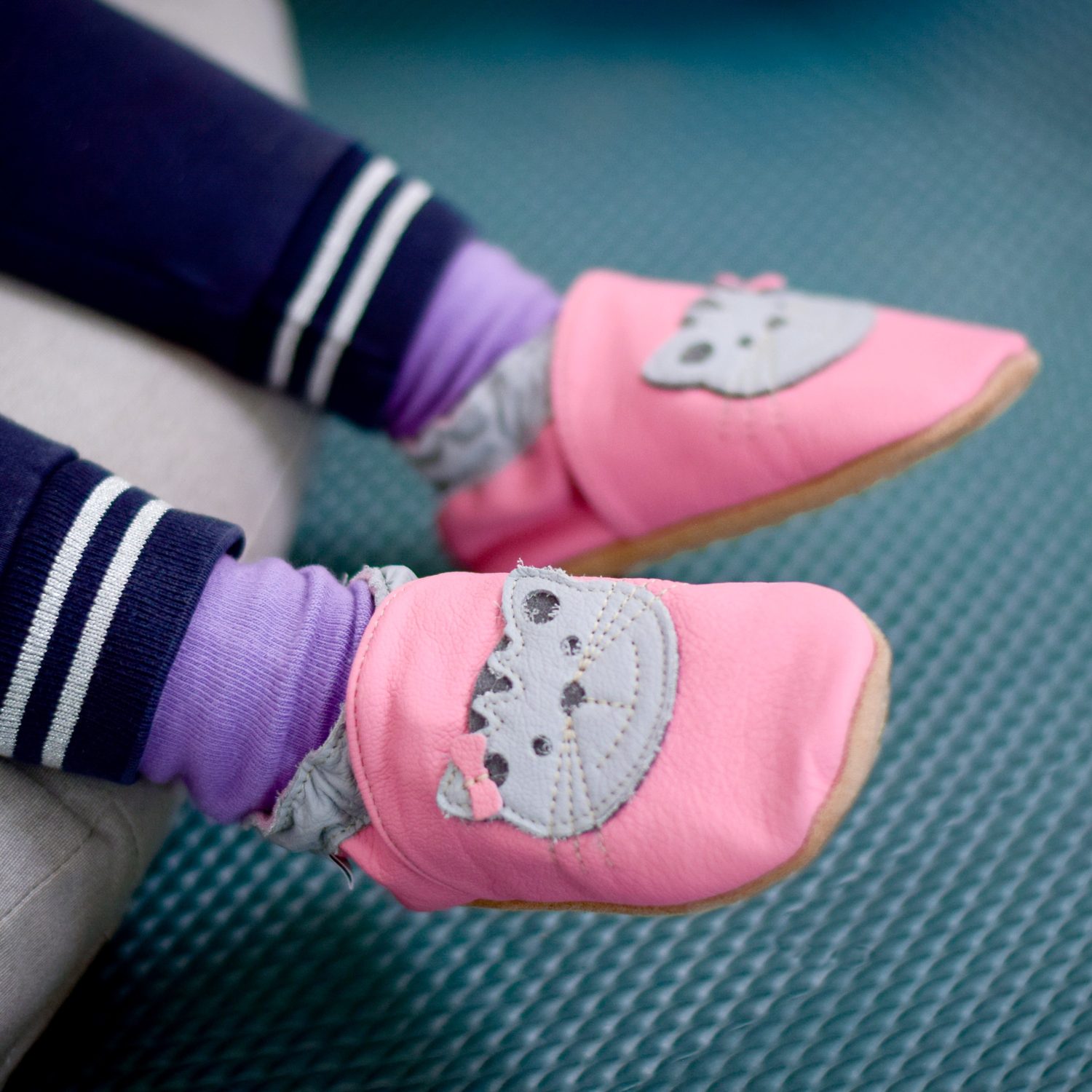
“When choosing first shoes, you should watch how the child walks in them. Walking with and without shoes shouldn’t differ in any way. If the child starts using a different walking style, the shoe isn’t suitable.” Bc. Edita Prošková, podiatrist.
Buy first shoes only once your child is walking steadily and confidently and you need to protect their feet from damp, dirt and cold. Even then, choose soft, flexible footwear – ideally soft sole shoes made of leather or fabric in the right size as a first step.
Text author: MUDr. Martina Holičková
doctor and mum of two, author of IG @pediatrie_s_laskou and the blog www.pediatrieslaskou.cz.


 € - US
 Čeština
 Magyar
 Slovenščina
 Română
 български
 English
 Slovenčina
 Polski
 Dansk
 Nederlands
 Svenska
 Suomi
 Español
 Français
 Português
 Deutsch (DE)
 Deutsch (AT)
 Deutsch (CH)

