We’ll be happy to help via online chat or at: orders@premiumbarefoot.com

Selecting and Maintaining Barefoot Shoes
Did you know that storing your barefoot shoes correctly can significantly extend their lifespan? We’ll show you how.
Are you someone who loves everything neat and tidy? Then your shoes are probably living the dream. They get cleaned after every little bit of dirt, regular waterproofing at least once (ideally twice) a month is simply routine, they have their own care products, and of course they’ve earned a cosy spot in your beautifully organised shoe cupboard.
So now you know, in a nutshell, how to look after your beloved footwear. But do you also know the ideal conditions for storing shoes? Dirt, dust, water, sunlight… and even the wrong kind of storage can shorten the life of your favourite pair — one that could otherwise keep you happy for years. Let’s take a closer look.
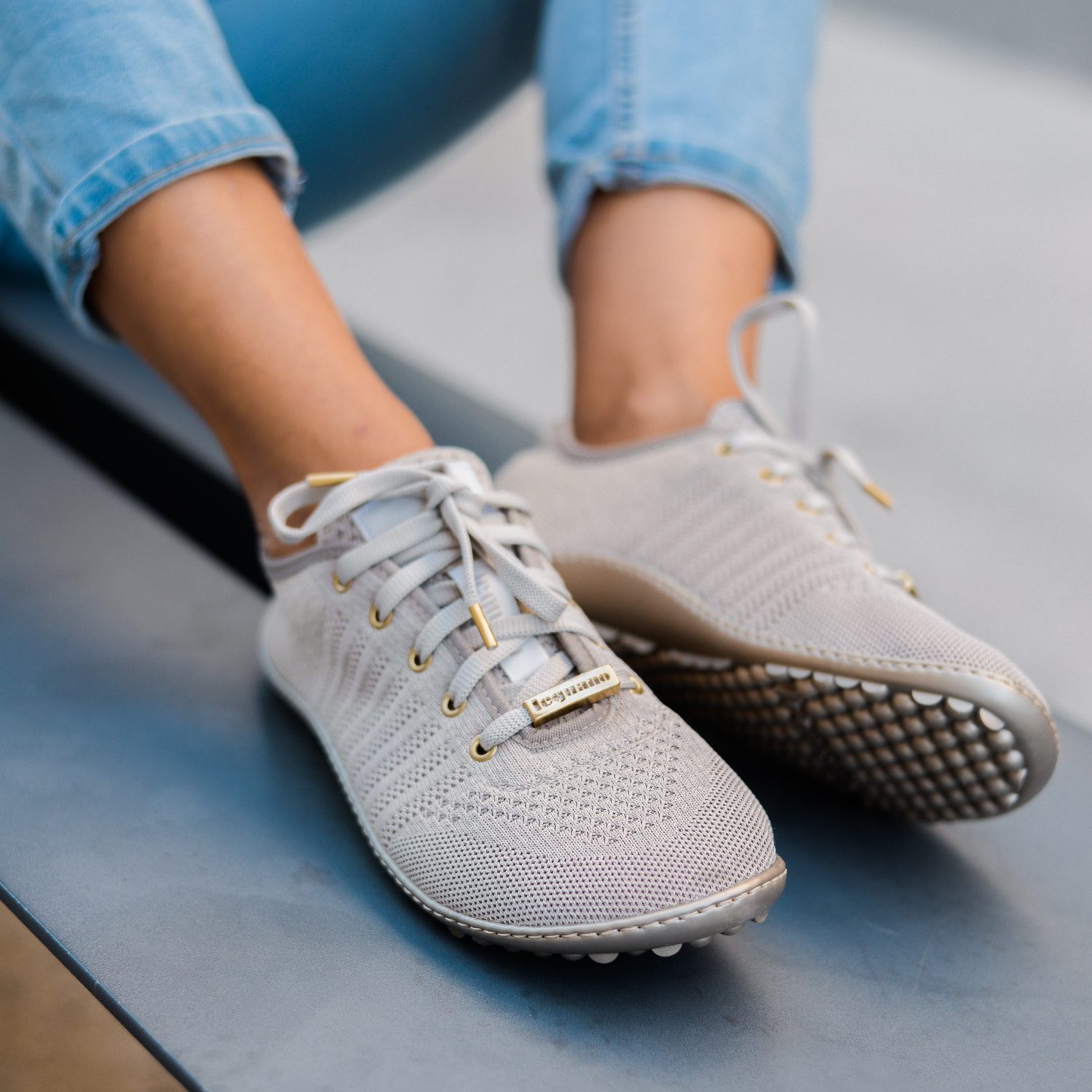
Do you chuck all your shoes into one pile — however they land? Here’s a little secret: it won’t save you time. Quite the opposite. When every pair has its place, you’ll find them more easily, you’ll decide what to wear faster, and finally — it’s simply a joy to look at an organised shoe cupboard.
A great space-saving tip is to place shoes together in opposite directions. Put the left shoe with the toe towards the back of the cupboard and the heel towards you, and the right shoe the other way round — toe towards you, heel to the back. Avoid stacking pairs on top of each other. It might look like you’re saving space, but the shoes underneath suffer and could permanently lose their original shape and material properties. If you’re short on space, the right organiser will sort it.
One important thing goes hand in hand with an organised shoe cupboard: get rid of pairs you don’t wear, that don’t bring you joy, and that you haven’t taken out for more than a year. We know — easier said than done. But the reward is a great feeling and more space around you. “Getting rid” doesn’t have to mean throwing them away. Donate your shoes to charity shops or drop them into designated charity collection bins, and trust they’ll have a useful (and happy) future.

Only keep in your shoe cupboard the pairs that make sense for the current season. In winter you can do without flip-flops, and in summer it’s better to give your snow boots’ space to brighter, airier pairs. Shoes you’re putting away for the season should always be cleaned thoroughly, waterproofed, and ideally stuffed with paper so they don’t lose their shape.
It’s worth assigning a specific place to each type of footwear. Put the pairs you wear every day at the front so they’re within easy reach. Keep your sports shoes nearby, and leave smart shoes — the ones that only go out a few times a year — on the lower shelves. Or ideally in their original box under the bed (in a wardrobe, in the cellar…).
Our tip: How should you store leather shoes? Leather beauties are a pricier purchase, but one that’s well worth the investment. As a high-quality natural material with plenty of undeniable benefits for your feet, leather deserves extra care — and it will repay you with durability and years of wear. You’ll find specific tips in our article How to care for leather barefoot shoes properly.
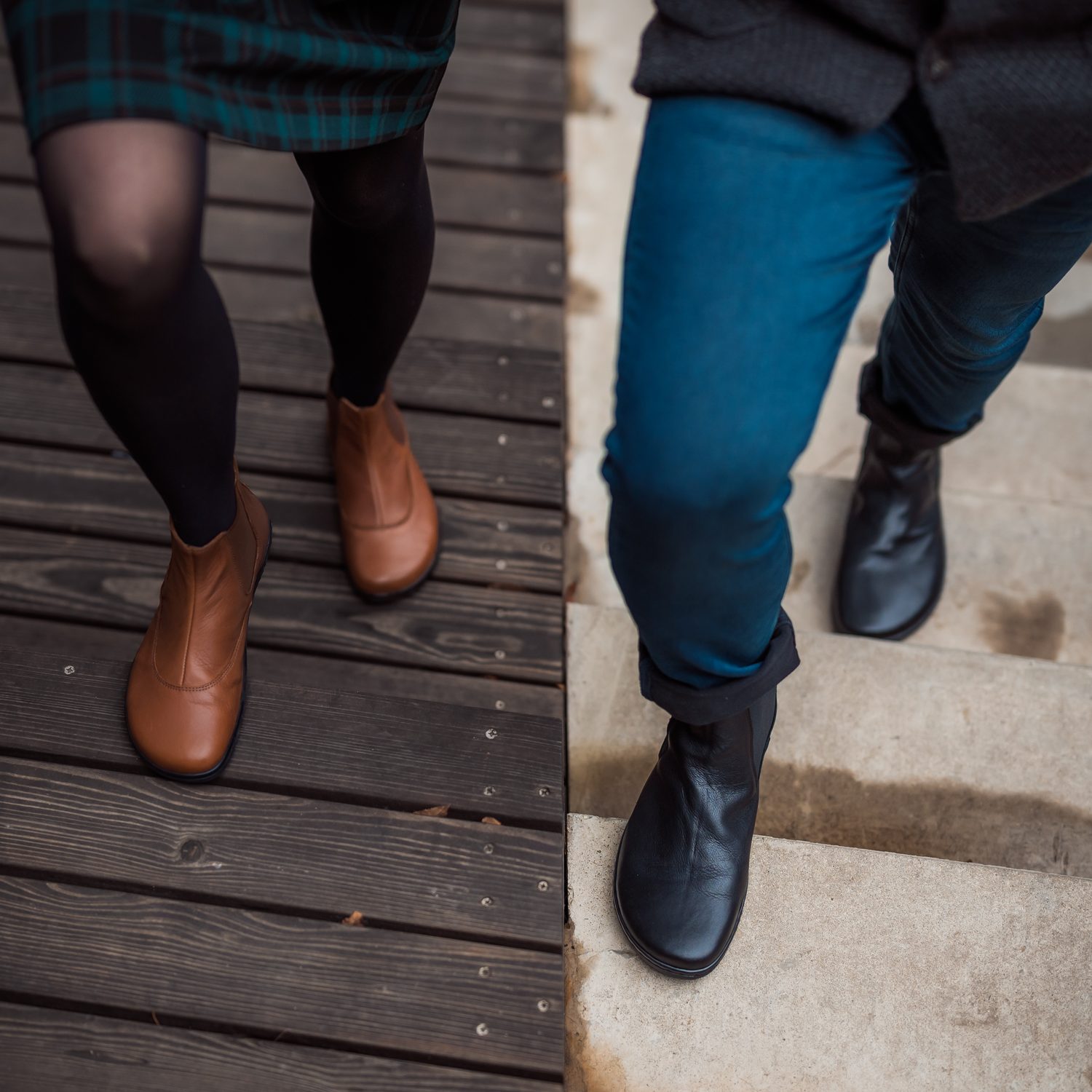
This decision depends on your sense of style and how you use the space in your home. Each option has its advantages. A shoe cupboard doesn’t have to be a boring closed cabinet — it can become a design feature in your hallway. The internet is full of inspiring ideas for open shoe storage in all sorts of shapes and materials, and many you can make yourself (or with help from someone handy).
For the shoes you wear most often, we recommend keeping them somewhere practical — for example on a mat near the door or by the coat hooks. And speaking of hooks — did you know there are shoe hangers? For storage and visibility, they’re genuinely brilliant. You can also buy organisers that let you store shoes above one another without the lower pair suffering under the weight of the one on top.
Whatever storage method you choose, never put shoes away while they’re still wet. Mould is not something you want to deal with — in footwear or anywhere else. As soon as you get home after a downpour, place your shoes somewhere well ventilated. But never dry them near a radiator or directly on it. Once dry, clean them, waterproof them, and then store them away. In the long run, it will absolutely pay off in terms of how long your shoes last.
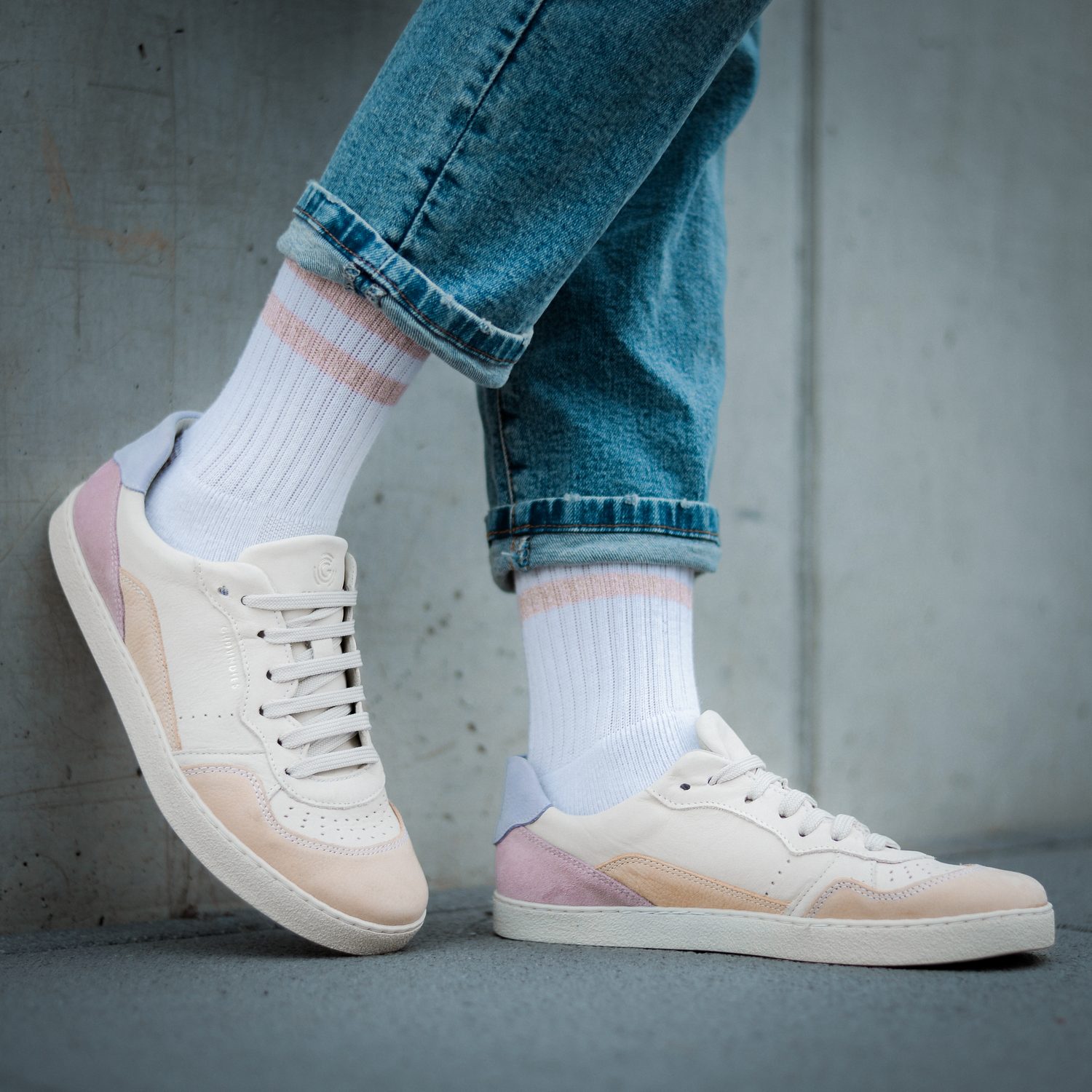
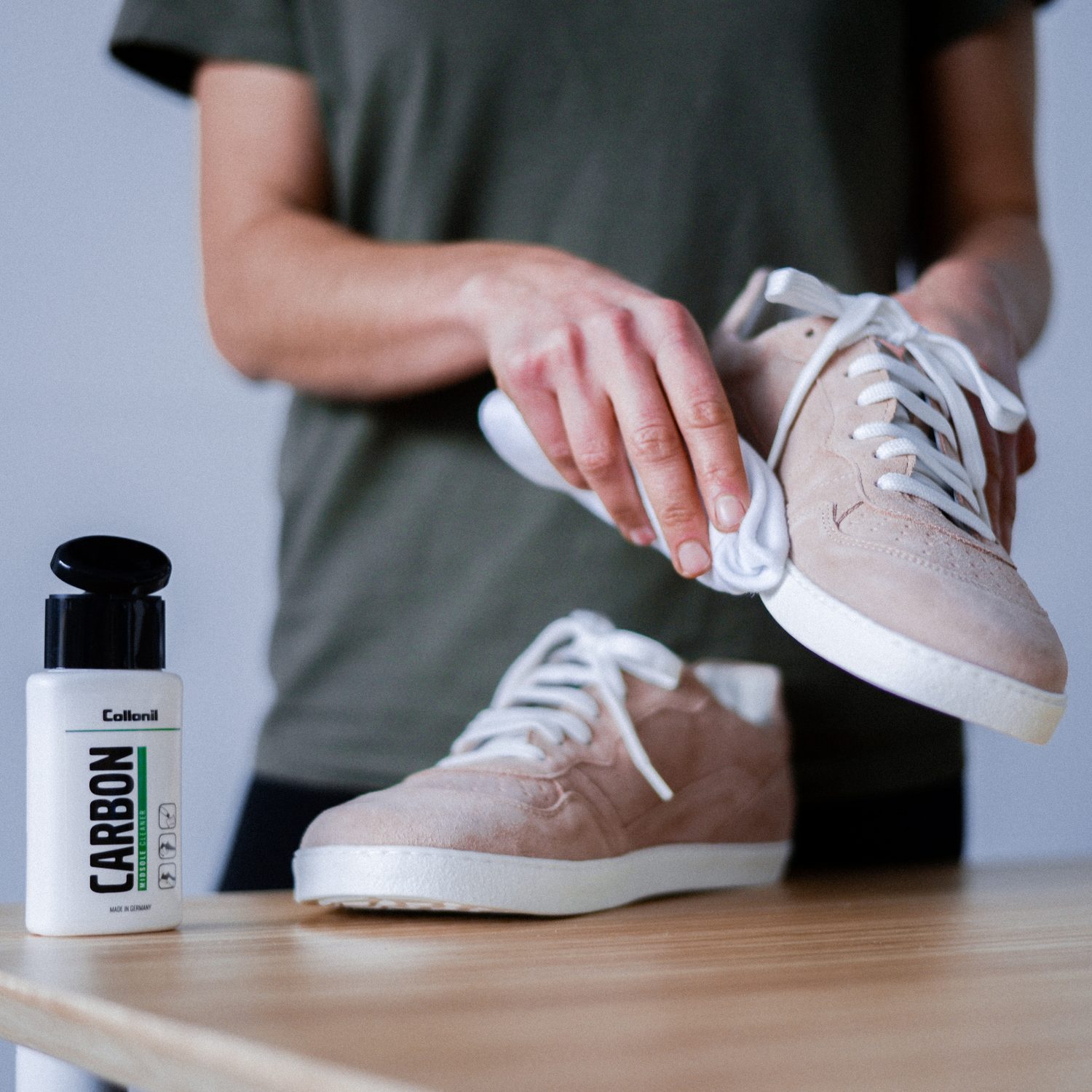
Care. Looking after your shoes is the key to their longevity and faithful service. Regular cleaning, waterproofing and proper storage should be part of your life together. Each type of footwear has slightly different requirements — caring for textile shoes isn’t the same as caring for leather ones. Usually the difference is simply in the types of care and waterproofing products you use. And we also don’t recommend putting leather shoes in the washing machine — that goes without saying.
How do you store them properly? Removing dirt (yes, really — even from the sole) and waterproofing is the foundation. Next, we recommend stuffing shoes with scrunched-up paper so they keep their shape. But be careful: not all paper is the same. Newspaper or leaflet paper can transfer ink — definitely not what you want with light-coloured shoes. Instead, you can use cut-up cardboard tubes from toilet rolls or kitchen towel rolls. That way you use up the whole roll — now that’s proper upcycling!
A separate category is tall boots, such as knee-high boots. They can bend and the material may crack, so it’s recommended to store them with the sole facing upwards and to stuff them fully. You can also buy a special boot shaper that adjusts to the exact width of the boot. If that feels like an unnecessary expense, try an empty wine bottle or a plastic bottle. That way you’re reusing yet another item — and you’ve got a reason to pour yourself a glass of wine, too.
What should you store shoes in? Definitely not plastic bags. Shoes need to breathe — especially leather ones. Our advice: keep the original boxes. We know storing boxes takes up space, but we’ll remind you again that you’re not buying barefoot shoes for just one season — and with proper care they’ll serve you for years. Leather or vegan leather shoes are best wrapped individually in packing paper before storing (the kind that doesn’t transfer colour).
A great tip for staying organised: label your boxes. When you’re rummaging through a pile of them, you’ll be glad you did.
It’s worth thinking about conditions not only when planning trips — the environment can also affect shoes in storage. The ideal place to store shoes is a dark space with a stable temperature and good ventilation (so there’s no risk of damp). For example, the cellar mentioned earlier (but watch out for humidity and temperatures that can vary a lot between winter and summer) or a walk-in wardrobe. If you have neither, the space under the bed works perfectly well.
How do you deal with moths? One option is to use chemical products designed for the purpose. But we prefer a natural alternative that moths can’t stand — and it leaves your shoes smelling lovely. Add a small piece of cedar wood to the box.
You now have all the information you need for storing shoes properly and a guide to sorting out your shoe cupboard. So no more excuses — get stuck in. Fingers crossed you see it through to the end. A tidy shoe cupboard will make you happy every day… even several times a day… you’ll see.



 € - US
 Čeština
 English
 Slovenčina
 Magyar
 български
 Polski
 Dansk
Dansk
 Nederlands
 Svenska
 Suomi
Suomi
 Español
 Français
 Slovenščina
 Română
 Português
 Deutsch (DE)
 Deutsch (AT)
 Deutsch (CH)

