We’ll be happy to help via online chat or at: orders@premiumbarefoot.com

Stories and Brands Selecting and Maintaining Barefoot Shoes Reviews
We tested the white leguano amalfi barefoot trainers you’ll barely feel on your feet. Elegance paired with maximum comfort for any occasion.
| Tested model | LEGUANO AMALFI White |
| Best for | leisure activities, city wear |
| Upper material | 100% polyester |
| Sole | 100% LIFOLIT®, flexible, non-slip |
| Fit | suitable for medium to narrower feet |
| Colour options | white, black |
| Available sizes | 36–44 |
| Price | 4 399 Kč |
| Testing conditions | during a photoshoot in Italy, in the mountains and in the sea |
| Manufacturer | German brand leguano |
Up to now, I’d never had any personal experience with barefoot footwear. I’m not a fan of heels or dress shoes, and I usually spend most of the summer in lightweight but sturdier shoes. So for my first introduction to barefoot shoes, I reached for the white leguano amalfi trainers. They look genuinely flattering and go with absolutely anything – not just summer outfits. And since they’re named after my favourite Italian town, Amalfi, it only made sense to test them in Italy.
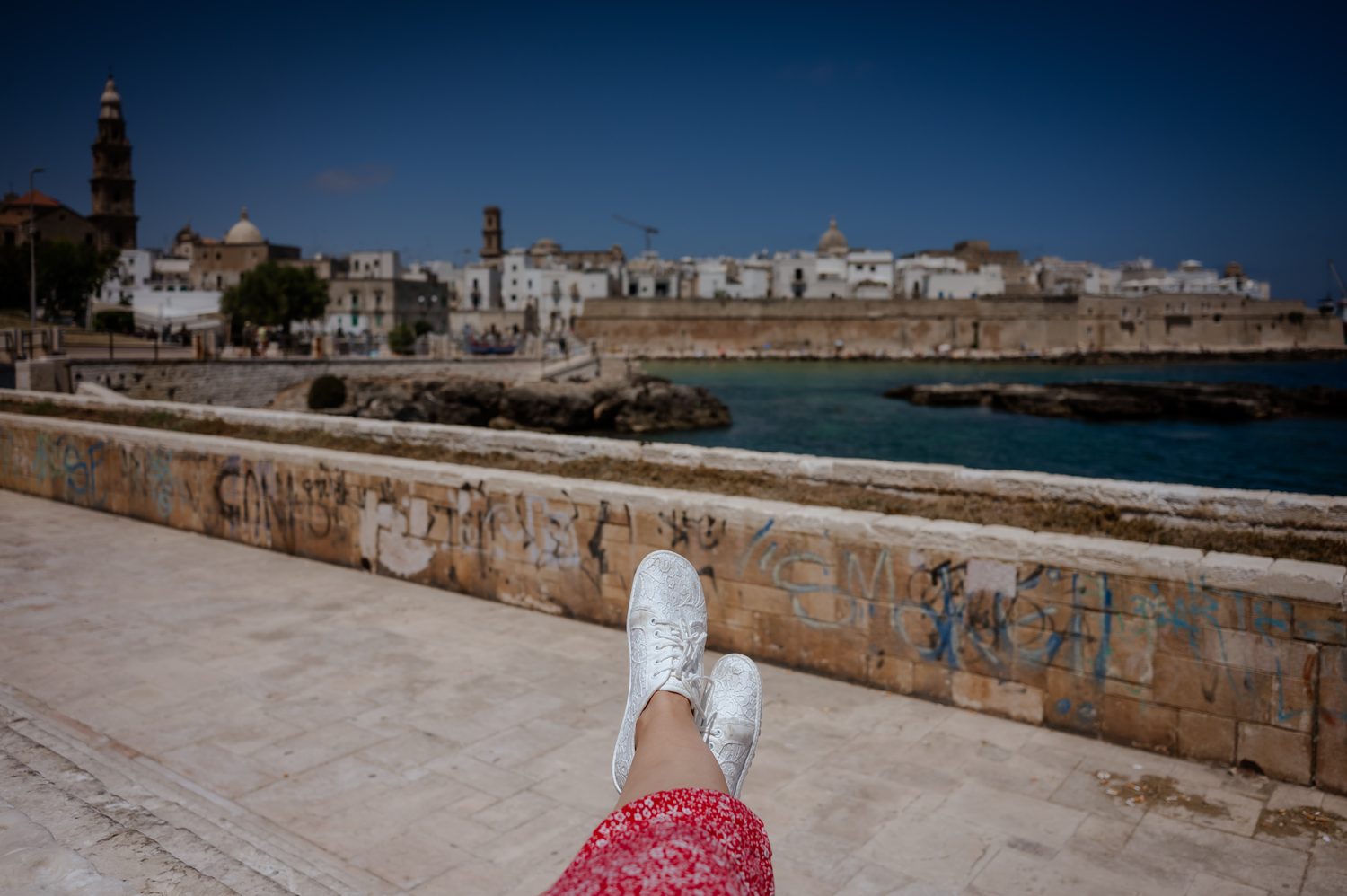
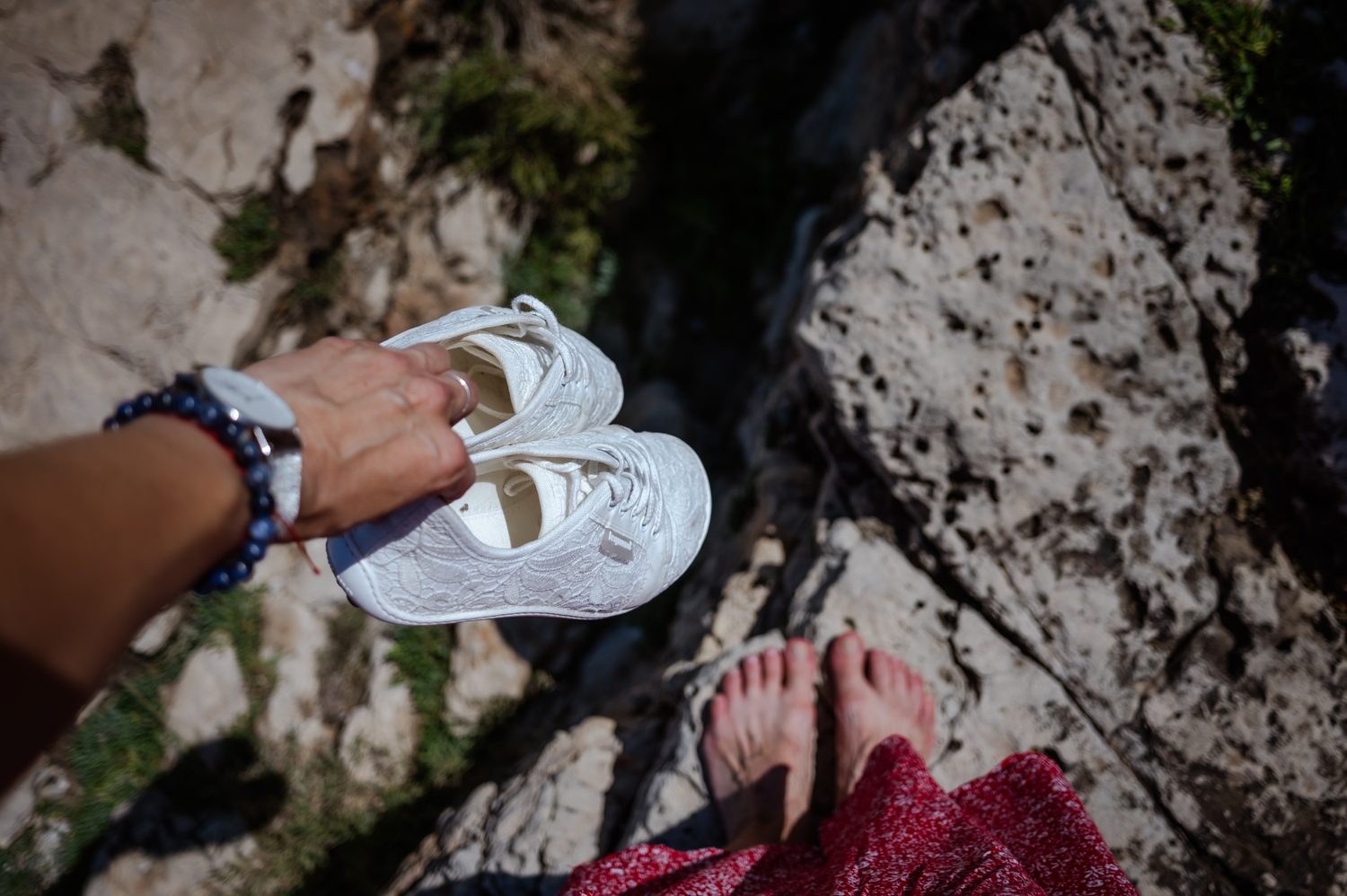
LEGUANO AMALFI White are shoes made in Germany and inspired by Italy. They combine a pleasantly soft fabric with a thin, flexible sole and deliver exceptional comfort.
Putting them on and taking them off is pretty standard – just like any other trainers. But you feel the difference from the very first steps. Even though I’d never worn shoes like this before, I didn’t feel the slightest discomfort at any point. My legs and feet didn’t ache, and I could forget about the blisters I usually get with every new pair of shoes. They fit perfectly, follow both your foot and the ground, and walking in them feels easy and brisk.
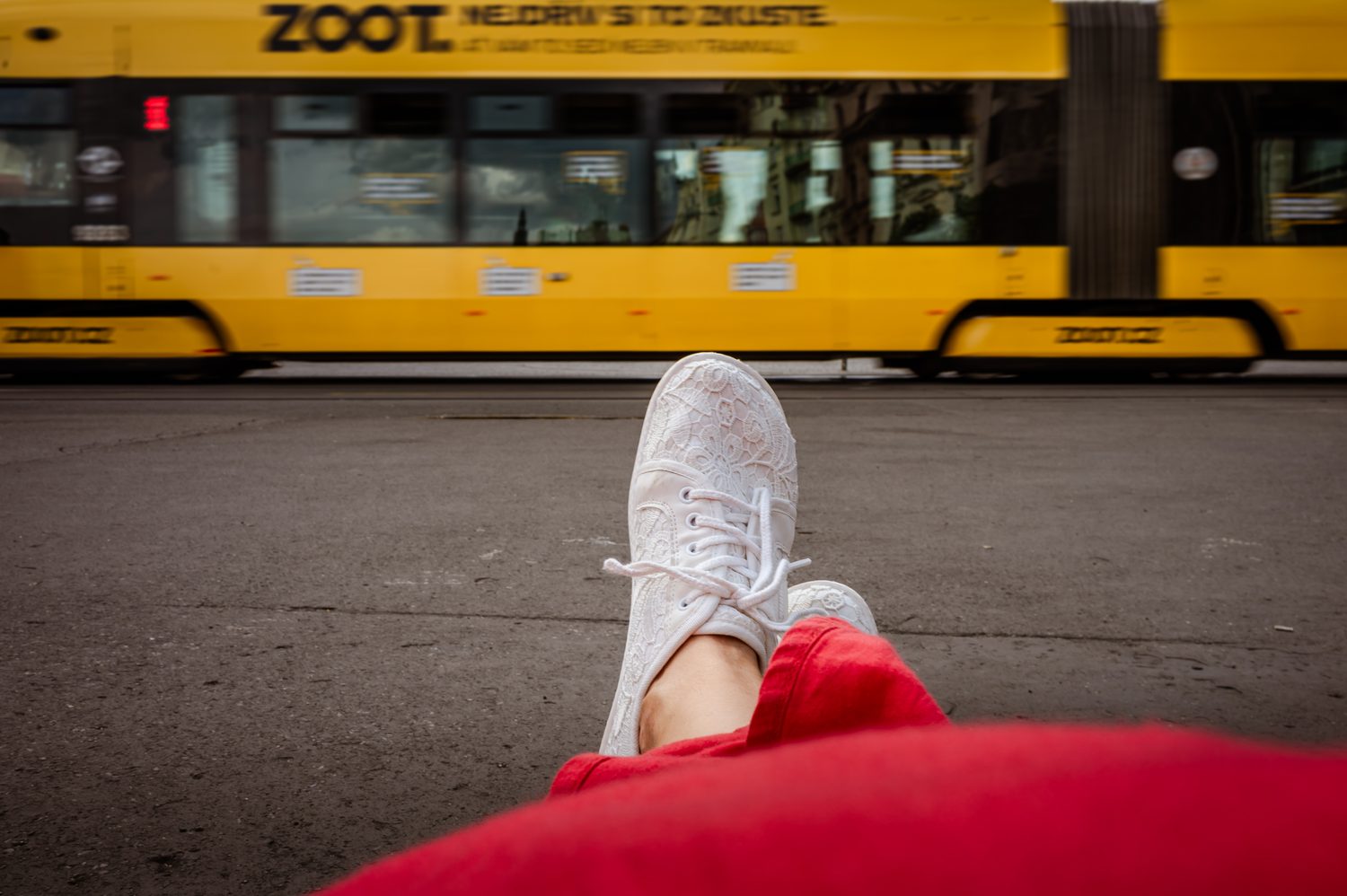
The colourway follows current fashion trends, and the white really does go with almost everything. It’s flattering and elegant at the same time, so you can wear them with jeans just as easily as with a skirt or a dress. Unfortunately, because of the thin sole, these trainers pick up dirt quickly, so they do need washing more often – but that doesn’t damage them in any way.
The delicate lace on the upper looks elegant, but dirt clings to it much more easily. And because the surface is textile, you can’t quickly clean them – for example, with a fast wipe of a damp cloth. There’s simply no getting around the occasional wash.

I picked the trainers up in the shop and, just two days later, headed off with them to southern Italy – specifically Apulia – where I had a week of shooting and travelling around local towns and villages. The forecast promised temperatures above 30 °C, and I was a bit worried about how I’d cope with the trip in completely new shoes – and closed ones at that. In the end, it turned out all my worries were completely unnecessary.
Despite the high outdoor temperatures, I barely felt them on my feet, and even after intensive wear – seven days a week and an average of 25,000 steps a day – I didn’t get a single blister or pressure mark. The amalfi trainers lived up to their name and felt right at home in Italy.
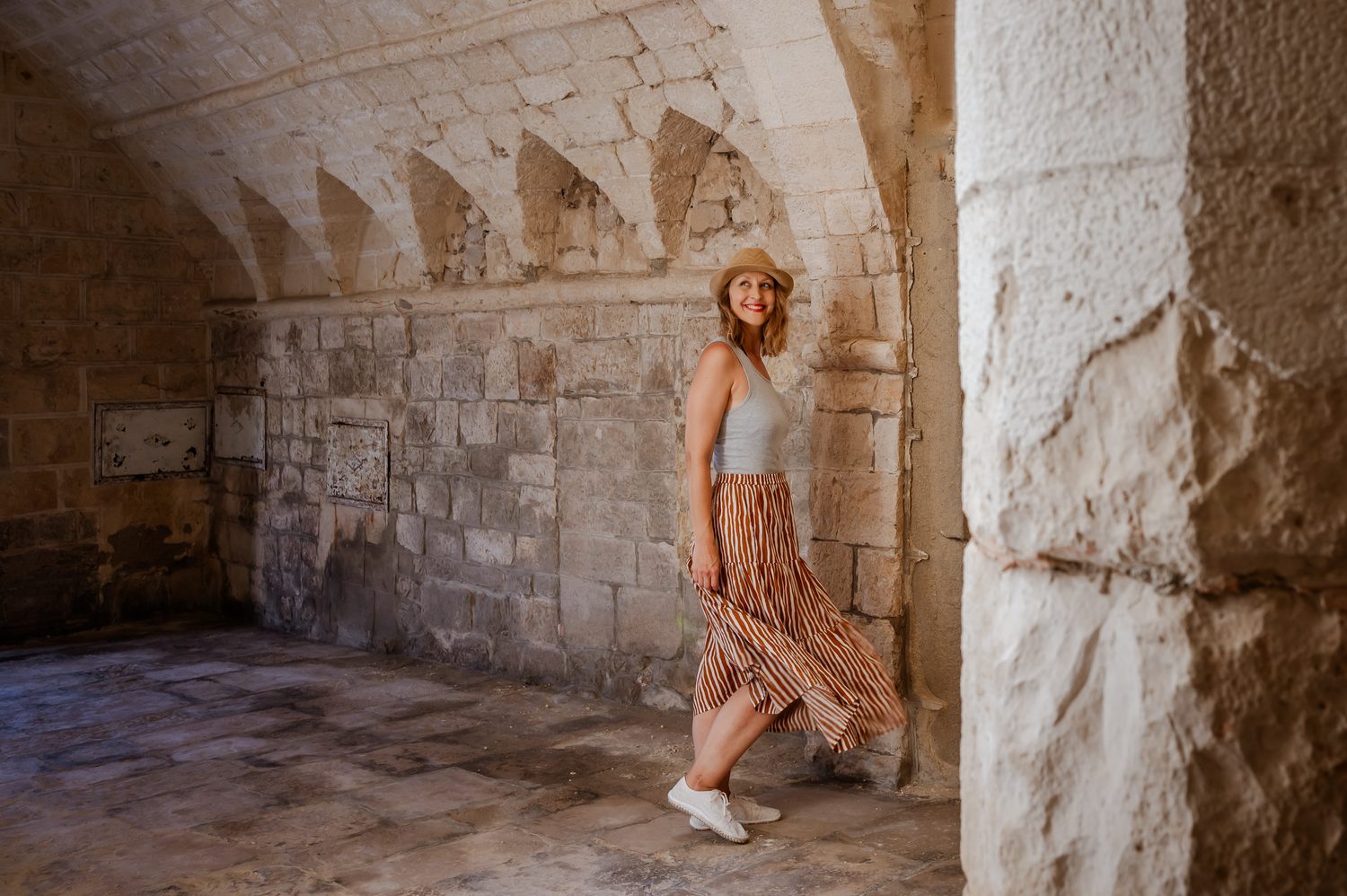
The only minor obstacle was the smooth surfaces of the local city paving – in old towns it’s a bit different from what we’re used to back home. The streets are paved with light stone blocks which, in some busier spots (most often kerbs by crossings), feel more like a waxed floor. The shoes can then slip slightly on them.
They behave similarly on glass paving blocks (this kind of street paving is fairly common in Italy in front of some shops) or on painted wet surfaces (freshly painted crossings and the like). In Prague or other Czech cities, you usually don’t have to deal with this.
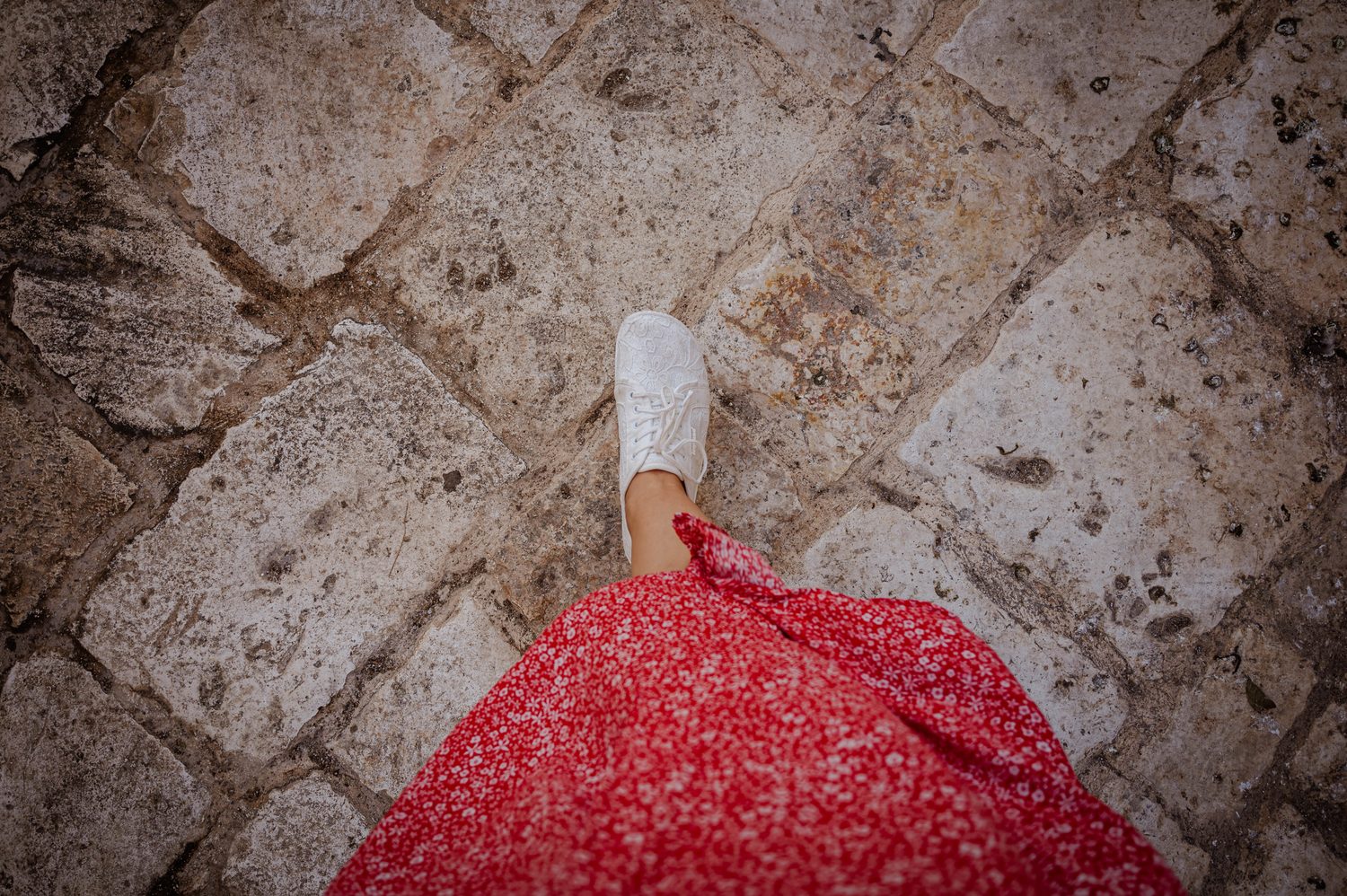
A much bigger difference between running around Apulian villages and Prague was the cleanliness I’ve already mentioned a few times. Because I’m a real walking enthusiast and try to do most journeys within cities – at home or abroad – on foot, that kind of wear unfortunately shows on shoes pretty quickly.
While the centres of old Italian towns are relatively clean, the situation in a busy big city is, of course, different. So while I washed the shoes barely once during my stay in Italy, in Prague they’d deserve a spin in the washing machine after just two days of all-day wear.
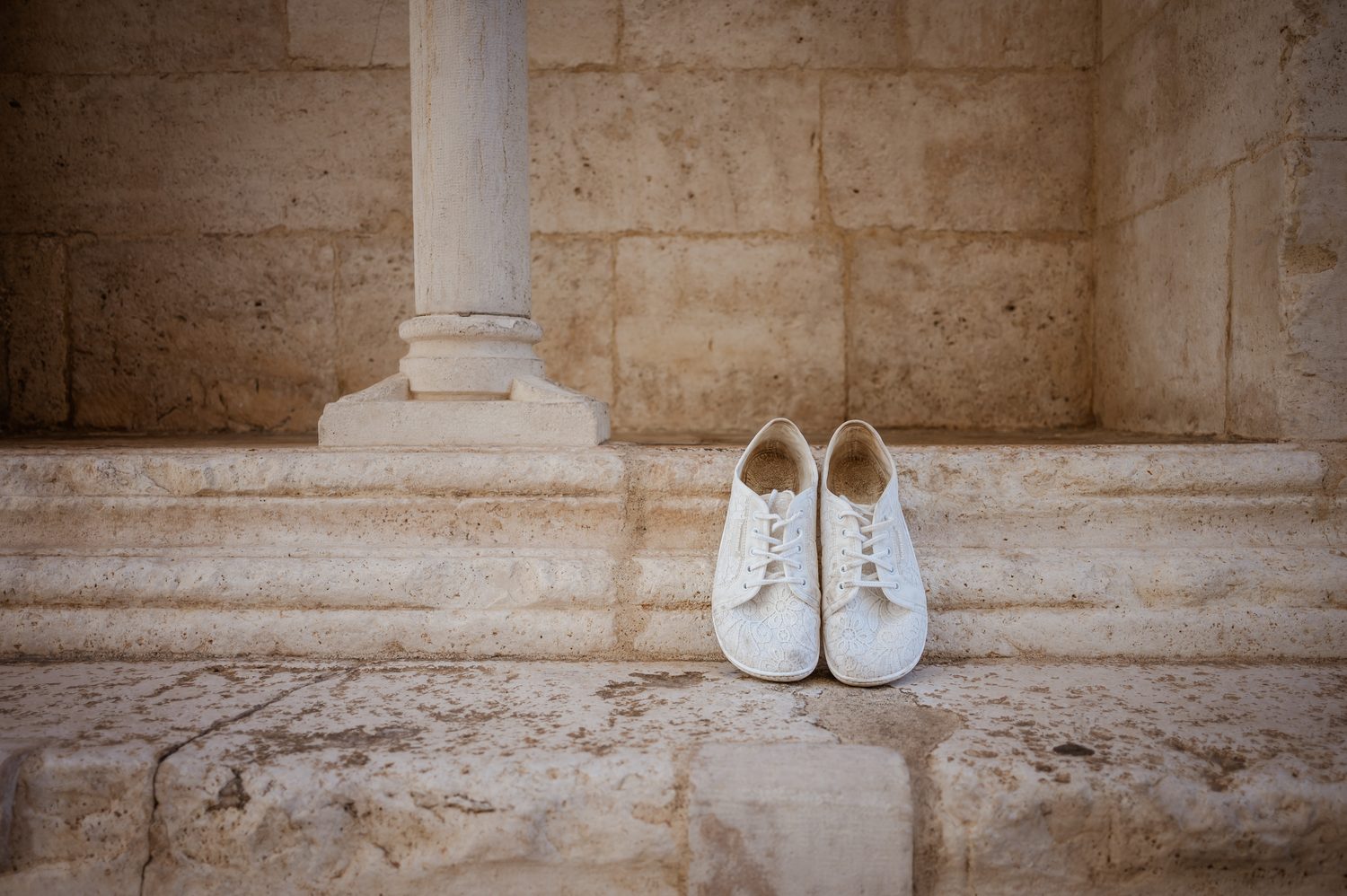
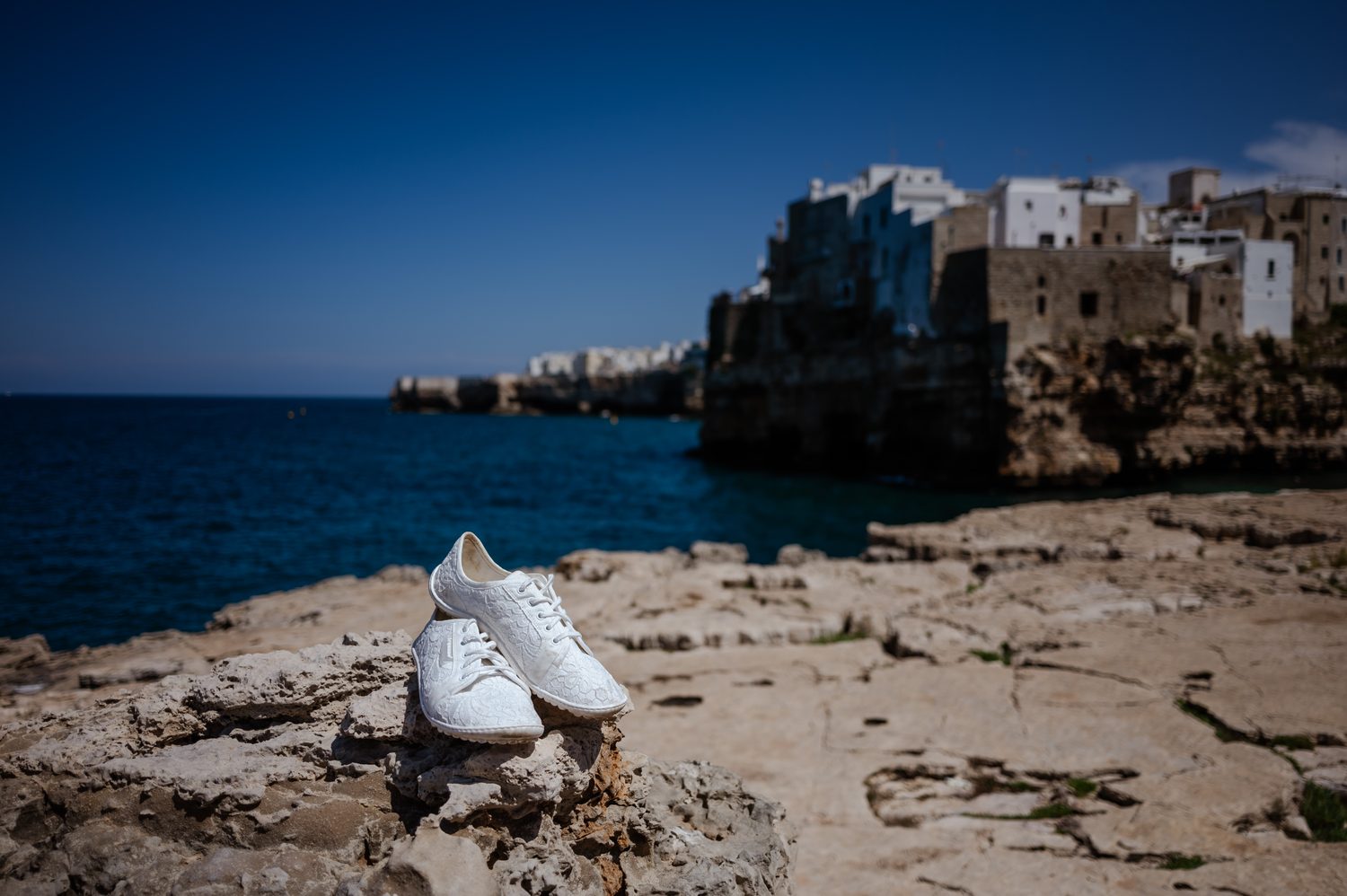
Apulia’s coastline is rocky, beautiful and breathtaking. Of course I couldn’t resist wandering above the sea, and I often left the comfortable, safe lanes of the old towns. Even in that kind of terrain, the shoes didn’t let me down once. The sole gripped the rocks without any issues, didn’t slip, and every step felt secure and steady – I didn’t feel even the slightest uncertainty.
I understand these are city shoes, not hiking footwear, but if you want to nip into more natural terrain now and then on your travels, you can most likely rely on them.
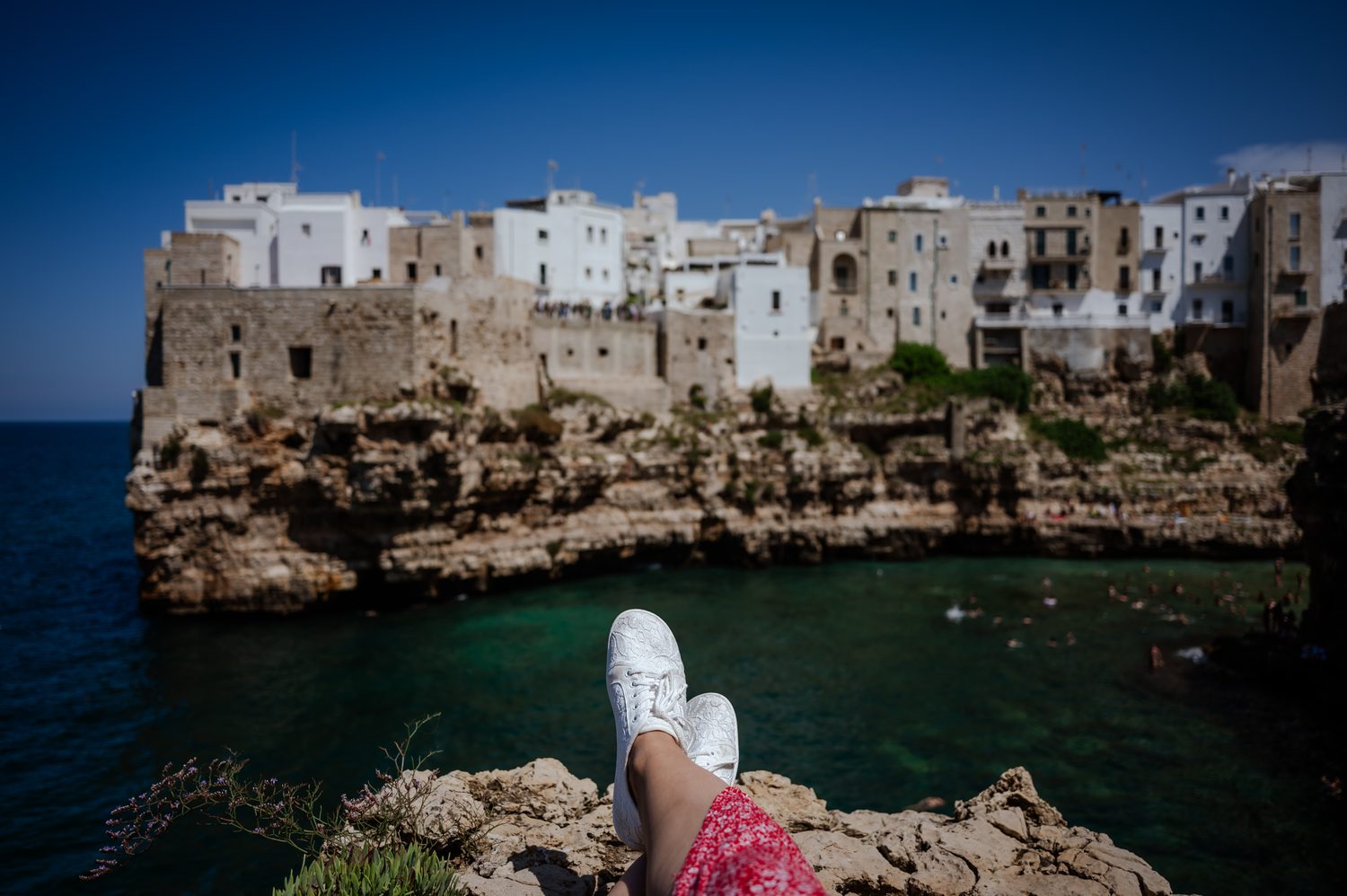
Just as these trainers aren’t hiking shoes, they’re probably not meant for the water either. Still, more than once I found myself having to swim in the sea with them on. When you spend the whole morning walking around the harbour, photographing old weathered fishermen and looking in fascination at their daily catch – including countless sea urchins – you get pretty nervous about entering the sea straight from the rocks.
The towns of Molfetta and Trani, north-west of Bari, sit right on the coast, and you can swim right in the centre of the old town, just below the local churches. Who could resist? At midday, the stone breakwaters turn into a city beach occupied only by locals, but getting into the water from that kind of terrain is definitely more of an adrenaline moment. So I took the risk and walked into the sea over algae-covered boulders – still wearing my trainers.
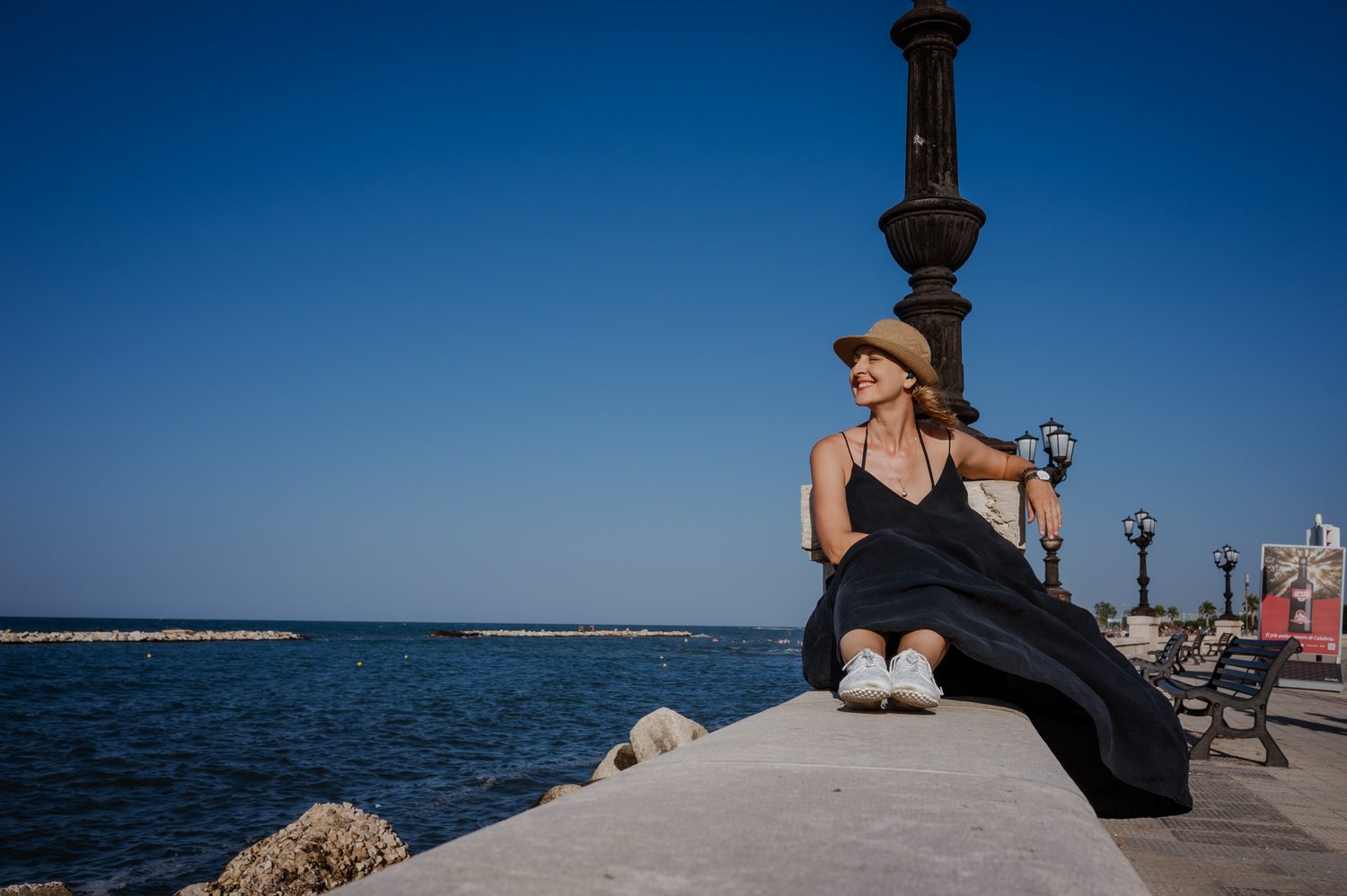
Again: it was as if I could barely feel them on my feet. They helped me get over my fear of sea urchin spines and slippery stones, so I could cool off on hot days without any trouble. The salt water didn’t seem to harm them at all, and after a proper dip their colour was a little closer to white again.
They definitely won’t replace proper water shoes, but in a pinch they can do the job occasionally. And since I haven’t had any luck with rain all summer so far, I tested their water resistance at least this way.
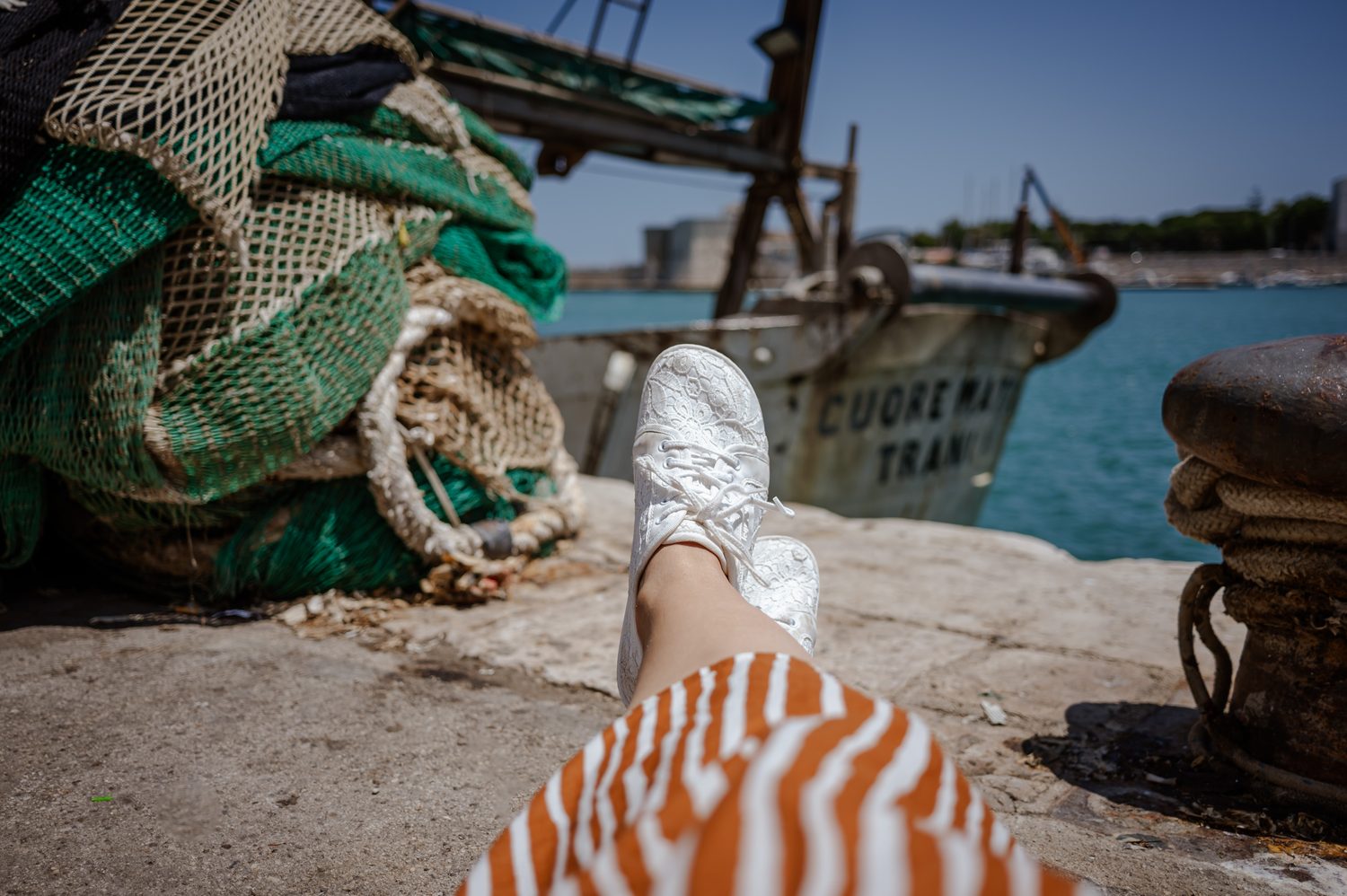
Even though practicality and, above all, comfort always come first for me, sometimes you want to look the part too. In that respect, these shoes do their job perfectly. I wear them into town and to the office, I teach photography in them both in the classroom and out in the field, and I’ll put them on for a trip to the theatre or an exhibition opening as well. In every case, both I and the shoes get plenty of admiration.
They really are a model you can wear with any outfit. And if you’ve got a small flat and an even smaller shoe cupboard, you’ll appreciate that kind of practicality.
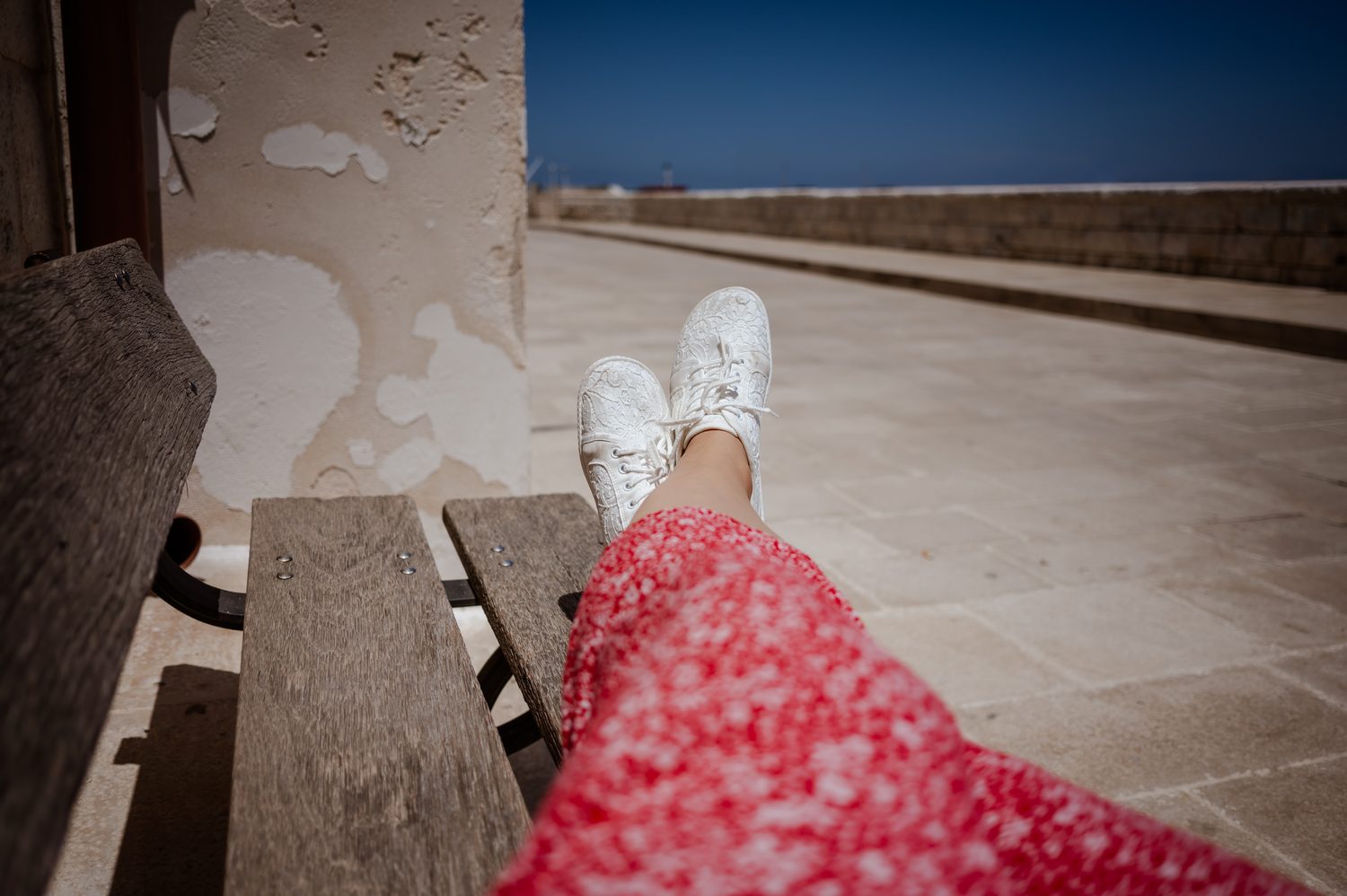
I’m not the type of person who needs different shoes for every outfit. When I fall in love with a model, I can happily walk in it for a whole season – often more than one. This pair is incredibly comfortable, flattering, and I liked them from our very first ‘step’ together.
So I’m hoping that more frequent washing won’t do them any real harm, and that I’ll be able to dash around cities in them right up until the first snow of the year. Because they really are brilliant.
 Johana Kupčáková, originally from České Budějovice, is a graduate of – and since 2013 also an instructor at – the School of Creative Photography in Prague. She has been pursuing photography more actively since 2008. Over that time, she has taken part in several group and solo exhibitions at home and abroad, and her photographs have been published in a number of photography books. In 2012, she received the FotoVideo magazine award Photographer of the Year, her images appeared in the prestigious Nikon calendar, and she is an active member of the global photography community Women Street Photographers.
She was drawn to photography by her second passion – travelling. These two biggest interests are exactly what she tries to connect in her work. Although those around her see her as a versatile photographer, she focuses mainly on humanist photography and scenes from everyday life.


 € - US
 Čeština
 English
 Slovenčina
 Magyar
 български
 Polski
 Dansk
Dansk
 Nederlands
 Svenska
 Suomi
Suomi
 Español
 Français
 Slovenščina
 Română
 Português
 Deutsch (DE)
 Deutsch (AT)
 Deutsch (CH)


