We’ll be happy to help via online chat or at: orders@premiumbarefoot.com

Stories and Brands Selecting and Maintaining Barefoot Shoes Reviews
We tested the insulated leguano husky boots. They meet demanding outdoor requirements, combining comfort and flexibility even in extreme conditions.
Spending winter above the Arctic Circle in barefoot footwear doesn’t exactly sound like the most sensible idea at first. But prejudice aside, leguano husky can handle even seemingly unforgiving frost with ease.
|
Tested model |
|
|
Best for |
light trekking, winter, leisure, city wear |
|
Upper material |
polyurethane |
|
Lining |
synthetic faux fur (polyester) |
|
Sole |
LIFOLIT® |
|
Fit |
suitable for medium to narrower feet |
|
Boot height |
mid (medium) |
|
Colour options |
black |
|
Available sizes |
36–47 |
|
Price |
5 399 Kč |
|
Testing conditions |
Norway and the Pyrenees, winter/spring, down to –20 °C, snow, water, mountains |
|
Manufacturer |
leguano |

The Norwegian city of Tromsø is the world’s third-largest settlement above the Arctic Circle. Thanks to the Gulf Stream, the average temperature in winter months sits at around –4.5 °C, and the record low didn’t even reach –19 °C. Despite a stable snow cover, the weather is highly changeable and temperatures sometimes jump above zero. In Tromsø, I work through the winter as a photographer and Northern Lights guide. In these uncompromising conditions, I put the winter boots LEGUANO HUSKY through a proper test. And I really didn’t go easy on them.
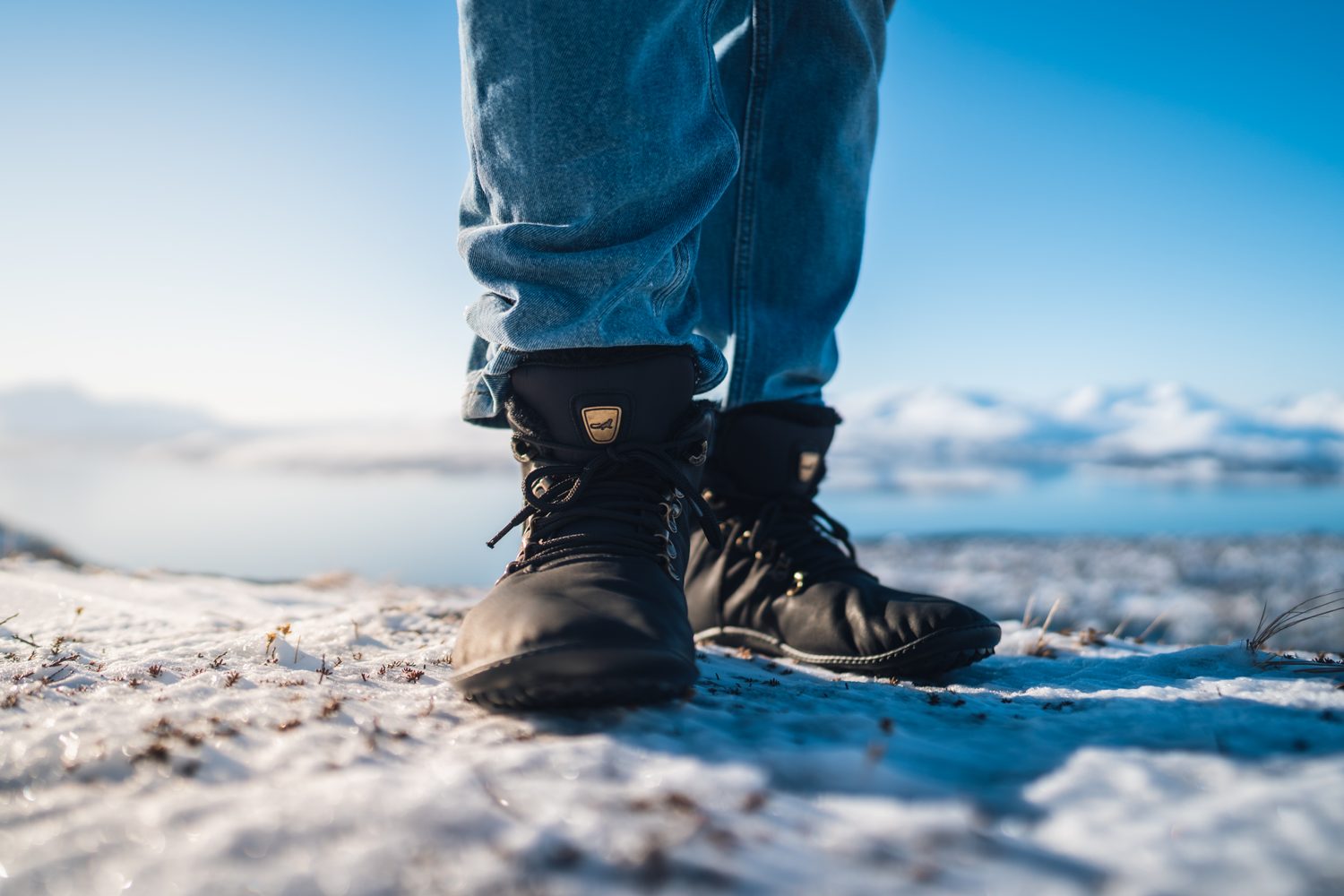
The barefoot shoes LEGUANO HUSKY are primarily designed for autumn, winter and spring. At first glance, they look very thin, which naturally makes you think they can’t possibly be warm enough. Thanks to the insulated lining, however, the opposite is true. The boots also fit comfortably from the very first wear and provide comfort from toes to heels. With the higher cut above the ankles, water has a hard time getting in, and with well-applied waterproofing you don’t need to worry about damp at all.
Pulling them on is easy thanks to the width, and lacing them up is straightforward. Even when tightened firmly, they still feel like cosy slippers on your feet.
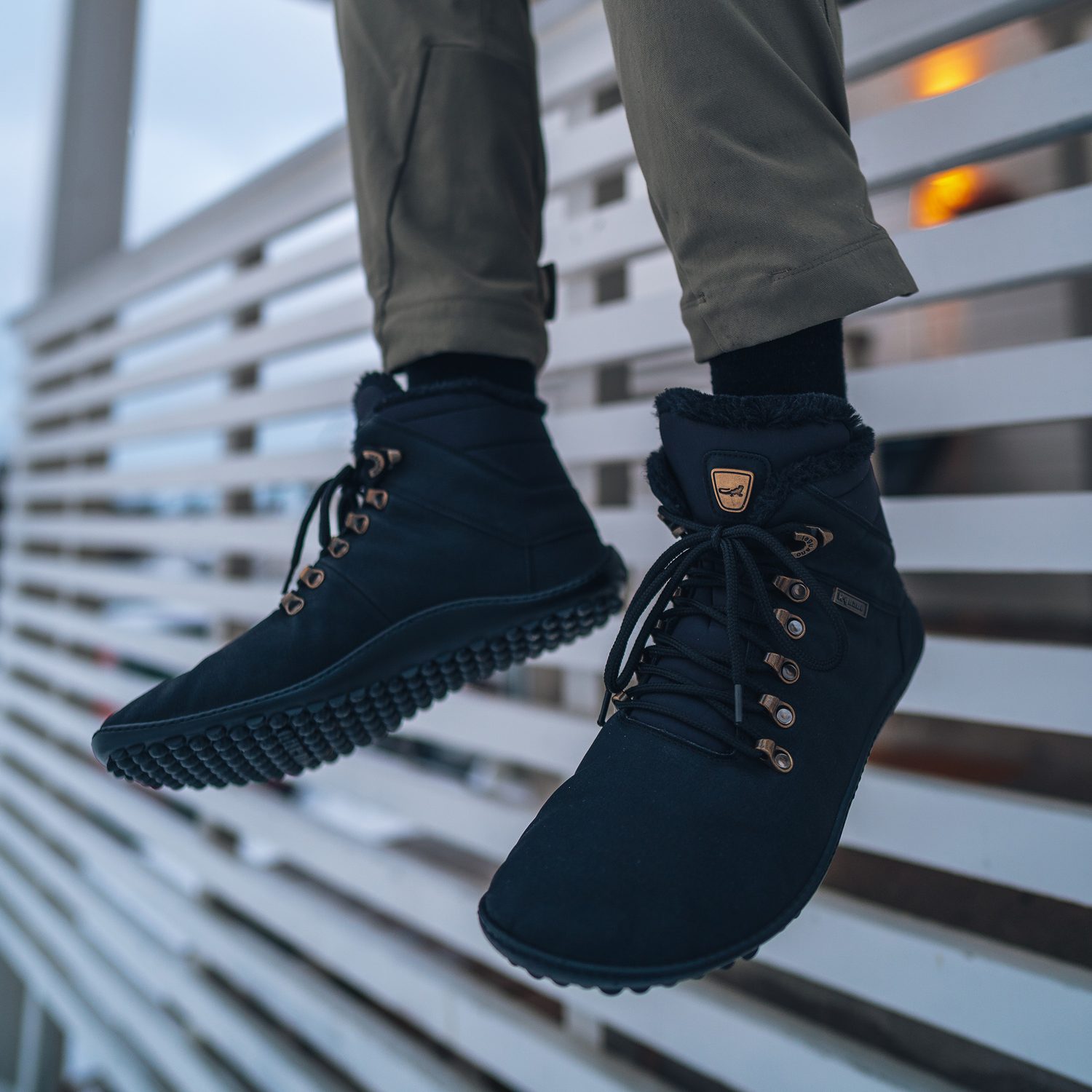
The bubble-pattern sole is very thin while still providing maximum sensory feedback. I often walked tens of kilometres in them and didn’t have the slightest issue with blisters or any other pressure points. I should add, though, that I’m used to long walks, and barefoot beginners will need to build up to that gradually.
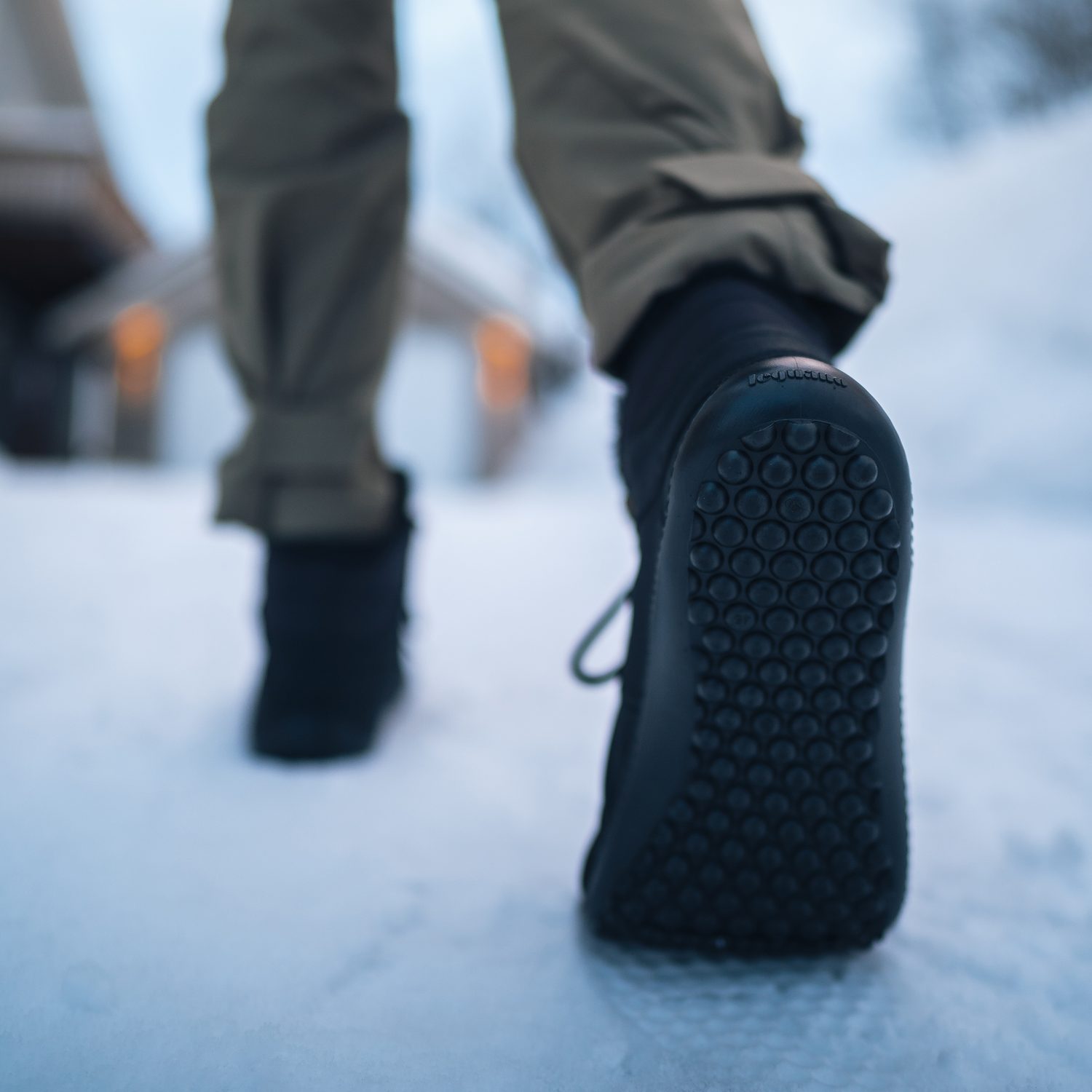
On slippery surfaces the boots, thanks to the unusual tread pattern, hold up fairly reliably. Of course, on smooth ice or wet mud it’s slippery just like in any other shoes, but overall I felt safe in leguano husky.
Thanks to their dark, versatile design, they go with almost any outfit. In the city I felt smart in them, while in the mountains I blended right in with the sporty crowd. Visually, the versatility is absolutely spot on.
In these remote corners of our planet, I work as a photographer and Northern Lights guide. In practice, that means spending long nights outdoors – definitely the coldest part of the day. Depending on the weather, we go to watch the aurora either along the coast or further inland. By the sea, temperatures are more forgiving, and the biggest enemy is mainly salt water. A few times, through sheer inattention, I let a small wave wash over my boots. With a well-waterproofed upper, that’s not a problem, although in general it’s better to avoid salt water where possible.
Inland along the Finnish and Swedish borders, temperatures can drop extremely low and at around minus twenty degrees, standing outside for a long time is anything but pleasant. You could certainly reduce the cold with a thicker insole, but I’m not sure it would be enough to keep your feet truly warm. Over time, I’ve built up a certain tolerance to cold coming up through the soles.
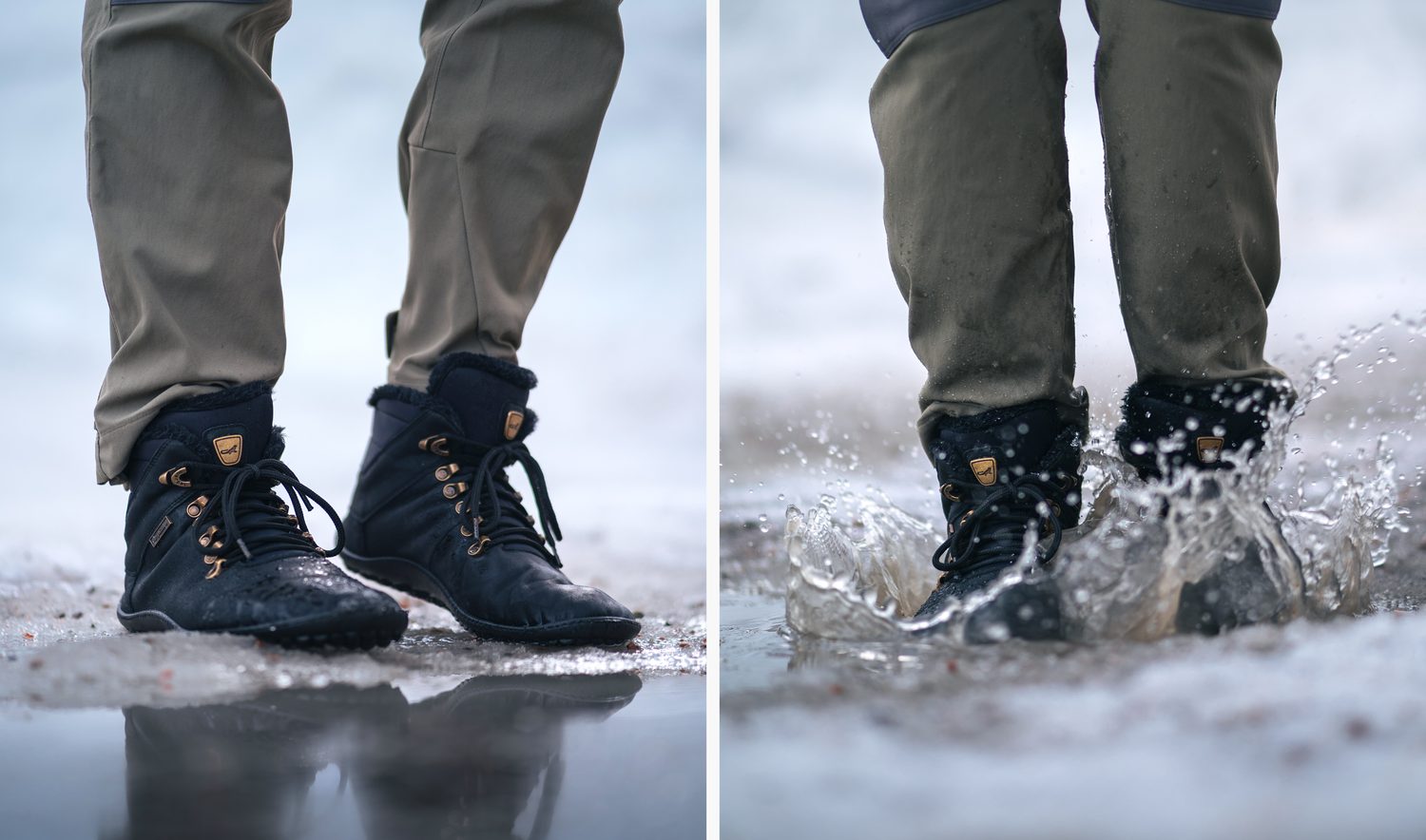
When a thaw did arrive, the streets of Tromsø suddenly turned into a paddling pool. Throughout, I was genuinely pleasantly surprised by how reliably these boots kept water out from the outside.
More than anything, though, I enjoyed the irreplaceable comfort, which I don’t think I’ve felt so strongly in any other shoes.
In April 2022, I headed off for a short visit to the Spanish Pyrenees. At an altitude of 2,000 m and above, there was still more than a metre of snow, which I honestly wasn’t expecting. Hiking routes at those heights were geared mainly towards ski tourers and people on snowshoes. I obviously belonged to neither group, so there was nothing for it but to somehow manage in barefoot shoes.
Back then, I could have had anything on my feet and I still wouldn’t have stayed dry. Around 25 km, sometimes knee-deep in snow – and in the end I still wouldn’t hear a word against the comfort of my LEGUANO HUSKY.
That experience convinced me that even seemingly casual boots can cope with more extreme conditions with ease.
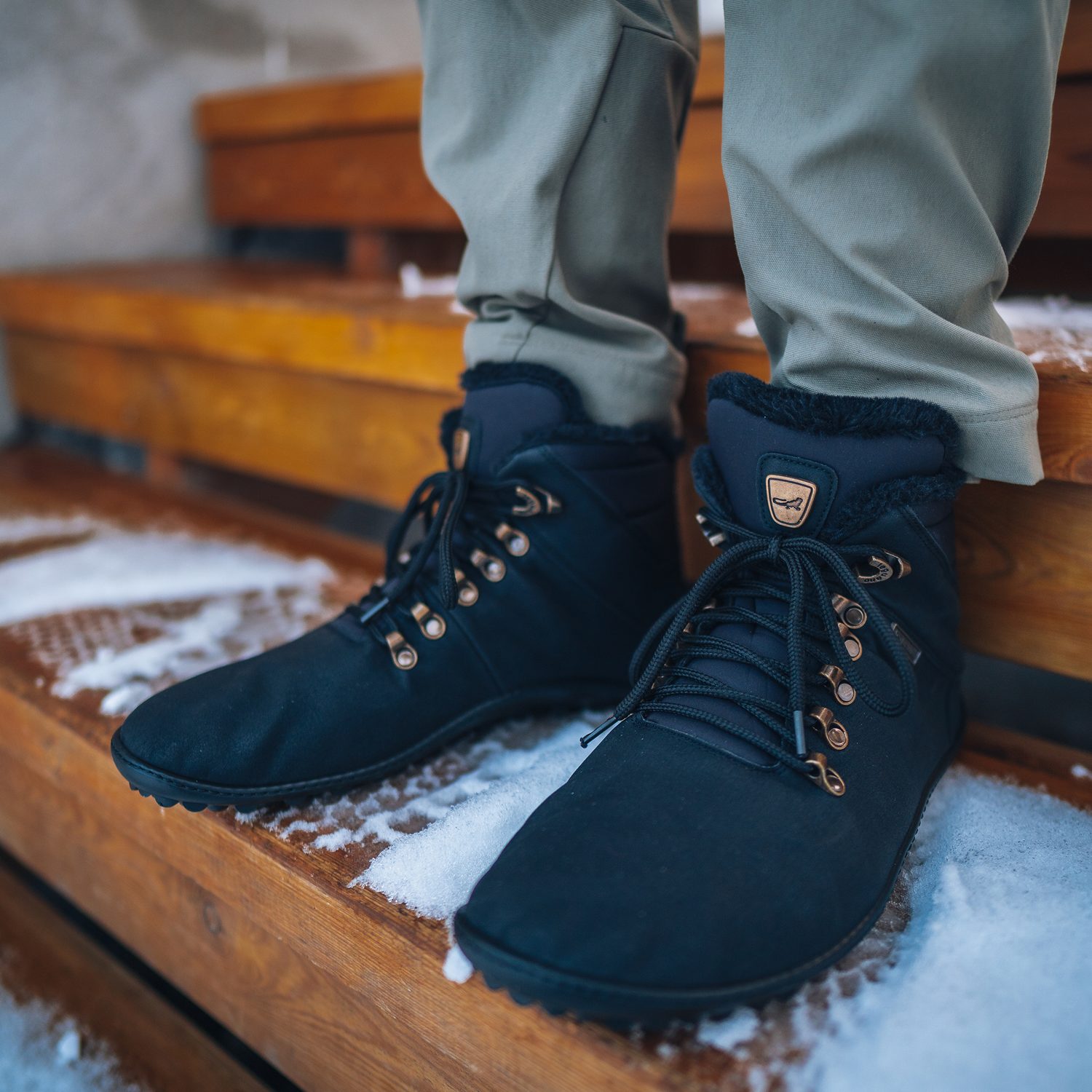
Minimalism has been my personal obsession for many years. The fewer things I own, the freer I feel – and when I do decide to add something material to my life, I insist on quality. The barefoot boots LEGUANO HUSKY certainly didn’t disappoint. I love their elegant, well-thought-out style and, as a constant traveller, I also appreciate the low weight and brilliant packability.
For extremely freezing conditions, I’d rather consider warmer footwear, but for everyday winter use they meet all requirements brilliantly. I also appreciated that in heated indoor spaces I had no issues with sweaty feet. On slippery surfaces they grip impressively thanks to the distinctive sole design, and whether in the city or in the mountains, they simply look great.
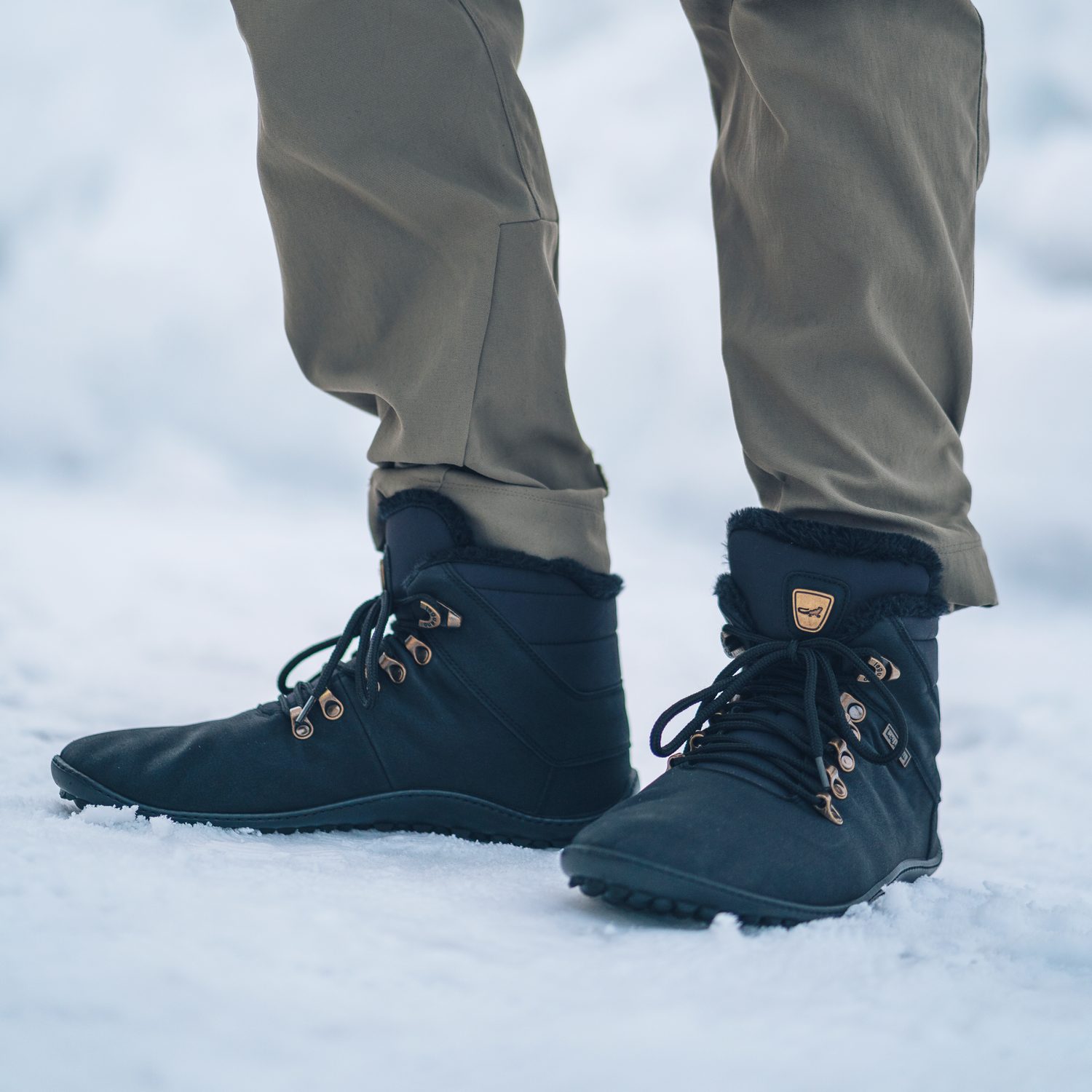
From the first time I put them on, I knew we’d get on brilliantly.
 The barefoot leguano husky were tested by Marek Rybář. A passionate traveller, professional photographer and guide, extreme minimalist and lifelong backpacker. With a love of nature, he most often seeks out Nordic and mountainous countries, where he enjoys breathtaking landscapes and the ever-present silence. In his spare time, he also writes a blog about his adventurous travels. Over winter he guides tourists to see the Northern Lights in northern Norway, and for the rest of the year he focuses on photography and workshops.


 € - US
 Čeština
 English
 Slovenčina
 Magyar
 български
 Polski
 Dansk
Dansk
 Nederlands
 Svenska
 Suomi
Suomi
 Español
 Français
 Slovenščina
 Română
 Português
 Deutsch (DE)
 Deutsch (AT)
 Deutsch (CH)

