We’ll be happy to help via online chat or at: orders@premiumbarefoot.com

Selecting and Maintaining Barefoot Shoes Walking, Movement and Health
Does a thin sole in barefoot footwear mean cold feet in winter? Quite the opposite. Thanks to toe space and freedom of movement, your feet regain their natural thermoregulation.
Are you worried what icy temperatures might do to your feet in barefoot shoes? When you look at that thin sole, it’s only natural to have a few doubts. But we can reassure you: even in barefoot shoes, you’re not at risk of frostbite in bitterly cold weather. With a little winter prep, even temperatures well below zero won’t stop your feet from doing what they’re meant to do.
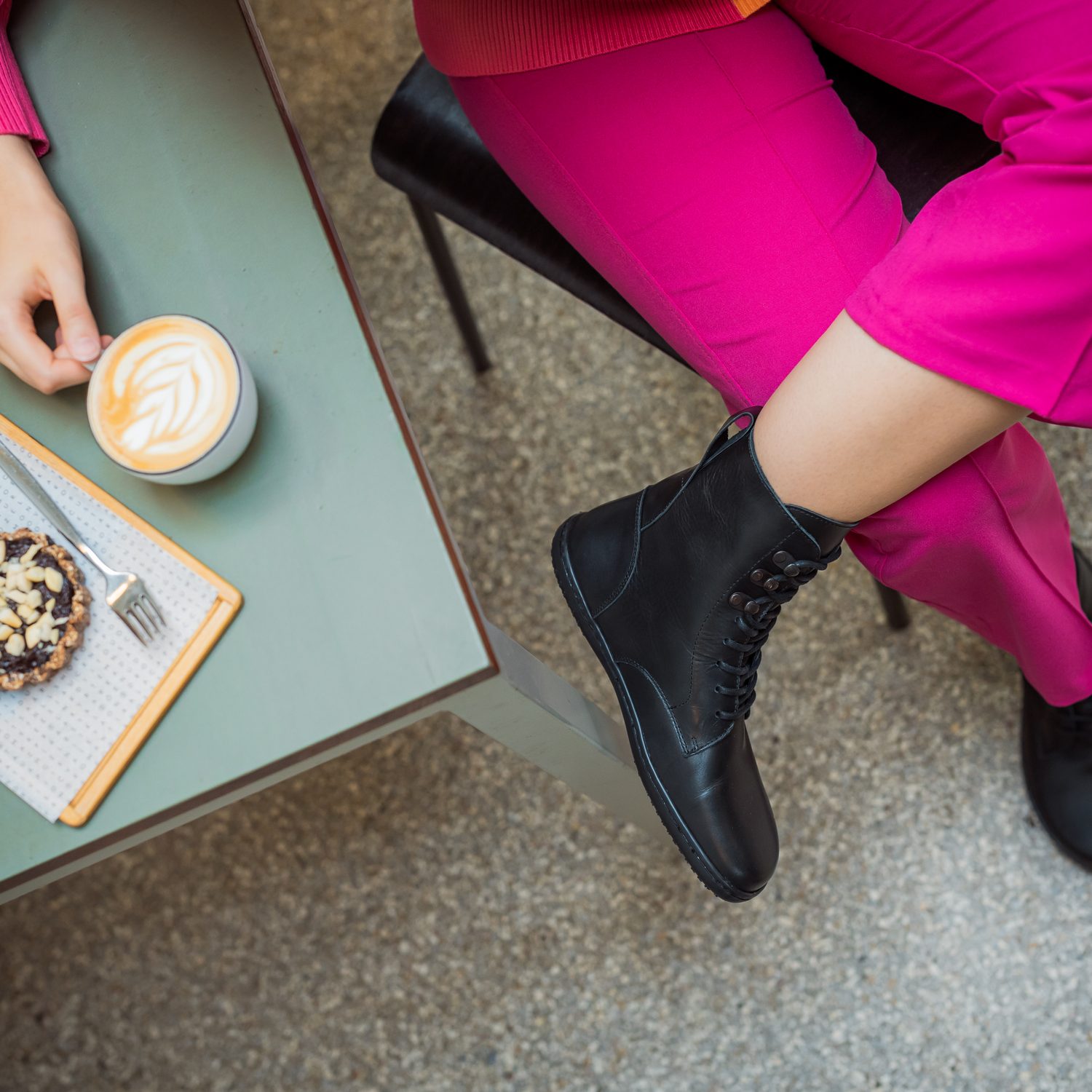
It doesn’t really matter whether you’re buying winter boots, sandals or trainers. The rule is always the same: barefoot shoes should feel light as a feather. As well as following the natural shape of your foot, they’re defined above all by their “special” sole— and that’s what we’ll pause on for a moment.
Barefoot shoes not only have no heel, but their sole is completely flat and very thin (usually 3–5 mm). That makes it nicely flexible and allows your feet to feel the ground beneath you much better as you walk.
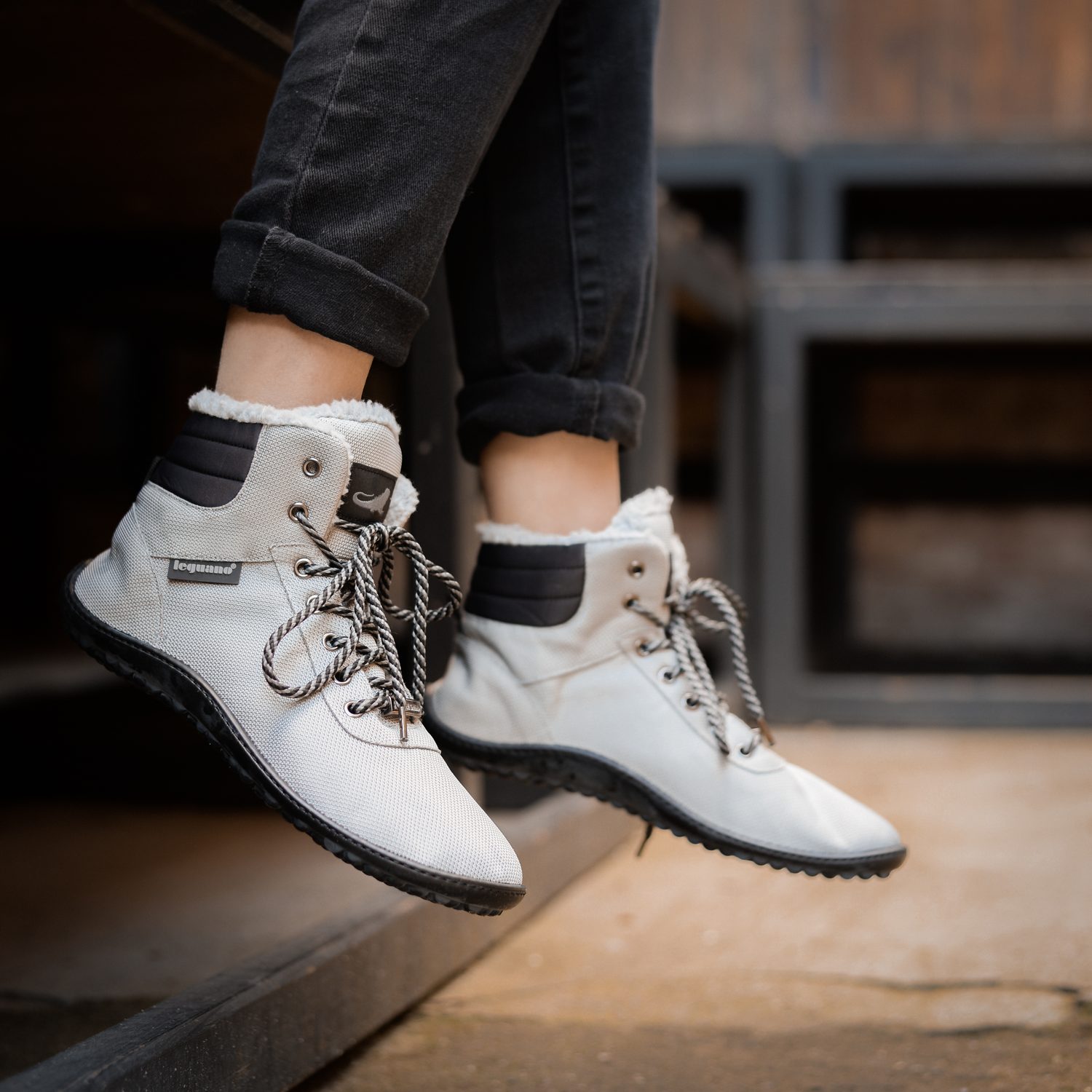
Conventional shoes are stiff and have thick soles. Compared to barefoot shoes, they’re narrow and squeeze the foot into an unnatural shape. That means your foot can’t properly sense uneven ground, and it also can’t move or get good circulation naturally as you walk. So it’s no surprise you start feeling cold much sooner.
And when you add the fact that we often wear warm socks in furry-lined winter boots, it’s fair to say our feet have become a bit pampered.
Without proper activity, your feet simply won’t warm up on their own. But once you switch to barefoot shoes and learn how to walk in them correctly, your feet can regain their natural ability to regulate temperature — and you won’t be cold on your walks.
When you walk, the foot muscles are far more active thanks to shoes that give them enough space, so they can move freely. This stimulates circulation, your feet get nicely warmed through, and they become a source of heat in their own right.
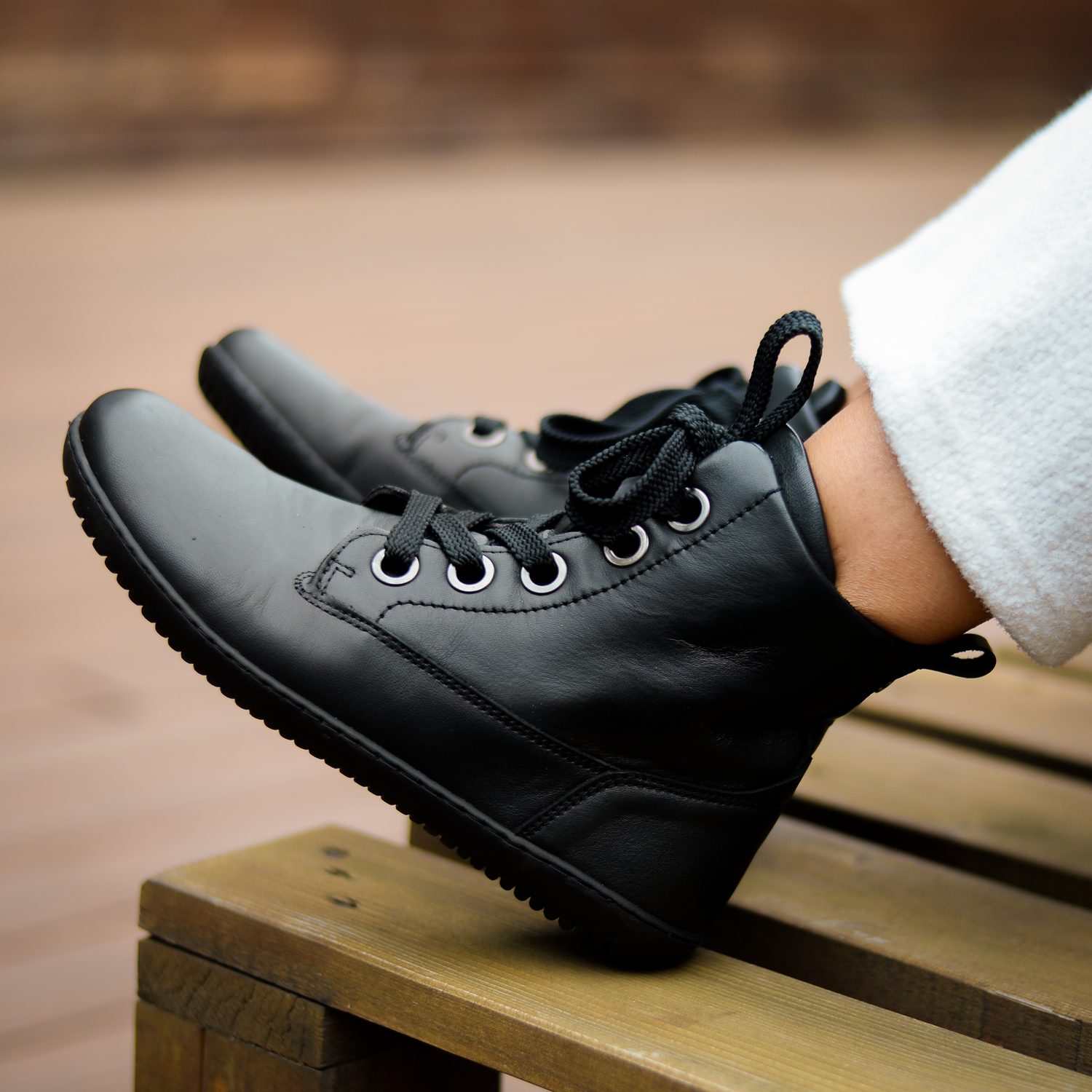
Of course, having just a few millimetres between your feet and the ground does mean there’s a higher chance you’ll feel the cold from below—especially if you’re standing still for a long time. For example, waiting 30 minutes at a bus stop during a wet, slushy January spell. When you’re standing in one place, the muscles in your feet are resting, they can’t generate warmth, and they cool down faster. In that situation, it’s definitely not a good idea to stand completely still.
You can keep your feet active with simple exercises — shift your weight from toes to heels, circle your ankle, or gradually lift and spread your toes.
So how do you know your feet are really suffering? The first warning sign is that your feet—especially your toes—start to feel a bit numb. That happens because the blood vessels constrict in response to the cold. When you take your shoes off, you may notice your feet have lost their natural pink colour (again due to reduced circulation) and have turned pale.
All of these are signs your feet need warming up.
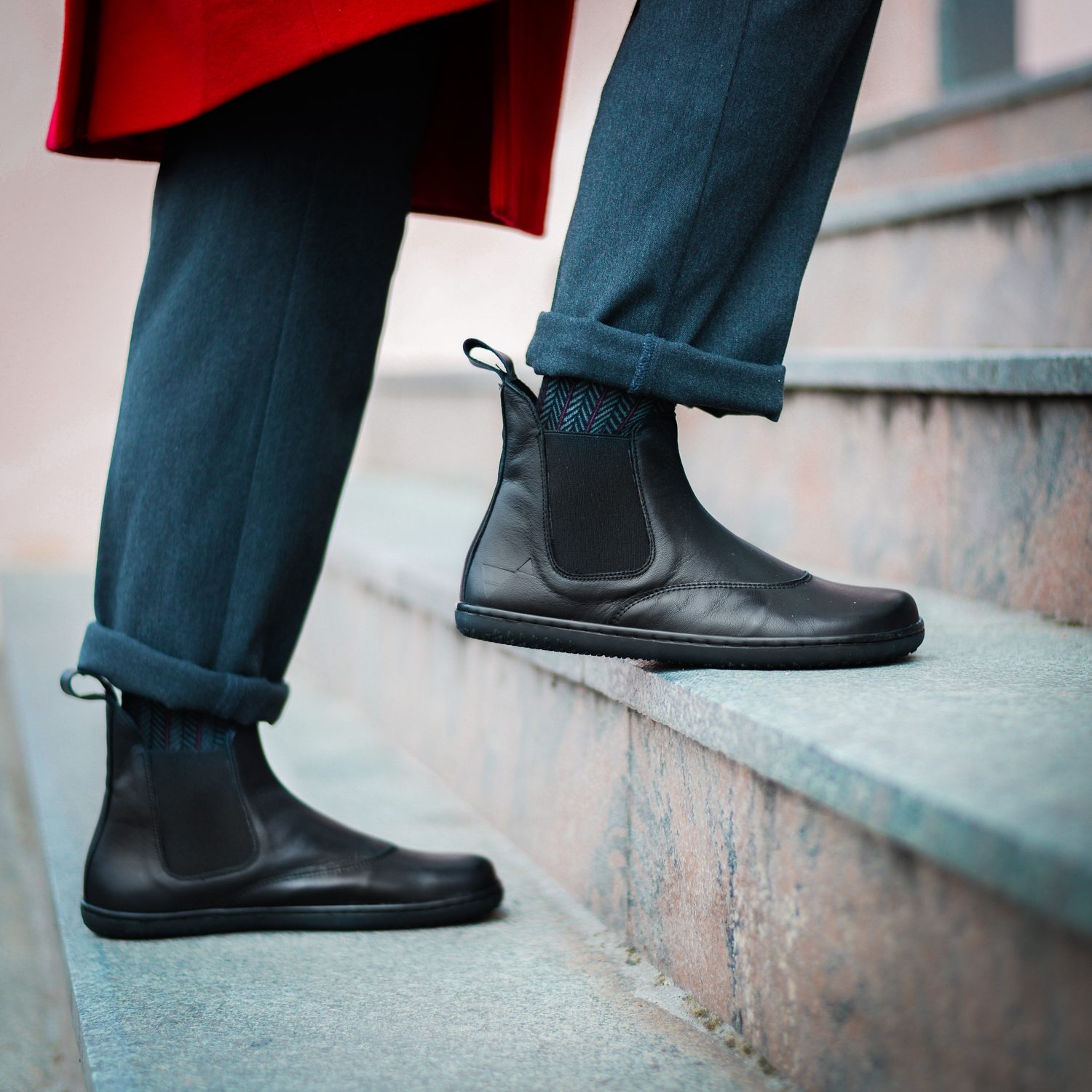
You don’t have to give up barefoot shoes in cold weather. Some people can wear trainers all winter—just like someone else will happily wear shorts when it’s around freezing. But most of us cope less well below 0 °C, and we can’t always rely on something like the car heater to warm us up.
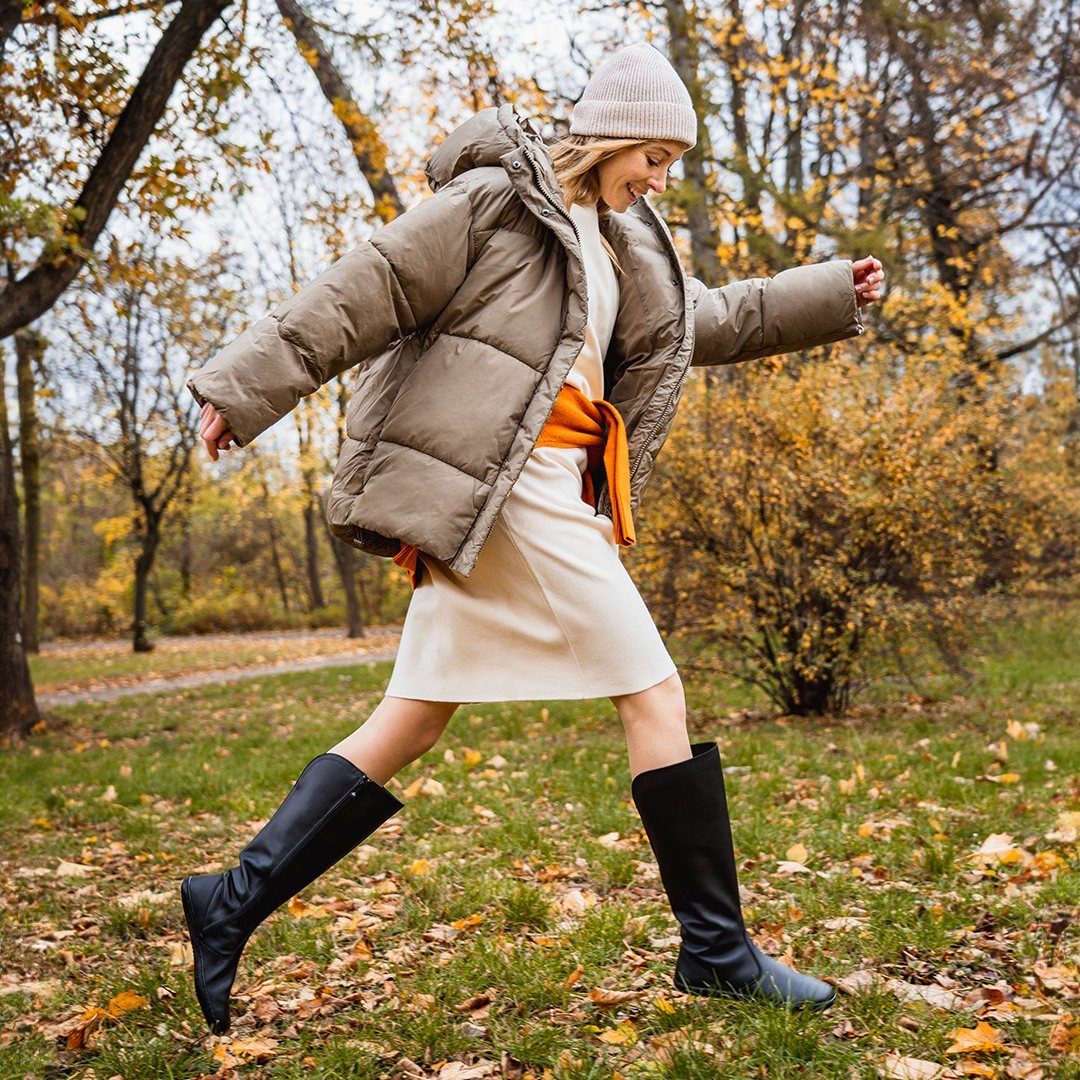
Winter barefoot shoes are usually above the ankle, because a lot of heat escapes from the body around the ankles. Women can also choose from barefoot knee-high boots from several brands.
Many models are also available insulated — with genuine shearling, faux fur, or a warm lining with a membrane.
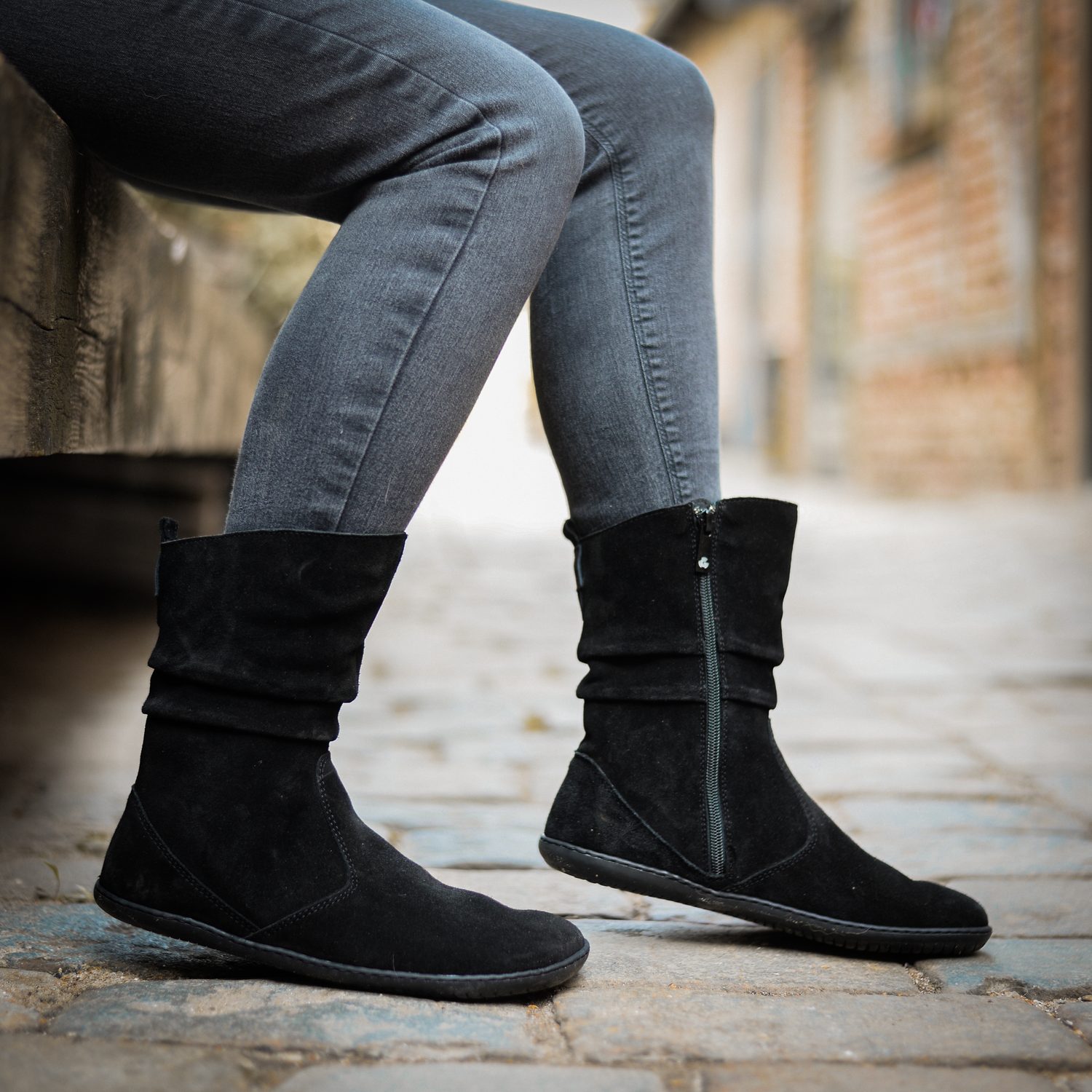
You already know how to measure your foot properly— but let’s pause for a moment on toe allowance. For anyone who’s not sure: toe allowance is the extra space at the front of the shoe that lets your foot work properly as you walk. For adult shoes, it should be around 5–10 mm, and for children’s shoes 9–12 mm. When you’re buying winter boots, don’t forget to leave room for warm socks and, if needed, a thermal insole too.
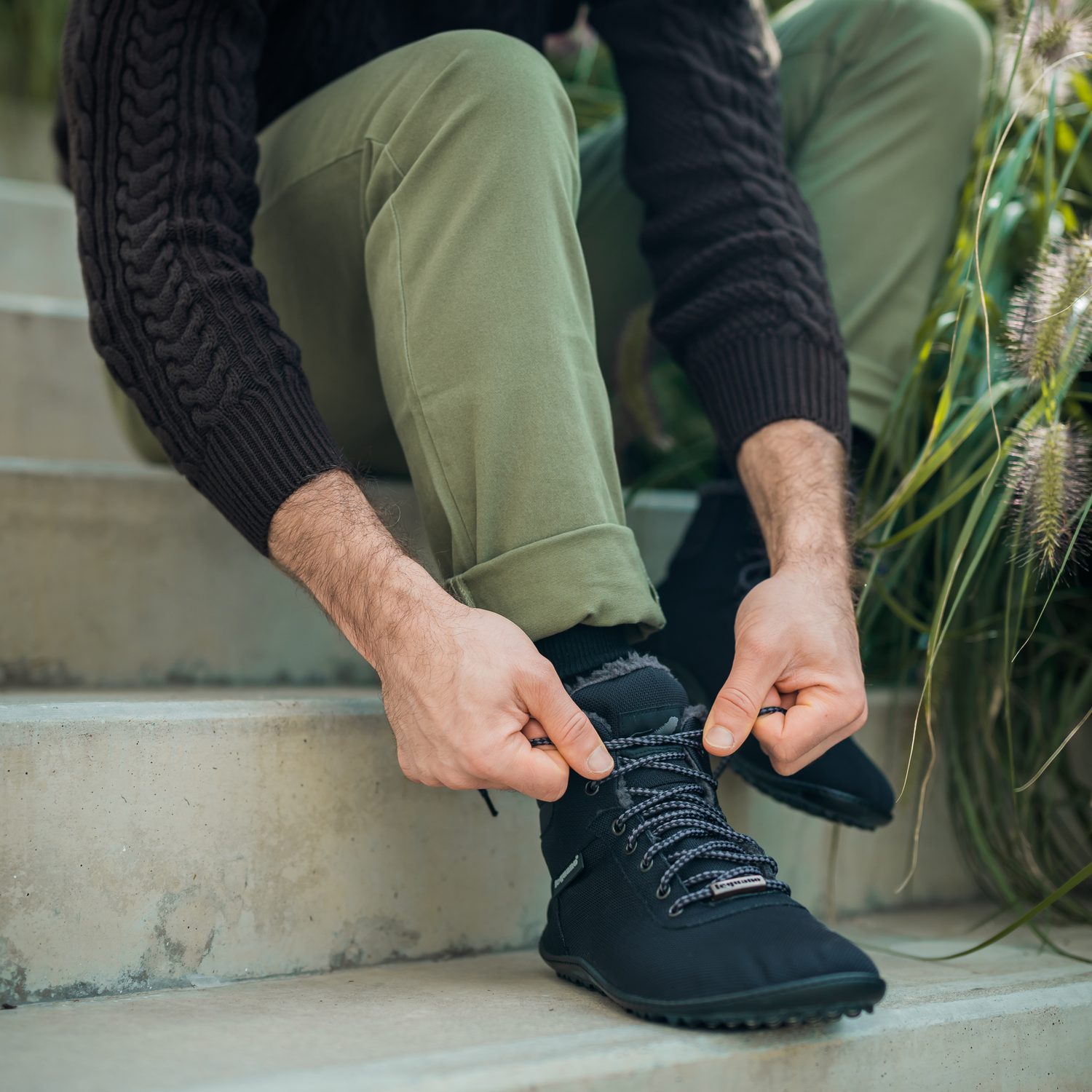
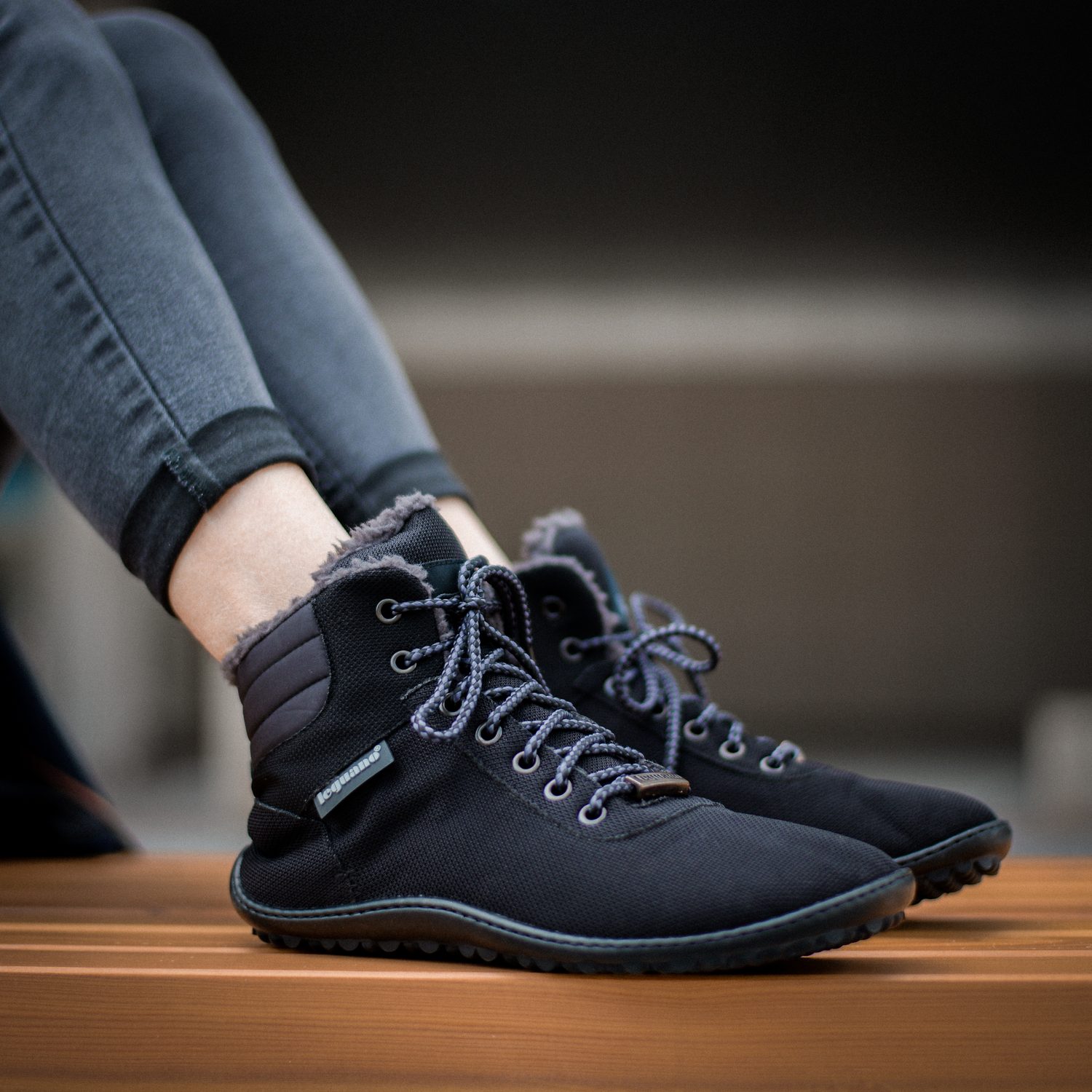
You’ll fall in love with LEGUANO HUSKY from the moment you put them on. The signature sole is fully flexible—just like the whole shoe—and the comfort is second to none. Combined with water-repellent material and a warm faux-fur lining, they’ll handle winter trips in the snow too. A great alternative you can wear from autumn through to spring are the LEGUANO KOSMO or ICEBARE models. For a milder city winter, the low-cut insulated LEGUANO GALAXO will do the job.
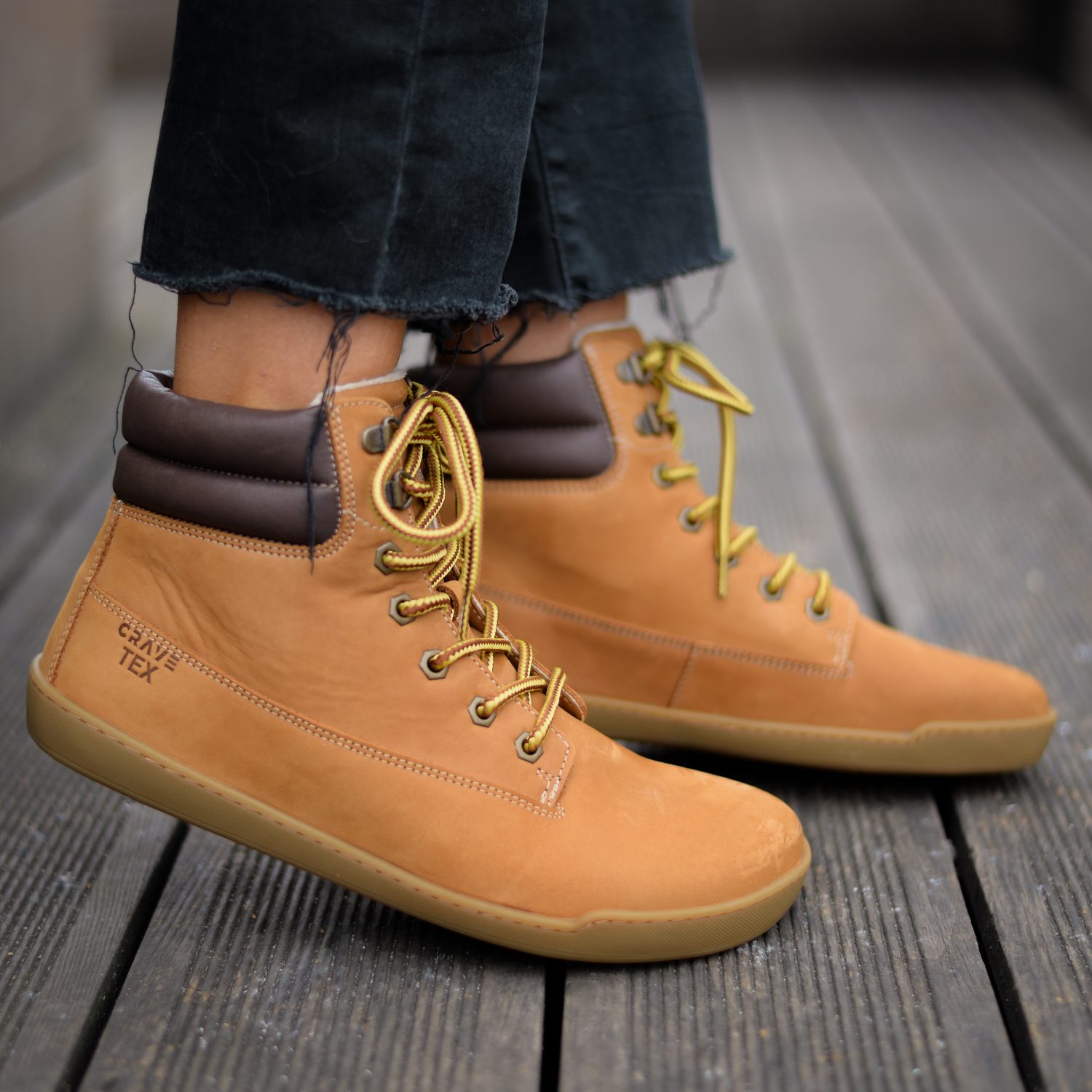
Our own brand CRAVE brings you high-quality winter barefoot shoes for children and adults, combining comfort, style and practicality. You’ll find leather insulated models with a membrane or wool for adults, as well as leather shoes, snow boots and winter soft-sole booties for children.
GROUNDIES shoes don’t compromise between style and comfort. Whether you go for boots or lace-up styles, you won’t regret it. For anyone who wants to look on-trend with every step, we also have stylish Chelsea boots. And good news for men—GROUNDIES also offers men’s winter models that combine comfort with durability.
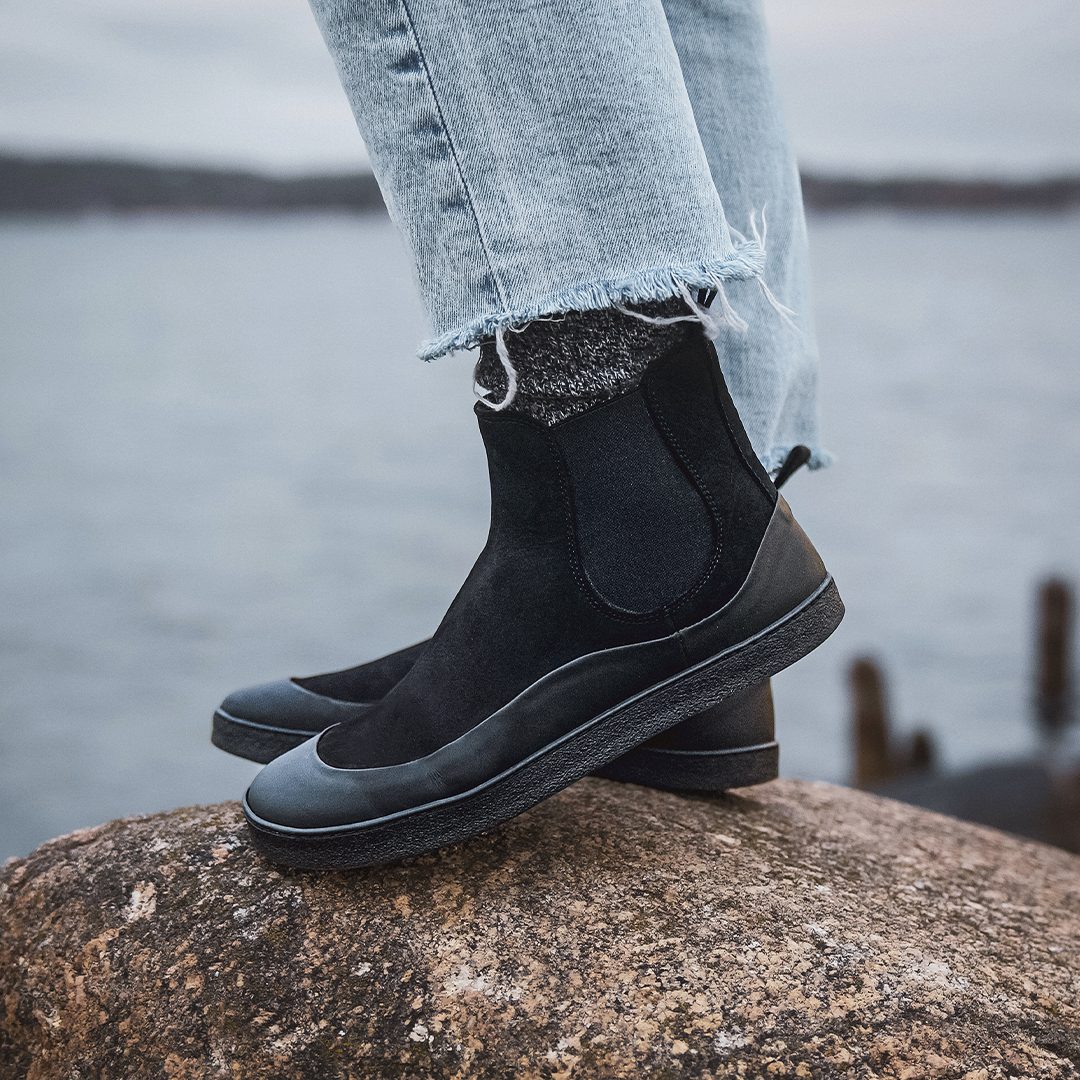
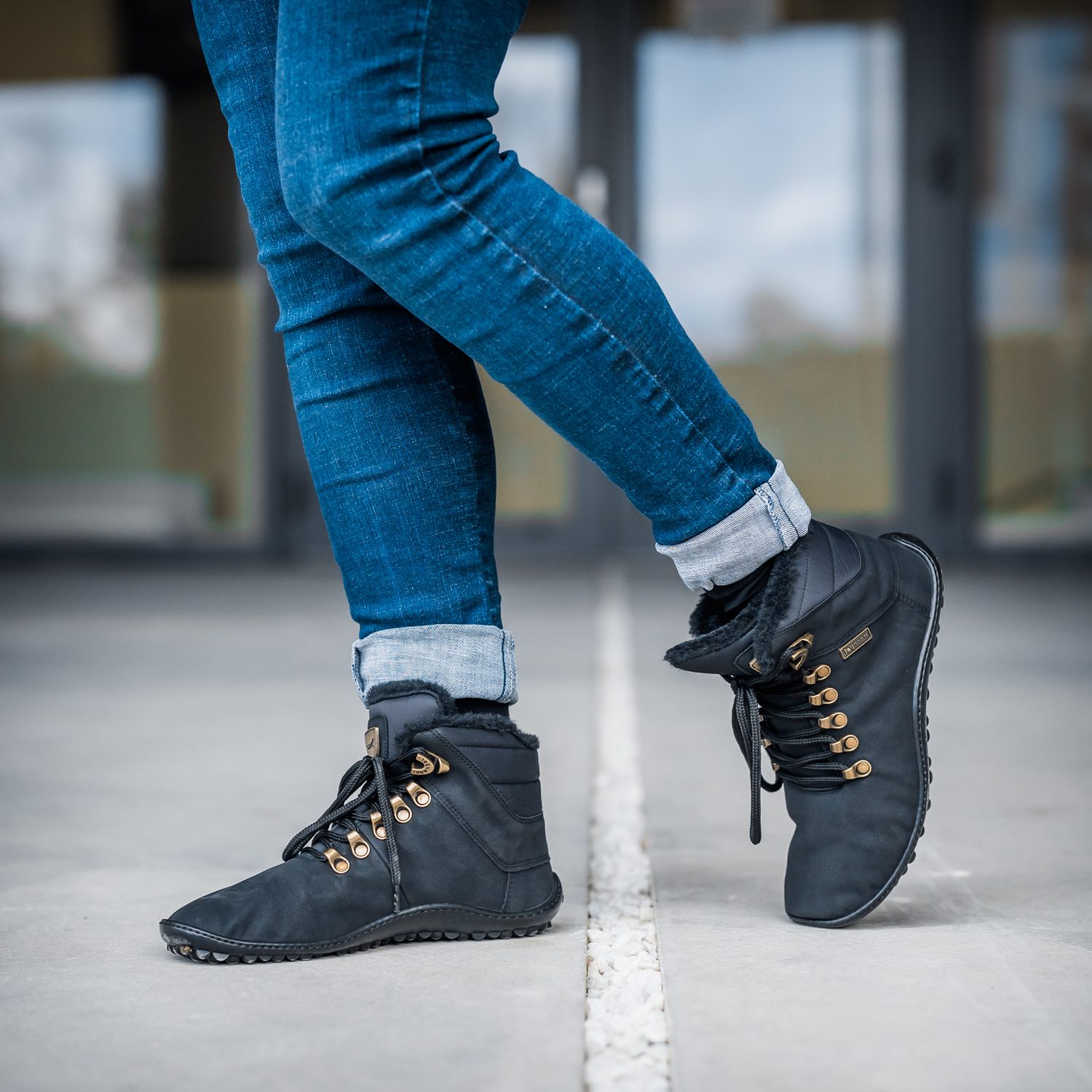
If you’re after elegant winter boots for the city, ANGLES are the obvious choice. Stylish ankle boots and Chelsea boots will look great with any outfit. It’s up to you whether you choose an all-leather model or boots lined with sheep’s wool.
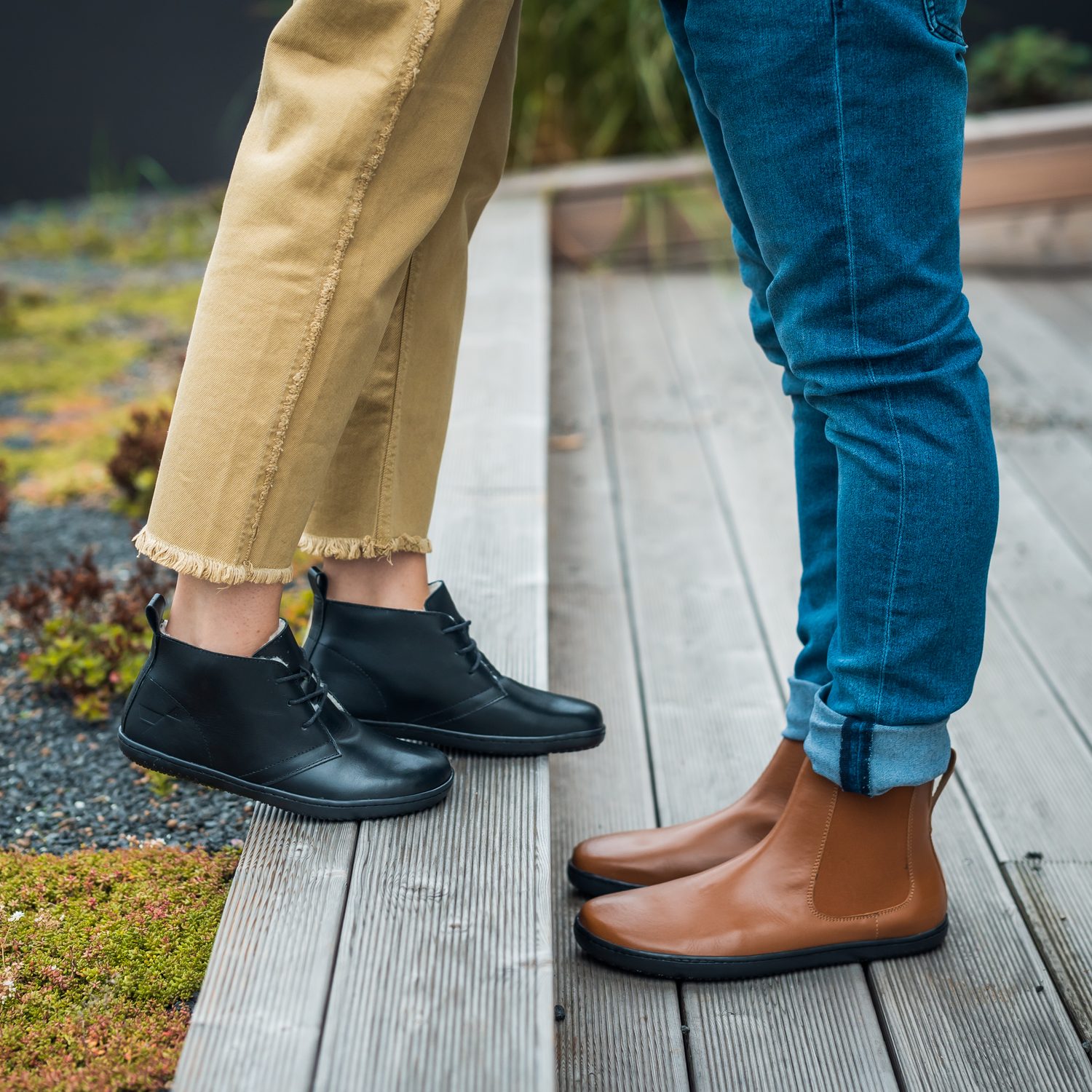
Czech brand BAŤA brings elegant and comfortable winter barefoot shoes that perfectly complement your city style. You’ll find a range of models—from unisex Chelsea and lace-up ankle boots to stylish knee-high boots. Everything is made in the Czech Republic, so you can be confident in the quality and comfort with every step, even on winter days.
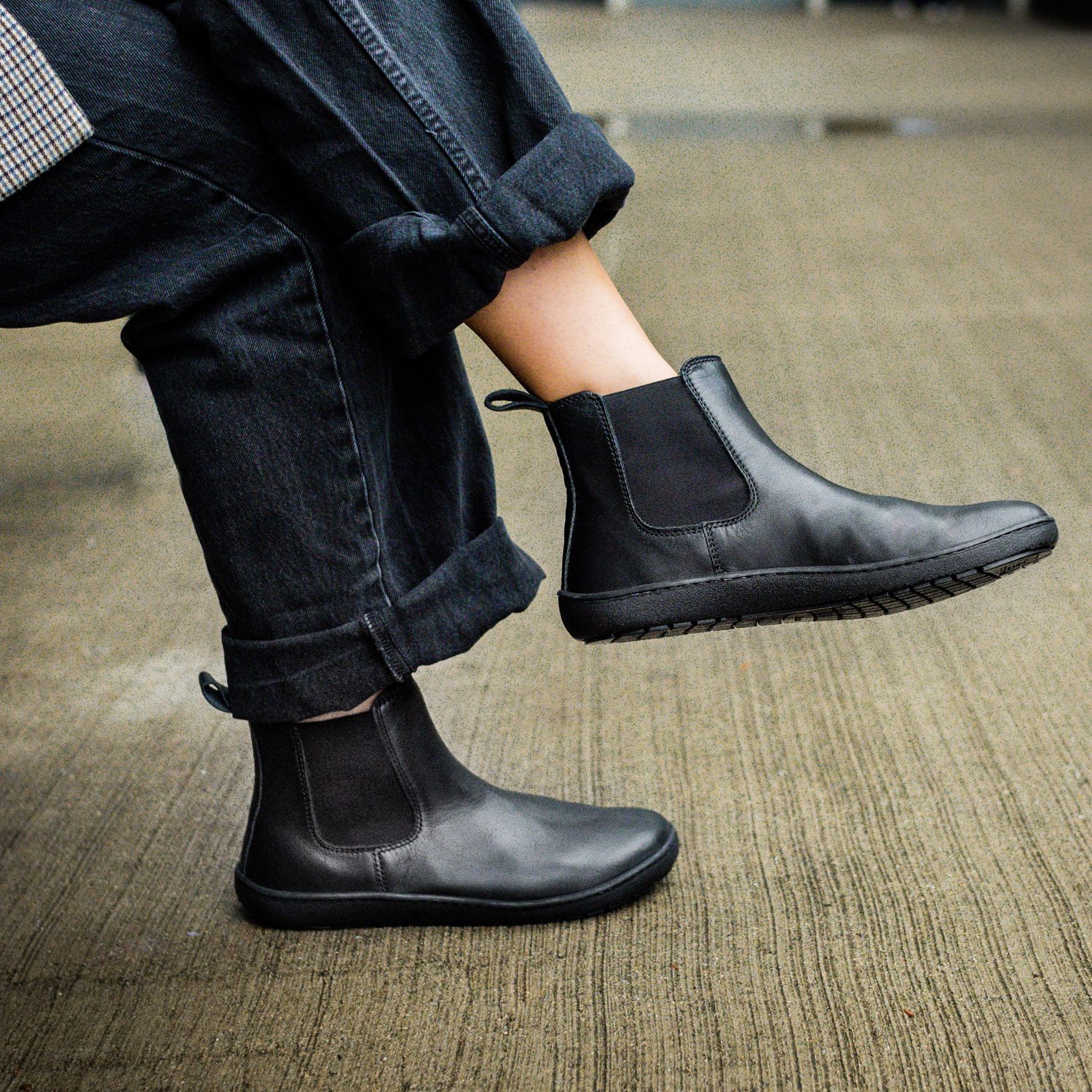
Slovak brand BE LENKA offers winter barefoot shoes that combine style and comfort with a focus on sustainability. The models are unisex and made from smooth or suede leather, and the sole with a special tread pattern can handle both city surfaces and lighter trails, making them ideal for everyday wear as well as winter adventures.
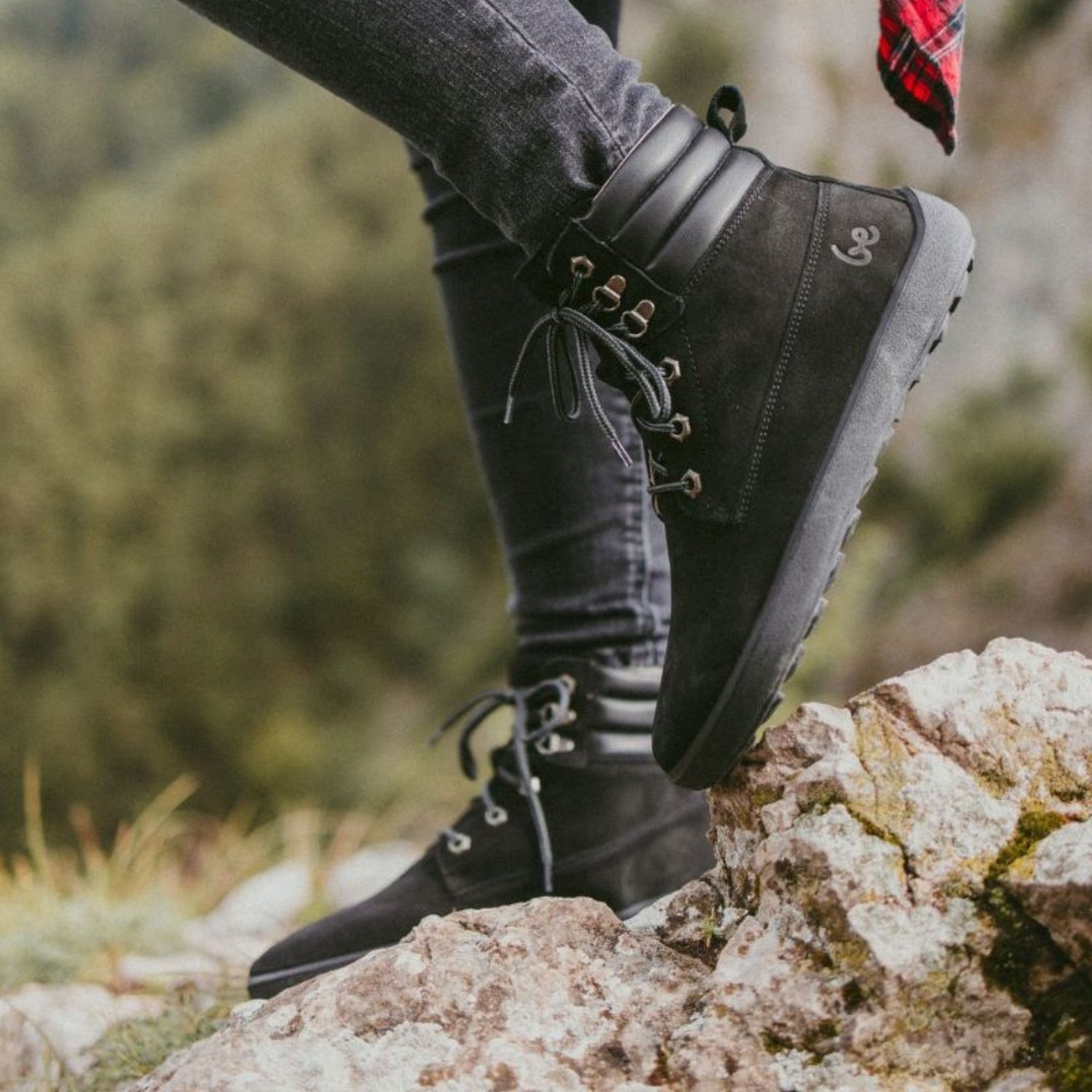
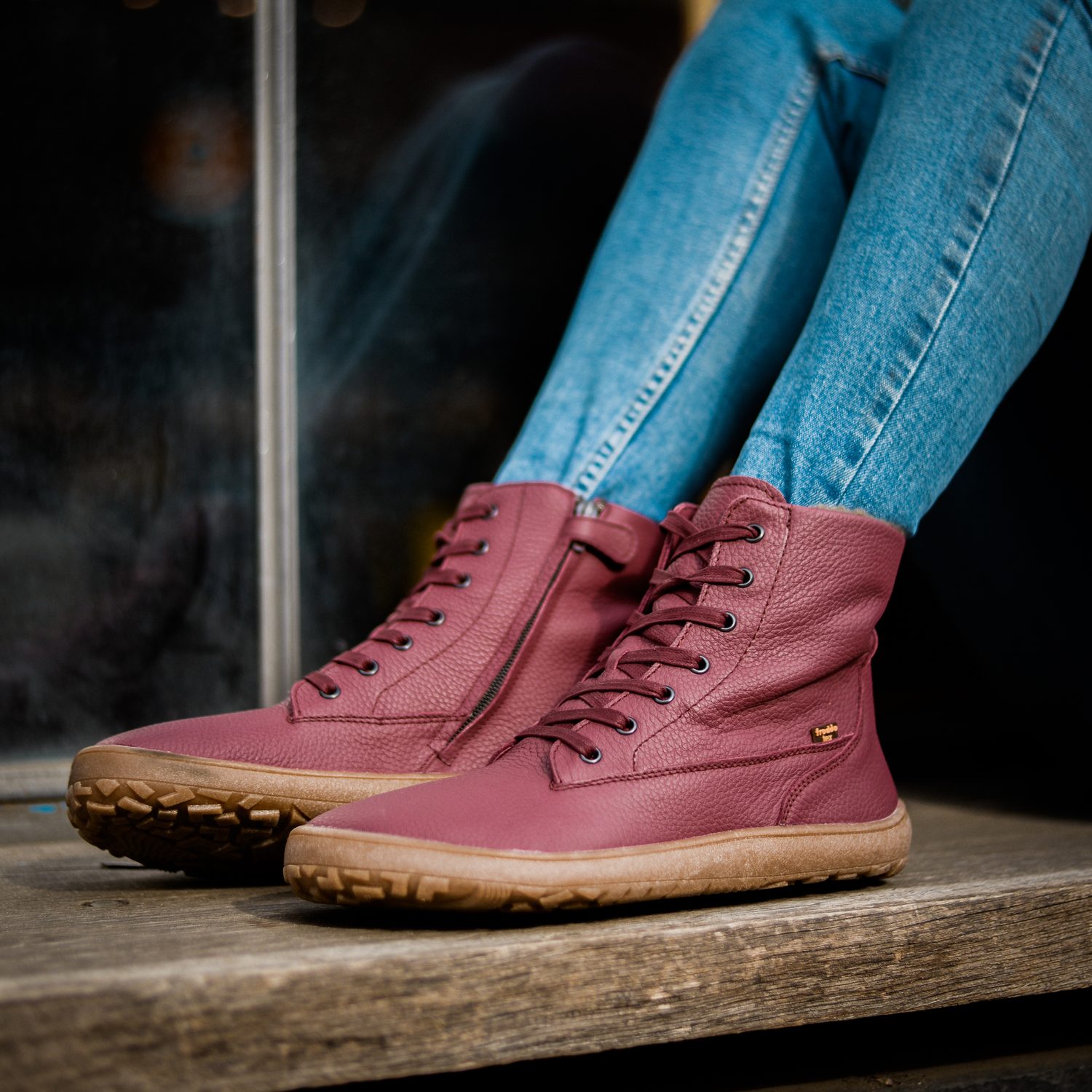
Croatian brand FRODDO offers affordable winter barefoot shoes that brilliantly combine style and function. You can choose comfortable lace-up models with warm faux fur and a membrane, or elegant all-leather Chelsea boots. For home, you can pick up cosy wool slippers.
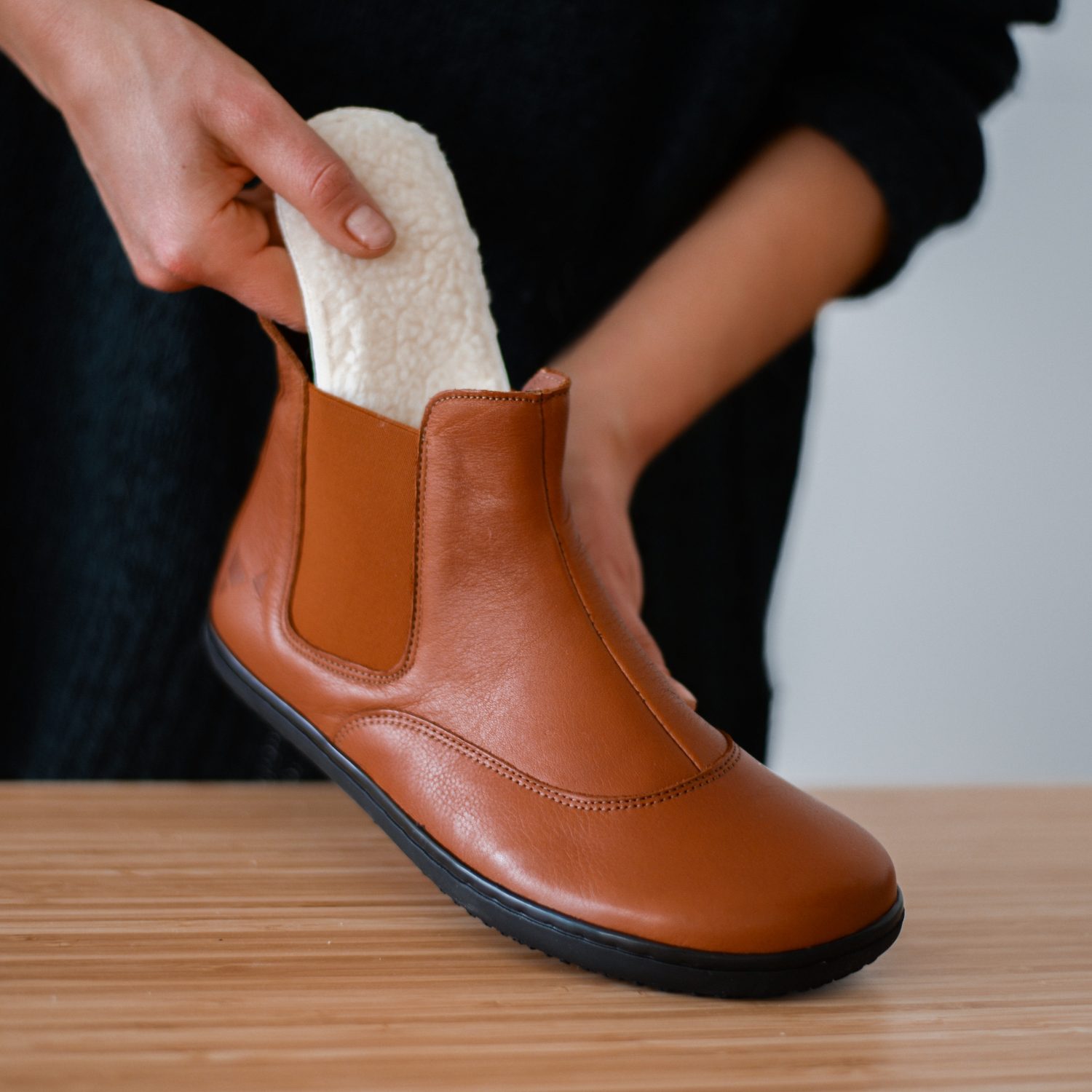
If you don’t want to give up your favourite ankle boots in winter, there’s nothing easier than reaching for wool insoles with an aluminium layer that reduces heat loss— they’ll keep your feet warm even below freezing.
Unfortunately, our feet can lose their natural ability to regulate temperature from wearing tight shoes and socks. But it’s nothing that can’t be improved. This is where gradual cold exposure can really help—improving not only your resilience, but also how you perceive temperature. Alongside regular cold showers and rinsing your feet with cold water you can also try barefoot walks on grass covered in morning dew, or a few minutes of walking in the snow.
If you keep in mind that our feet cope less well with chilly temperatures below 5 °C, and you adapt your choice of winter footwear accordingly, you can wear barefoot shoes all year round without worry. And if you add winter insoles, regular foot-strengthening exercises and gradual cold exposure, you’ll find your feet won’t suffer in winter either.
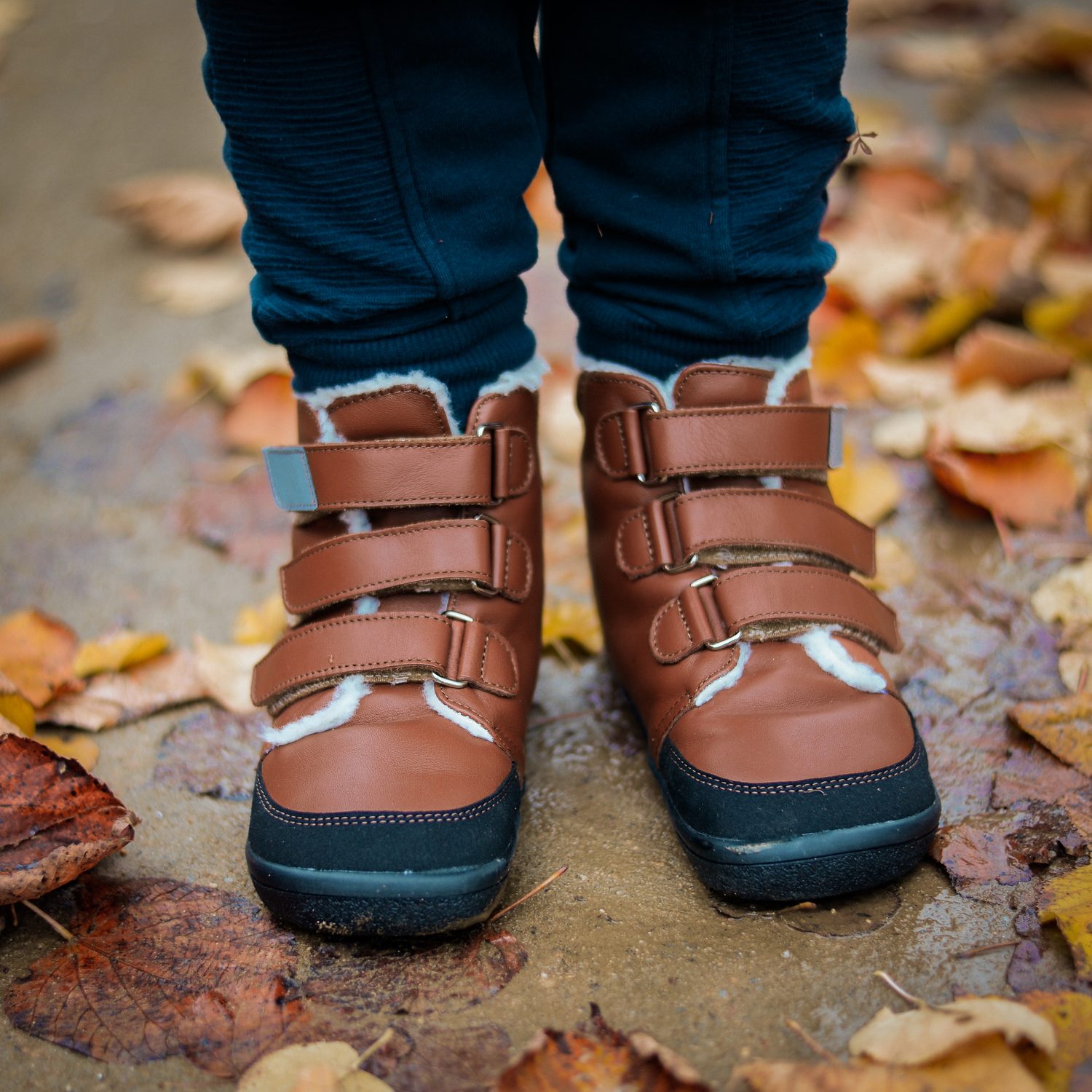
Warm little feet even on winter walks, building a snowman and sledging? Insulated winter barefoot shoes for children can handle it. Warm faux fur combined with leather or a waterproof membrane will keep children’s feet dry and cosy during all their winter fun.


 € - US
 Čeština
 English
 Slovenčina
 Magyar
 български
 Polski
 Dansk
Dansk
 Nederlands
 Svenska
 Suomi
Suomi
 Español
 Français
 Slovenščina
 Română
 Português
 Deutsch (DE)
 Deutsch (AT)
 Deutsch (CH)

