We’ll be happy to help via online chat or at: orders@premiumbarefoot.com

No time to exercise? No problem. Physiotherapist Darina Ungr shares five small things you can do while brushing your teeth, cooking or working. They won’t take an extra minute.
Almost everyone knows the feeling: you want to do something good for your body, but the day is packed and there isn’t even half an hour left for regular exercise. When it comes to your feet, though, that doesn’t have to be a barrier at all. That’s why we teamed up with physiotherapist Mgr. Darina Ungr, founder of the Fyzioterapie lidem clinic in Plzeň and the Fyzioterapie mamkám project, and asked her how to support your feet in a way that truly anyone can manage. Many useful ideas can be naturally built into activities you’re already doing anyway.
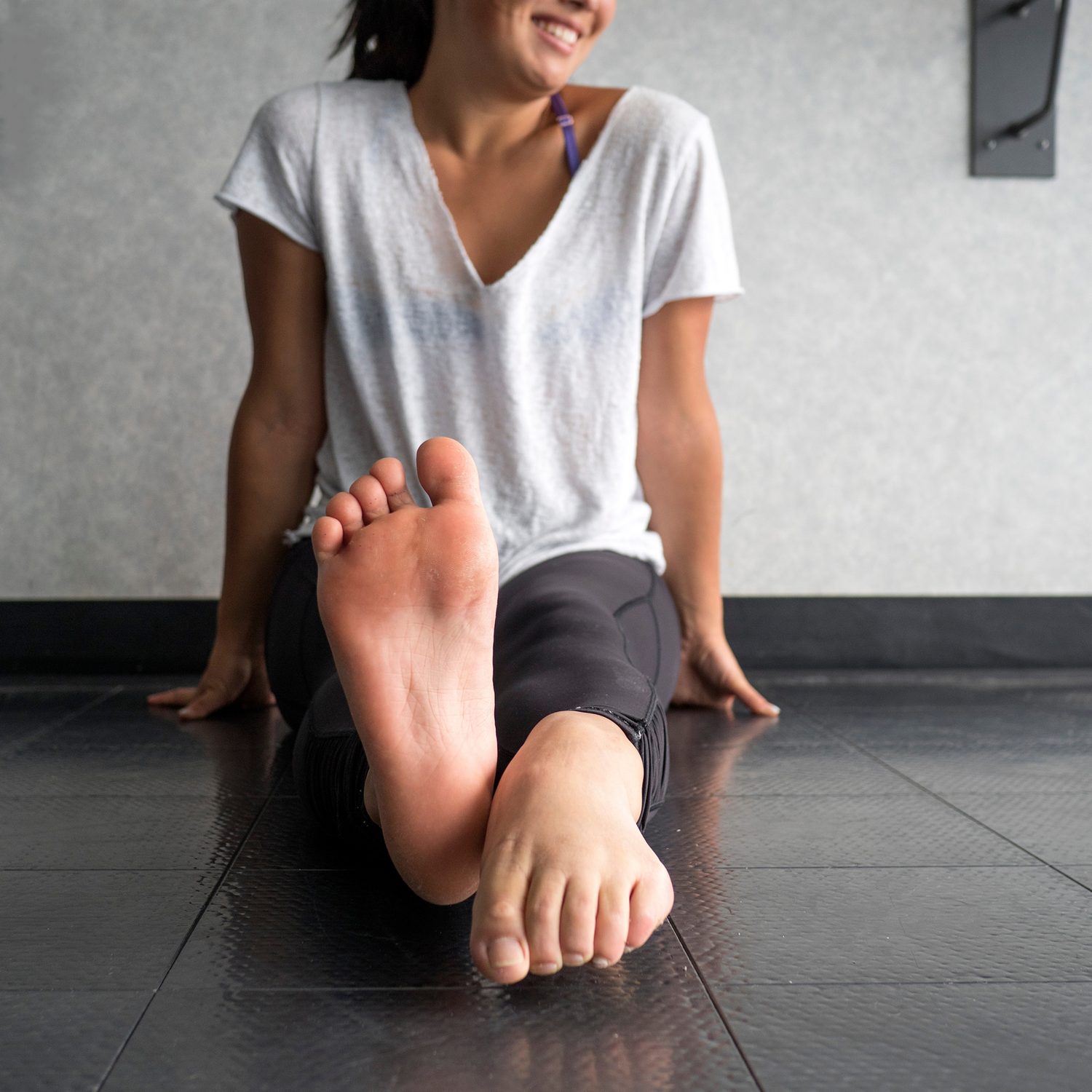
Your feet are under constant load when you stand and walk. They help you keep your balance and provide the whole body with contact with the surface you’re moving on. Just like with other parts of the musculoskeletal system, it makes sense to think about prevention here too. The trouble is, most of us only start paying attention once pain or other issues show up.
“In the clinic I often meet people who want to do something for their body. I hear them say they don’t have time to exercise. So I suggest small changes during the day that can be added to activities they already do,” says Darina Ungr.
Let’s take a look at how.
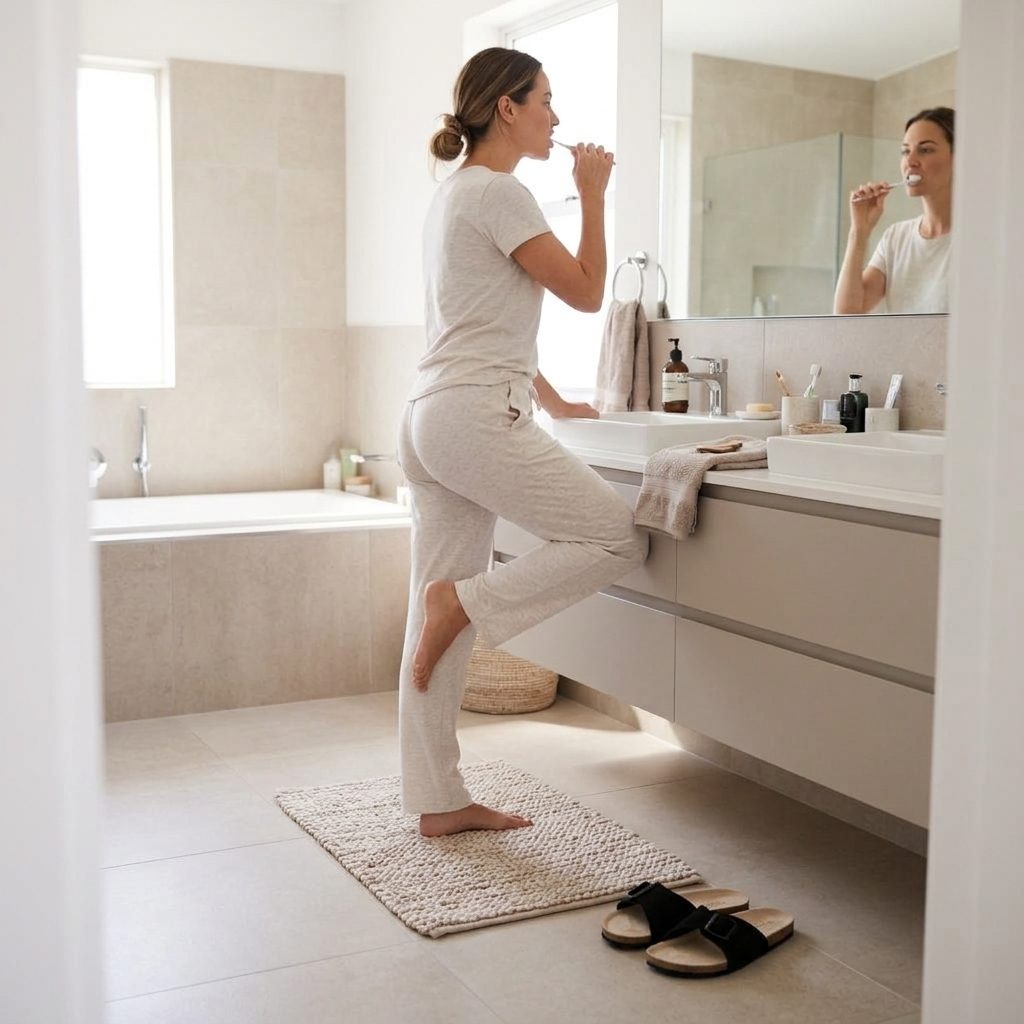
Two minutes at the sink in the morning is a perfect opportunity to train your balance. When you stand on one leg, your base of support becomes smaller and your body has to keep responding to tiny changes in position. Your nervous system works with information from your vision, your balance system and receptors in your muscles, joints and feet.
Start with, for example, 20–30 seconds on each leg. If it feels easy, you can slightly bend the standing leg or stand on a softer surface, such as a folded towel.
You don’t need to aim for the hardest version. If you struggle with balance, practise near a stable support so you can hold on if needed.
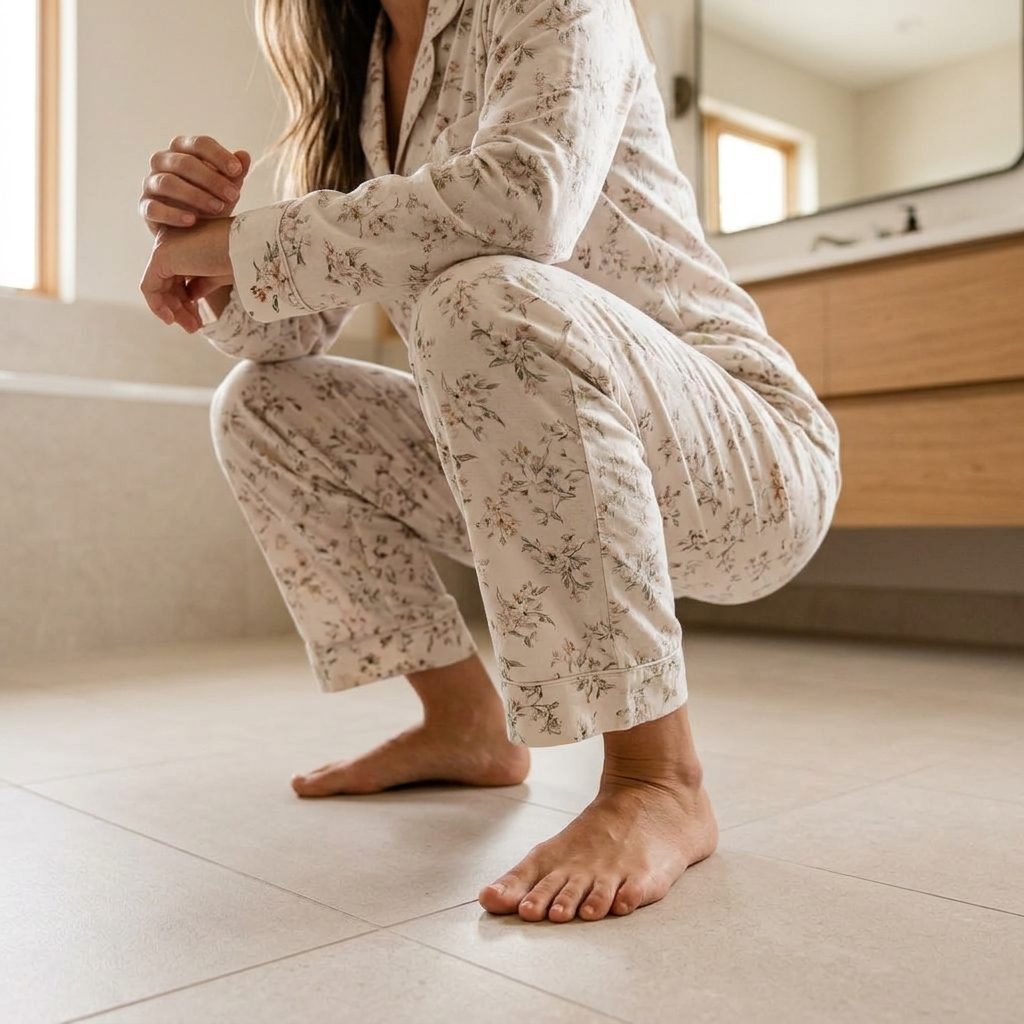
You can use the same routine in the evening too—this time for squats. Squatting requires coordination between the ankles, knees, hips and trunk, and how deep you can go depends (among other things) on ankle and hip mobility, body proportions and technique.
You don’t have to stay in a deep squat for several minutes straight away. Start with a few slow repetitions or choose only a depth that feels comfortable. If you want to use squats as a stimulus for your ankles and feet too, try to work at a depth where you can keep your whole feet in contact with the floor without pain or obvious compensations.
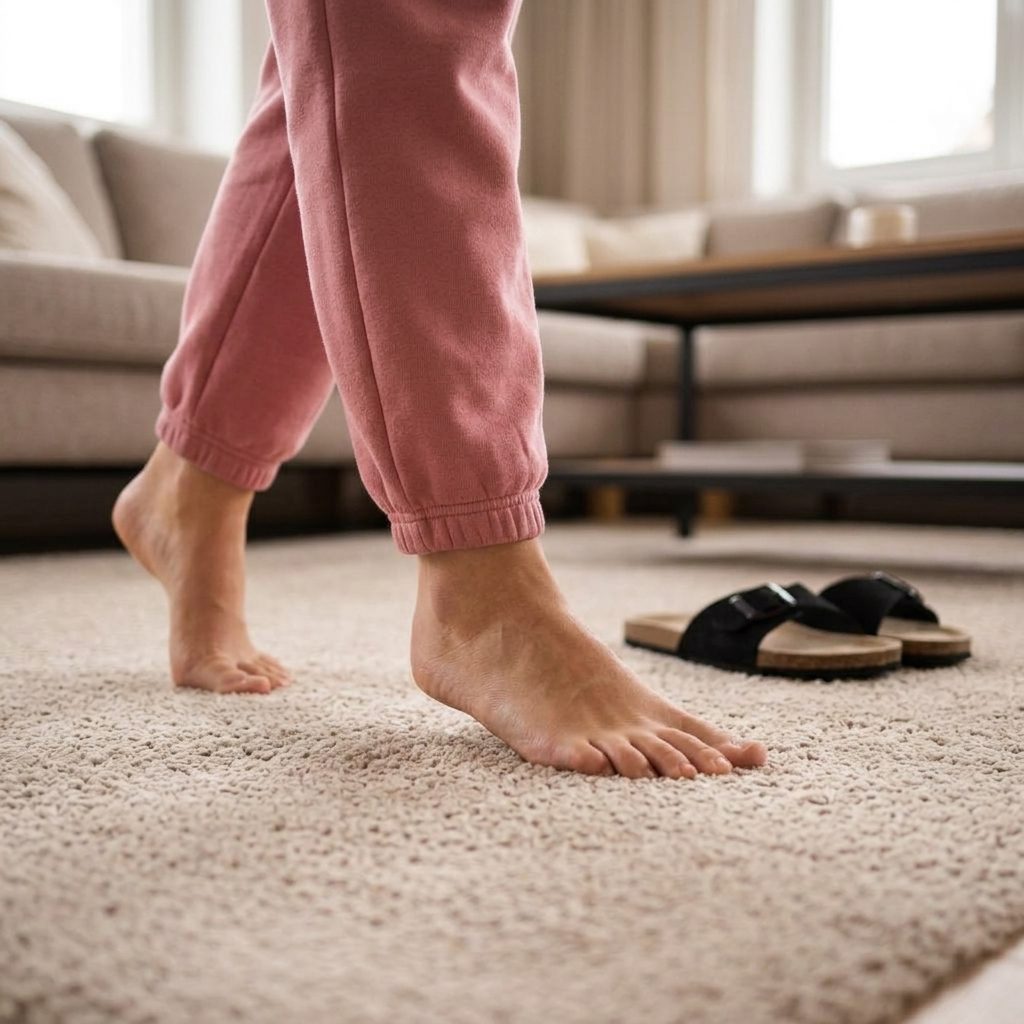
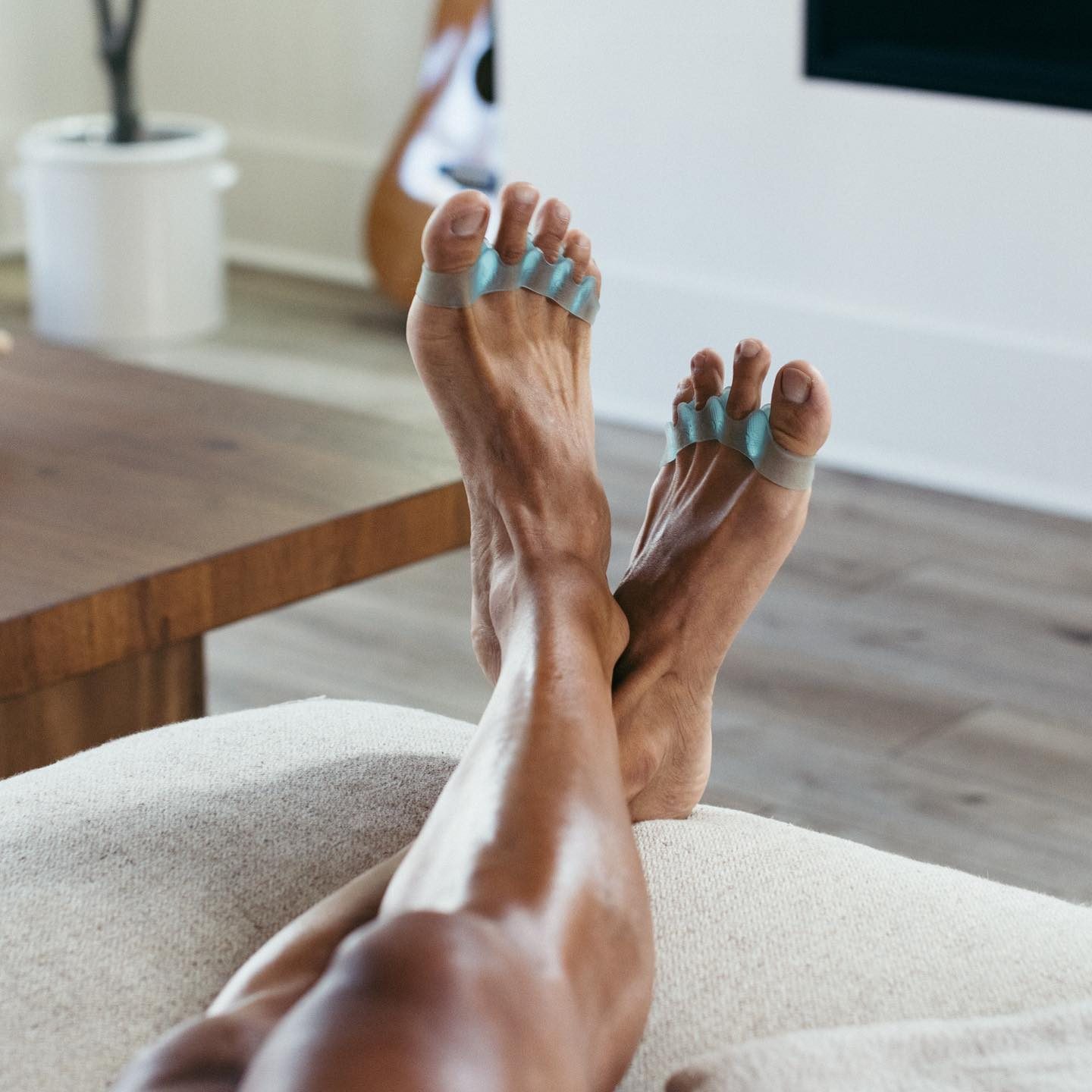
If it feels safe and comfortable for you, try ditching slippers and socks at home. From a biomechanical point of view, walking barefoot is different from walking in everyday shoes. Your foot isn’t restricted by the upper, your toes have more room and the sole gets more direct information about the surface you’re moving on.
That doesn’t mean barefoot walking is automatically better for everyone, or that you should immediately give up all footwear. If you’re used to spending most of the day in more structured shoes, start gradually and simply at home. Try alternating different surfaces—wood, carpet or tiles, for example. Socks aren’t a problem, but taking them off allows more direct contact with the ground.
Extra caution is needed for people with reduced sensation in the feet, significant pain, an injury, or a higher risk of skin damage.
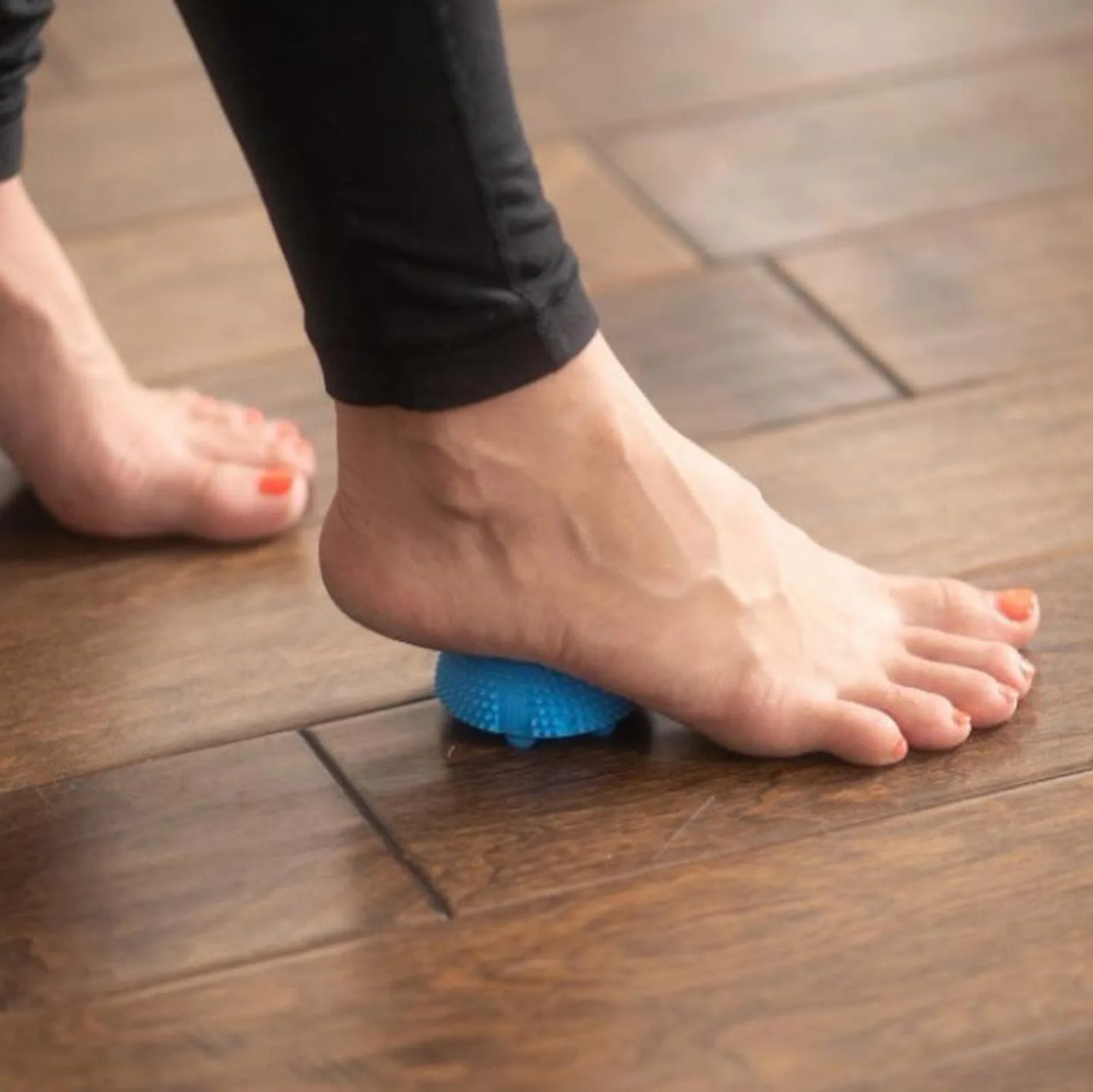
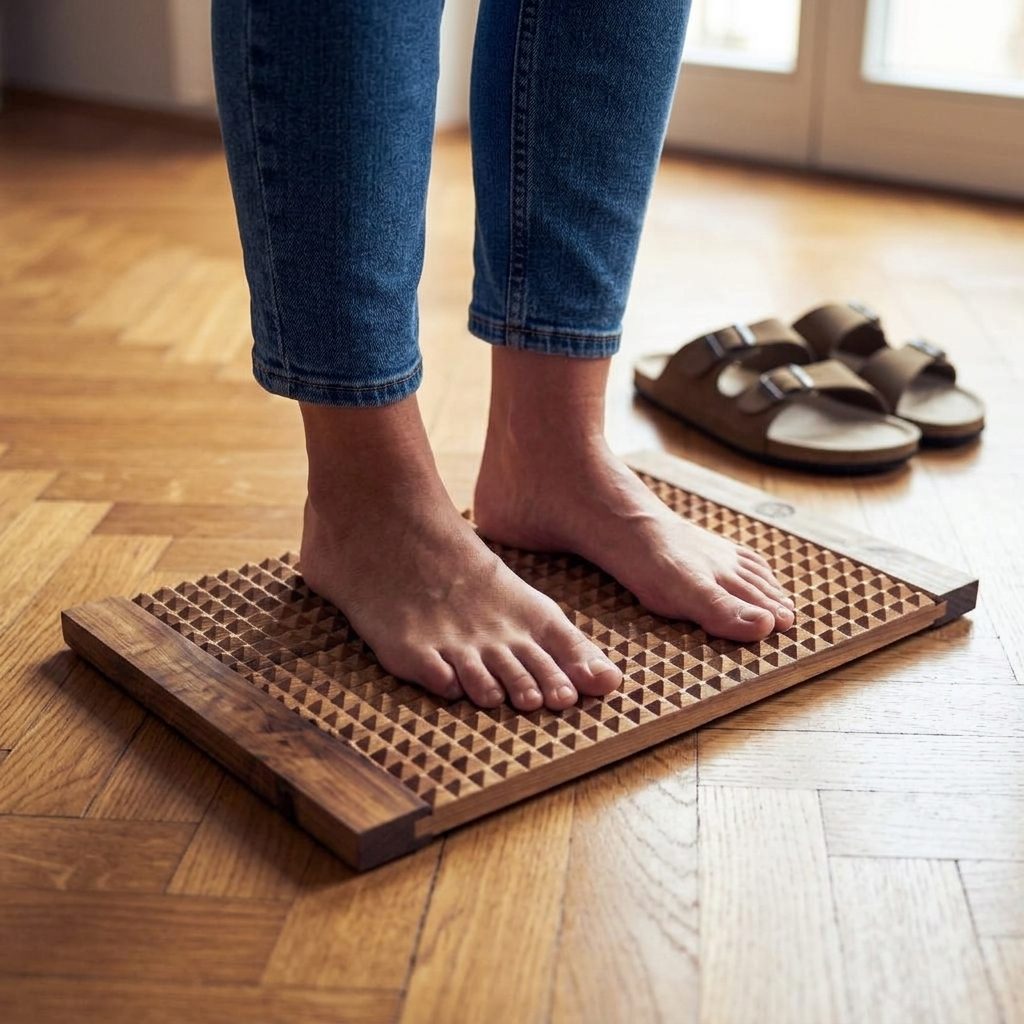
The sole of the foot contains a large number of receptors that tell the nervous system what contact with the ground is like. One way to vary these sensations is with textured surfaces. Research shows that changing input from the sole can influence how the body controls balance.
You can place a mat in front of the kitchen counter, by the sink, in the shower, or under your feet at a height-adjustable desk. Or put it under your feet even when you’re sitting.
That doesn’t mean the harder or more painful the surface, the bigger the effect. The mat should be a pleasant addition to a variety of stimuli throughout the day. You don’t need to stand on it for long, and it doesn’t have to replace targeted exercise.
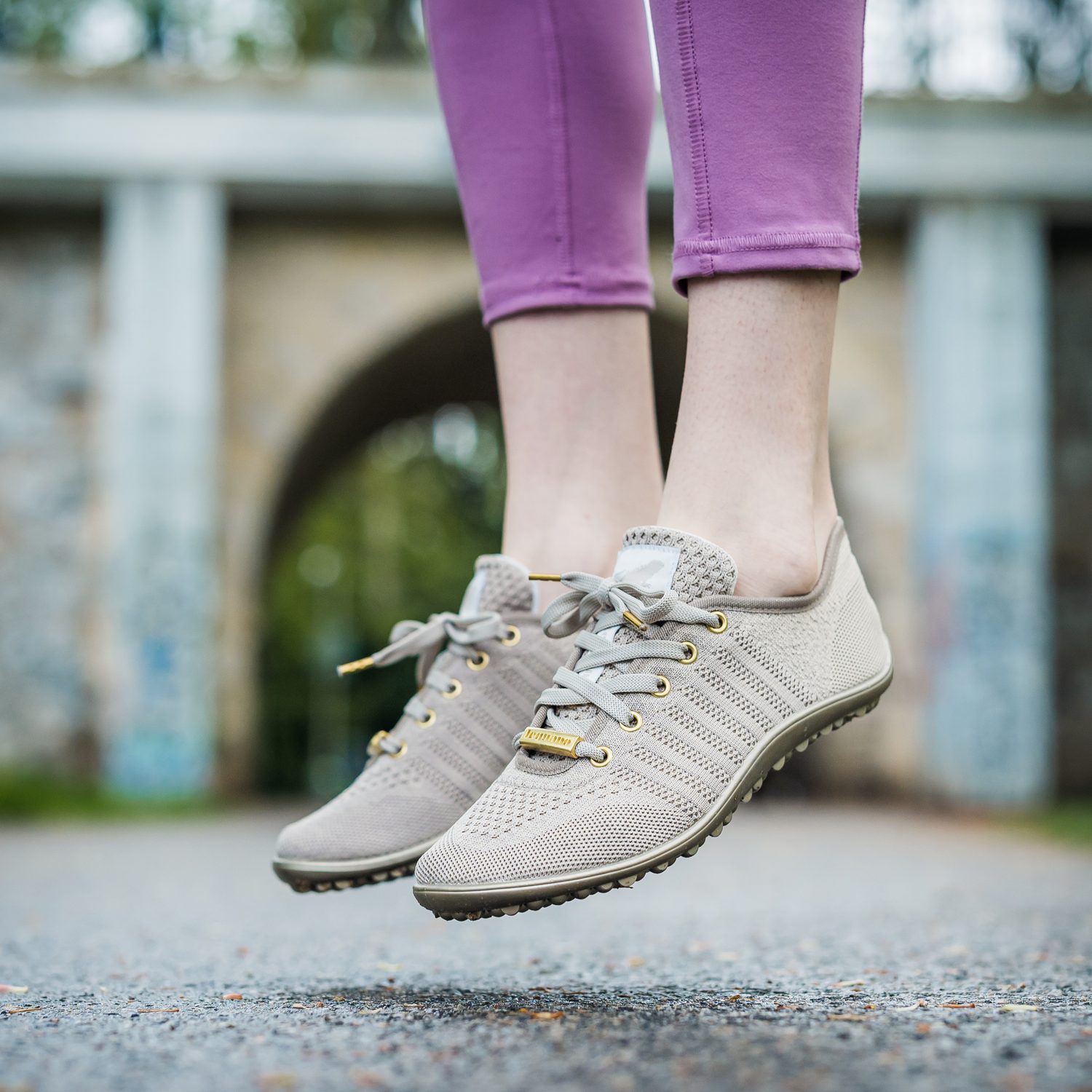
Our feet spend a large part of the day in shoes, so it’s worth looking at their shape too. Shoes should match both the size and shape of your feet—and above all, they should leave enough room for your toes. A toe box that’s too narrow can change toe position and increase pressure in the forefoot.
So when choosing shoes, don’t look only at the size number. Check that your toes have enough room in both length and width, and that they aren’t squeezed together. Research shows that toe box shape affects pressure distribution around the toes and forefoot. Long-term wear of very narrow shoes is also associated with a higher occurrence of certain deformities, such as bunions, although more factors contribute to their development.
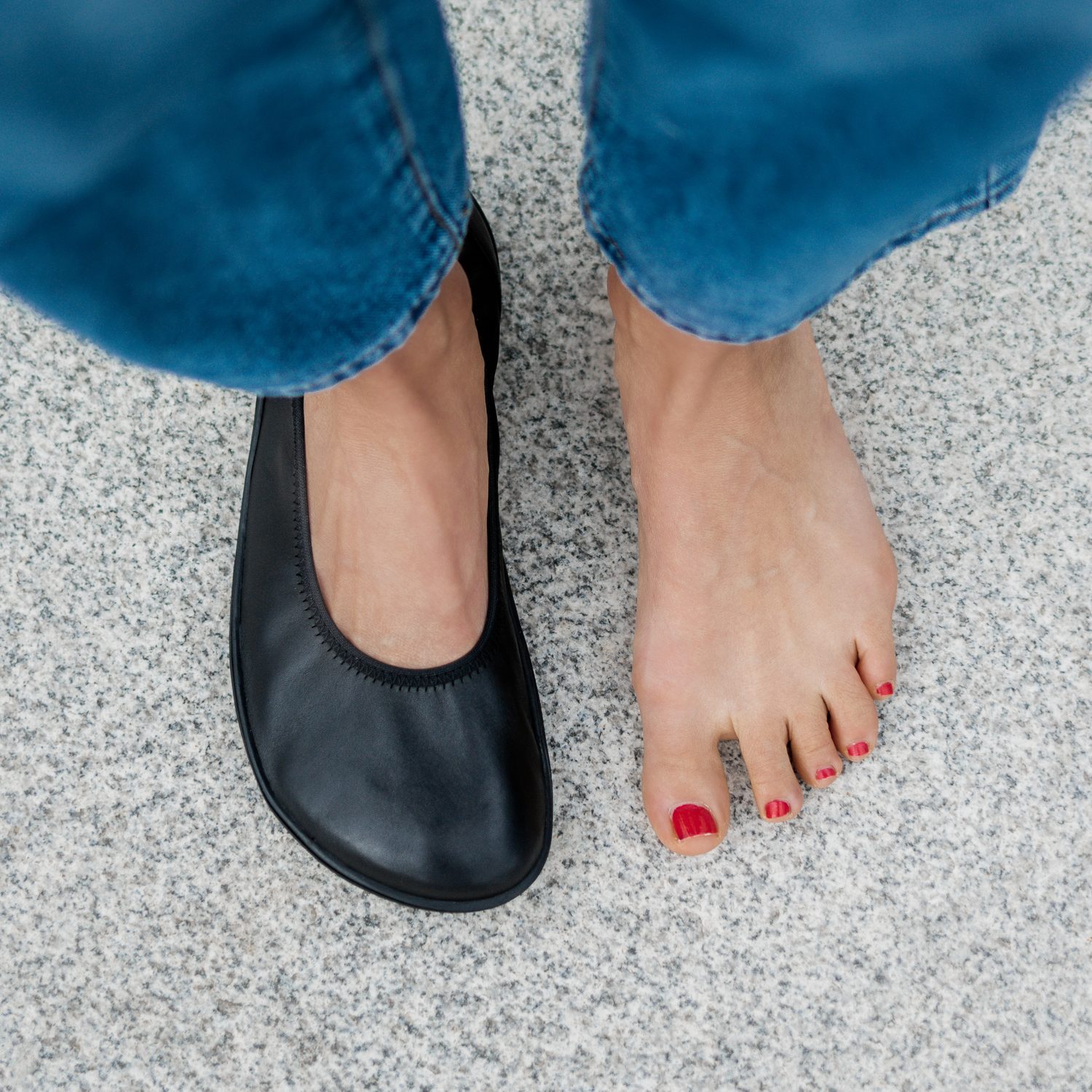
That’s exactly why barefoot shoes were created. You can recognise them by a thin, flexible sole, no raised heel (zero drop), and a roomy toe box where your toes can naturally splay. If you’re not sure how to choose the right pair, take a look at the article How to measure your foot properly and why barefoot shoes need extra allowance.
And one important tip to finish: if you’re switching from stiff, supportive footwear to minimalist or barefoot shoes, take it slowly. It’s a change in mechanical load, and your body may need time to adapt.
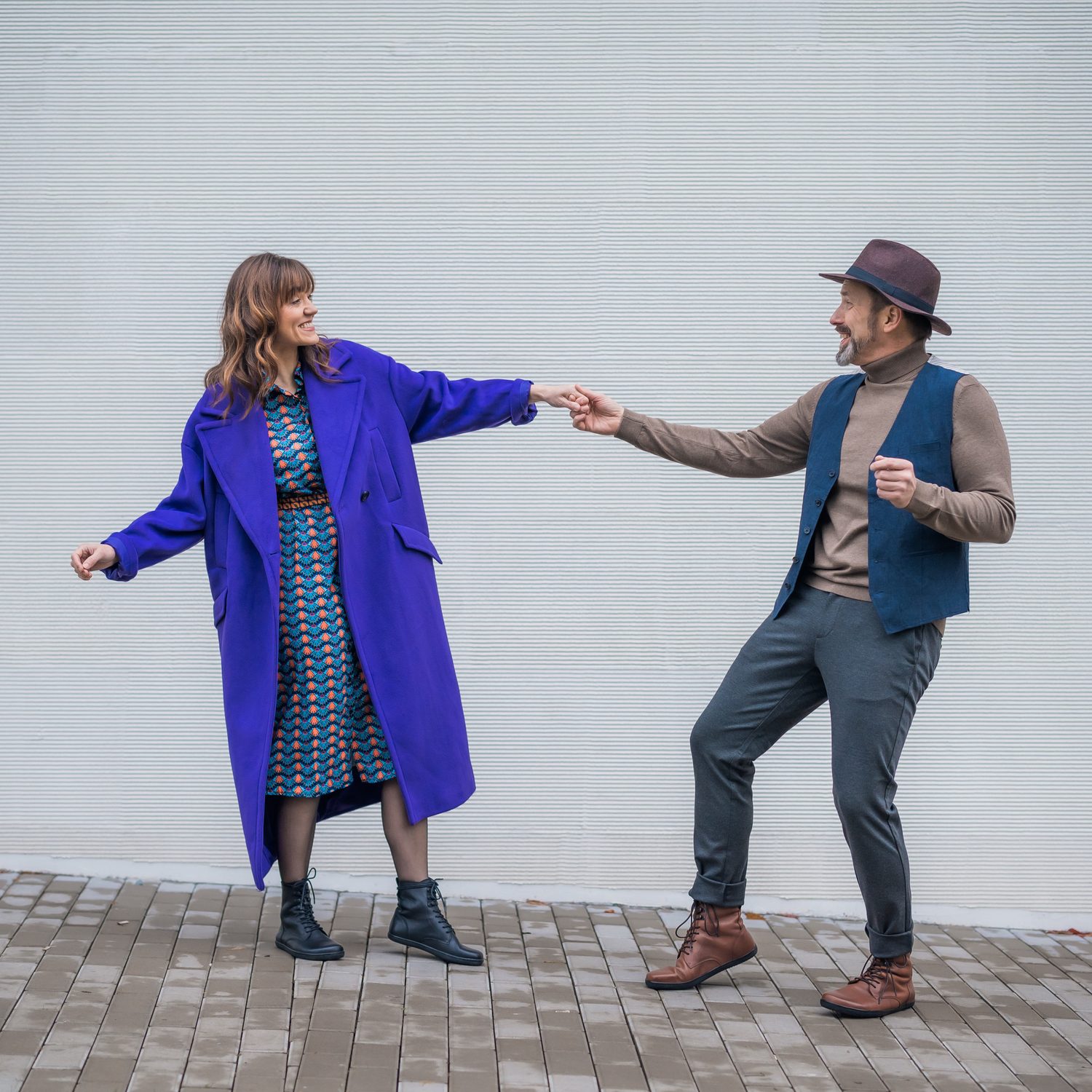
The biggest advantage of small habits is how simple they are. You don’t have to find a special time for another workout—you just add a movement or sensory stimulus to something you already do during the day.
That said, don’t treat them as a replacement for targeted exercise where it’s needed. But they can increase the amount of natural movement and varied input you get throughout the day, and they’re easier to make a regular part of your routine.
You don’t have to start with everything at once. Pick one small thing this week and try to include it regularly in your day. Foot care doesn’t have to be another item on your to-do list—often it’s enough to make use of situations that are already naturally part of your day.
This article was created in collaboration with Mgr. Darina Ungr. Darina is a physiotherapist and the founder of the Fyzioterapie lidem clinic in Plzeň and the Fyzioterapie mamkám project. In her practice, she focuses on physiotherapy and diagnostics of the musculoskeletal system, including the feet. You can find out more about Darina at fyzioterapielidem.cz and fyzioterapiemamkam.cz.


 € - US
 Čeština
 English
 Slovenčina
 Magyar
 български
 Polski
 Dansk
Dansk
 Nederlands
 Svenska
 Suomi
Suomi
 Español
 Français
 Slovenščina
 Română
 Português
 Deutsch (DE)
 Deutsch (AT)
 Deutsch (CH)


