We’ll be happy to help via online chat or at: orders@premiumbarefoot.com

A protruding tummy, back pain, and your core feeling ‘disconnected’. You might be dealing with diastasis recti – and it’s not only an issue for new mums. So how do you tackle it?
Do you still have a protruding tummy even though you’re back to your pre-pregnancy weight? Does your back hurt, or do you suspect your pelvic floor isn’t quite in shape? Are you bothered by a bloated, tight or painful abdomen? Do you feel weaker in your favourite sport and experience your core as a disconnected part of your body? It could be diastasis recti – a burning topic not only for new mums.
Diastasis recti is the term for a separation of the rectus abdominis muscles. The rectus abdominis forms an imaginary ‘belt’ at the front of the body, running from the chest down to the pubic bone. It is divided into a right and left half – so it’s actually a pair of muscles. In the middle, they are connected by a fibrous line called the linea alba. This is tough connective tissue with no blood vessels, which can be pulled sideways by forces and pressure, becoming thinner and weaker.
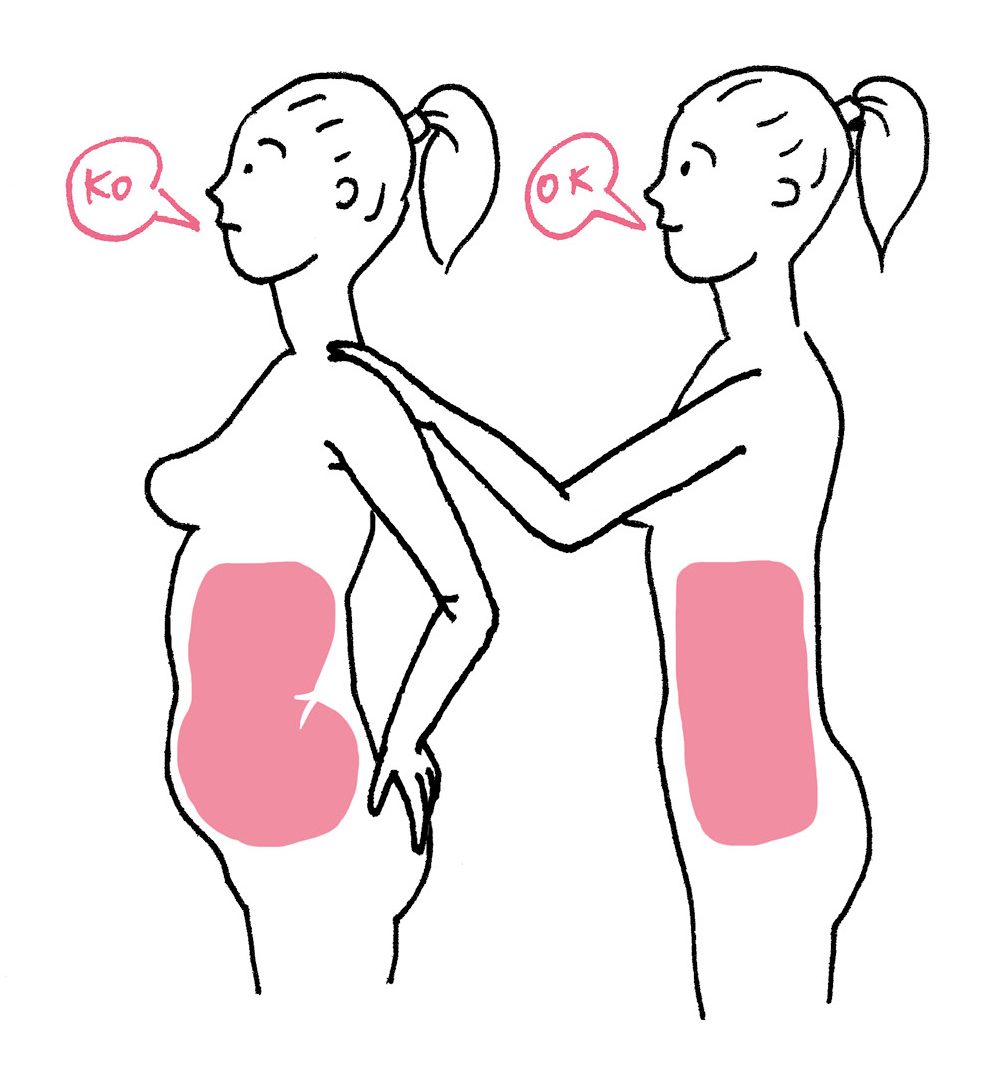
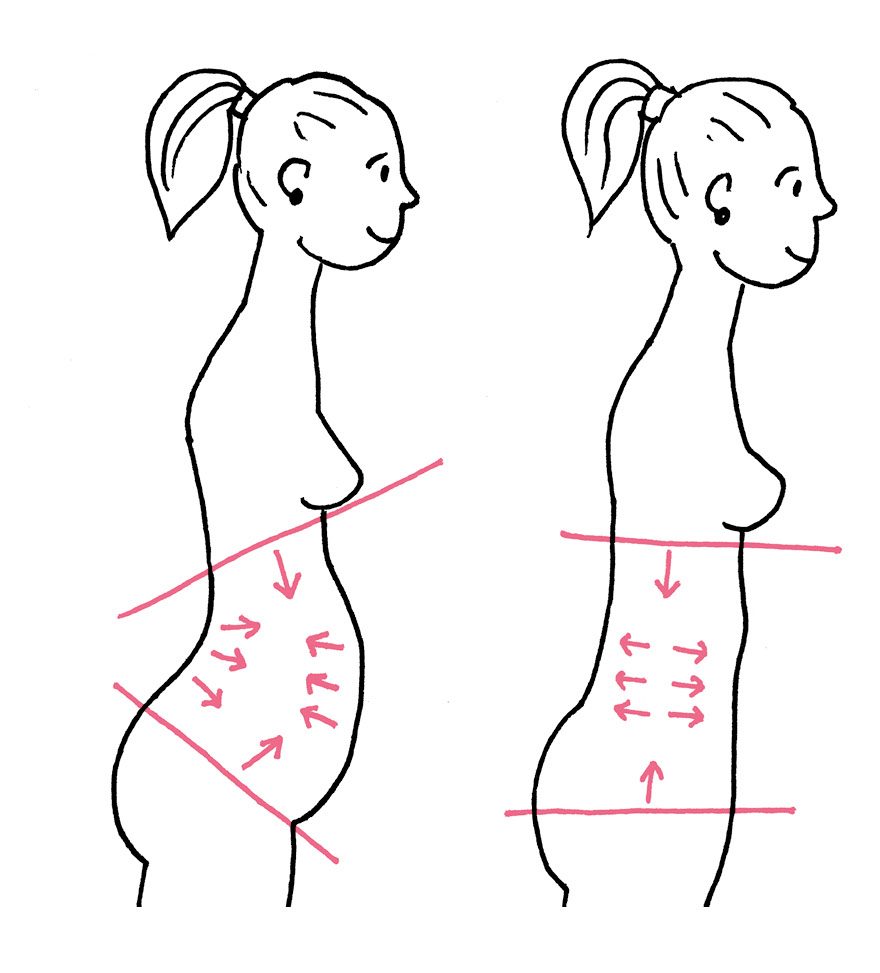
Because connective tissue isn’t as supportive as muscle, the abdominal cavity can become visibly distorted. When standing, this is most often noticed as a protruding tummy. When lying on your back, you may see a ‘dip/trough’, and during strength movements a so-called ‘ridge’ can appear along the midline of the abdomen.
‘After my son was born, I sensed that something wasn’t quite right with my body. My tummy didn’t pull back in after the postnatal period the way I expected. I was surprised that in the morning my stomach was flat, and by evening it was bloated like a balloon. I was also a bit worried that when lying on my back I had a big hollow in the middle of my body, and that I could see (and even feel under my fingers) the movement of intestinal loops. But the worst part of that period was that my dislike of my “new” body and the stress showed up in how I cared for my newborn son.’ Anna Nováková – COREyoga.cz instructor

Video
Most often, we see diastasis recti in pregnant women, where hormonal changes and internal pressure during pregnancy cause the left and right sides of the muscle to separate. The loosened linea alba connective tissue can’t hold them together, and a gap forms between the two halves.
‘So many times I asked myself why I had to be the one with diastasis recti. But what did I do to prevent it? Was I calm, balanced, and attentive to my body’s needs? No – always rushing, on an emotional rollercoaster, with a million unorganised thoughts. That showed in my posture and daily movement (slightly bent forward and carrying a load of important burdens). My body slowed me down and made it clear that this lifestyle could really harm me.’ Anna Nováková – COREyoga.cz instructor

However, everyone is born with a separation of the rectus abdominis muscles. During psychomotor development, as the body is loaded and strengthened, it either disappears completely or remains; it can also reappear, widen, and close again (it is reversible). So diastasis recti can affect men too (especially those gaining weight around the abdomen, those with increased or congenital connective tissue laxity, strength athletes, people who lift heavy loads, or those with long-term sedentary jobs). In babies and young children, we most often see non-physiological diastasis recti particularly if they are frequently in flexion (carriers, car seats, bouncers), cough often (for example, children with asthma), or strain often (long-term ‘wind’ or constipation).
Can you do it? Do your fingers sink in deeply? Then your connective tissue is likely weakened. Repeat the same process along the entire length of the linea alba – from the pubic symphysis at the pelvis up to the lower ribs.
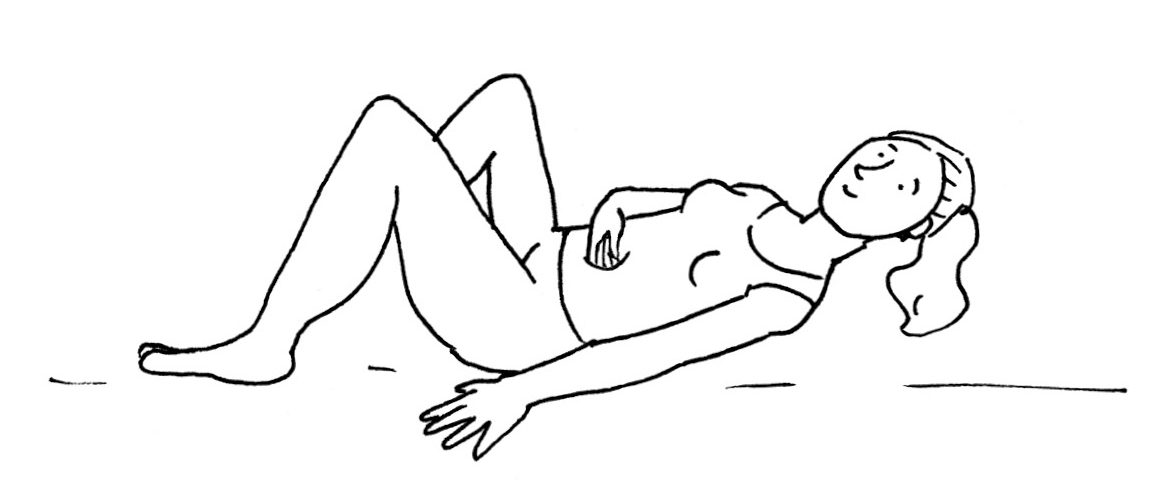
In a large percentage of mums, diastasis recti is noticeable soon after birth. If it’s a small separation, there’s no need to panic straight away. Pregnancy lasts 9 months, and you can’t expect your body to return to its original shape within a few days after giving birth. If the soft tissues (muscles and fascia) work together well, your tummy will gradually draw back in. Postnatal recovery time is individual for every mum (recovery after a caesarean section is usually longer).
It’s important to realise that diastasis recti during pregnancy is a natural thing (after all, the uterus has to enlarge up to 700 times to create enough space for the baby), but after birth you can always support its closing – or even full closure. The physical side goes hand in hand with the psychological side, and small or bigger struggles can significantly affect everyday life as well as intimacy.
Did you know that up to 75% of people with diastasis recti have had abdominal surgery (for example, a caesarean section)?
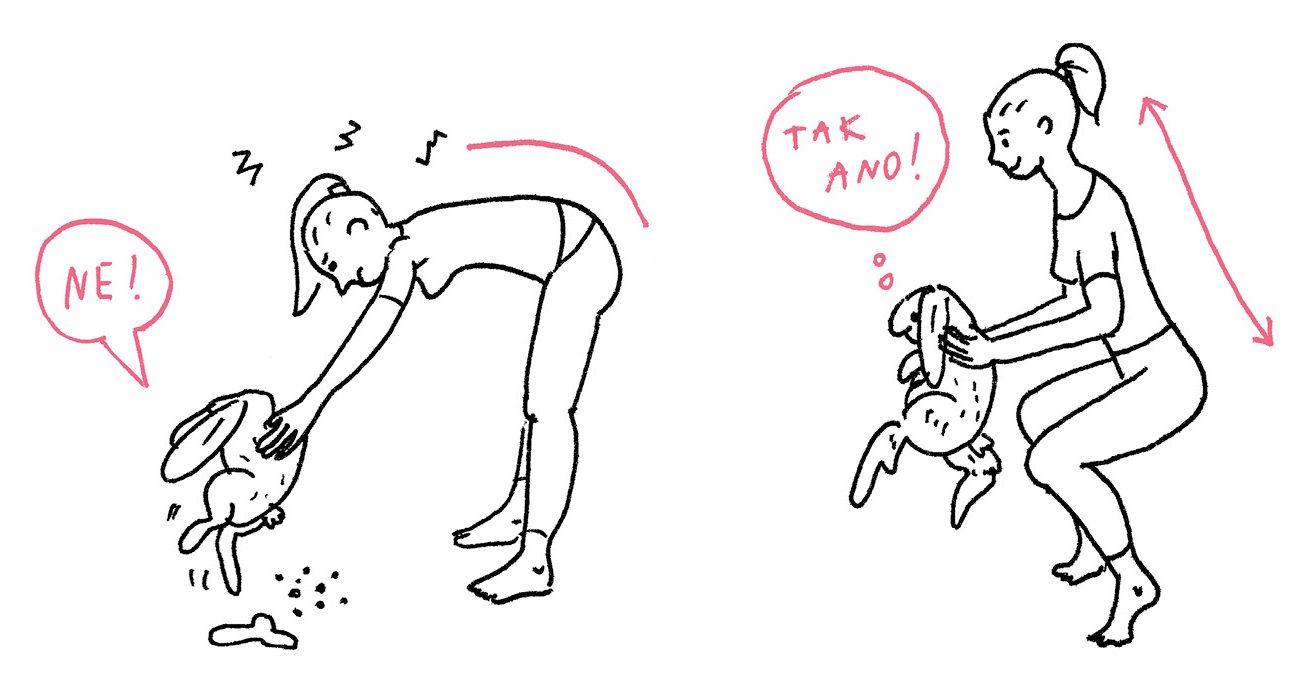
Mums leave the maternity ward informed about basic baby care, but very often not informed about basic self-care – how to lie down, sit, stand, move, carry your baby, bend down for your baby, how to care for your abdomen, how to exercise, when to start exercising, how to check for diastasis recti, what to avoid, or who to see if you suspect a non-physiological condition.
Up to 90% of women after childbirth don’t know the term diastasis recti, even though the core houses organs essential for life, shapes our posture, and all movement originates from it. Its dysfunction usually shows up across the whole musculoskeletal system – as numbness or pain, various pulls and tension, and overall discomfort.
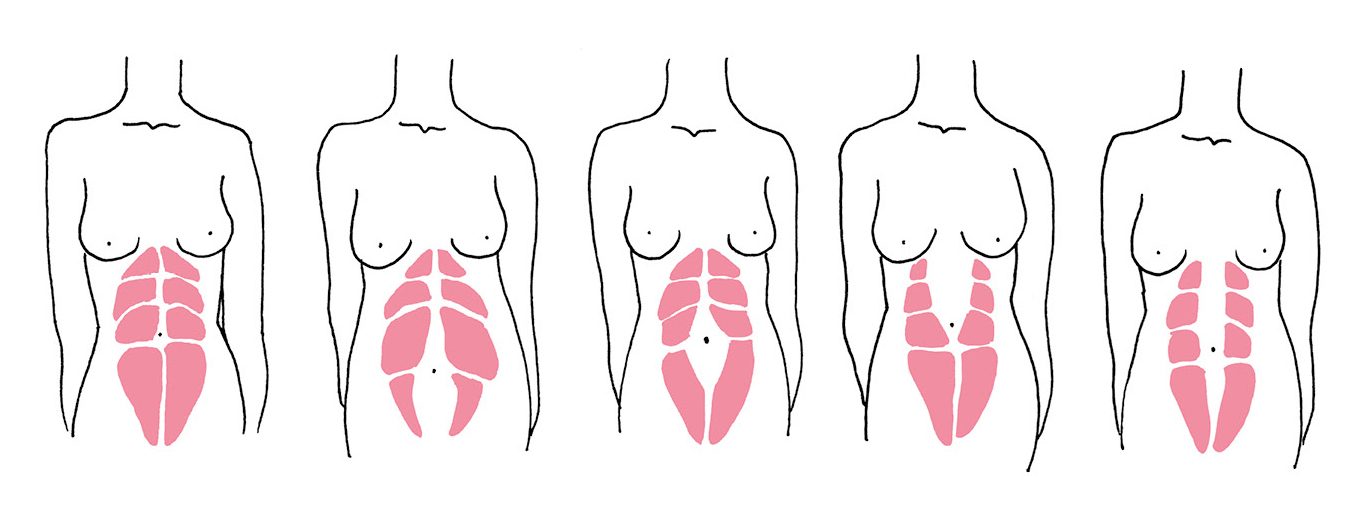
For most people, diastasis recti is mainly an aesthetic concern (a protruding tummy), without realising that by correcting it, they can make a truly significant contribution to their health and vitality. If the core muscles (4 muscle structures = transversus abdominis, deep back muscles, diaphragm and pelvic floor) can’t work properly or have been ‘switched off’ for a long time, and if the separation widens, then the following can happen:
You can read more facts about diastasis recti in the book Diastáza.
Now you know that the ‘funny little point’ on your tummy is diastasis recti. If you’ve been dealing long-term with some of the symptoms listed above and your nearest goal is to tackle diastasis recti, in the next part you’ll read how to get rid of it once and for all – and how, even here, your feet play an important role.
This article was created in collaboration with Anna Nováková, founder of COREYOGA.CZ.
You might also be interested in:


 € - US
 Čeština
 English
 Slovenčina
 Magyar
 български
 Polski
 Dansk
Dansk
 Nederlands
 Svenska
 Suomi
Suomi
 Español
 Français
 Slovenščina
 Română
 Português
 Deutsch (DE)
 Deutsch (AT)
 Deutsch (CH)

