We’ll be happy to help via online chat or at: orders@premiumbarefoot.com

Children Barefoot Walking, Movement and Health
How does a child’s foot develop correctly and healthily? We asked physiotherapist Michaela Kačírková, author of the book Child motor development with love and respect.
When we talk about children’s foot development, most people picture a baby who’s already standing or walking. But preparing the foot for independent standing happens much earlier – not only at the moment your child first pulls themselves up. So what comes before that, and how can you positively influence your child’s future walking even before they start standing?
From the moment a woman becomes pregnant, the baby’s foetus begins developing quite quickly. Just four weeks after the sperm and egg join, the foundations for both lower limbs start to form. Around the eighth week, the structures of the lower limb and foot (in anatomical terms, the foot is considered everything from the ankle down) are visible in the embryo, and the individual toes gradually separate. By the end of pregnancy, all limb structures (muscles, blood vessels, nerves) should be arranged as they are in an adult.

That’s genuinely great news. Our job is to help make sure those feet stay healthy. After birth, many factors influence development. One of the most important is the quality of psychomotor development – in other words, the quality of movement patterns. It’s about how your baby moves at each stage, because the feet are part of overall development and mature alongside the rest of the body.
The end result of foot development – and especially how the foot functions in standing – is directly proportional to psychomotor development. Foot development is part of every developmental stage (movement pattern). You can’t expect healthy foot development if there are deviations in psychomotor development.
A baby’s development progresses from the head downwards. Before your little one stands for the first time, they first need to master many movements that come before standing. Over the course of a year and a half, a baby goes from lying down to standing and then walking – so during this period they have a long journey ahead and learn many new skills.
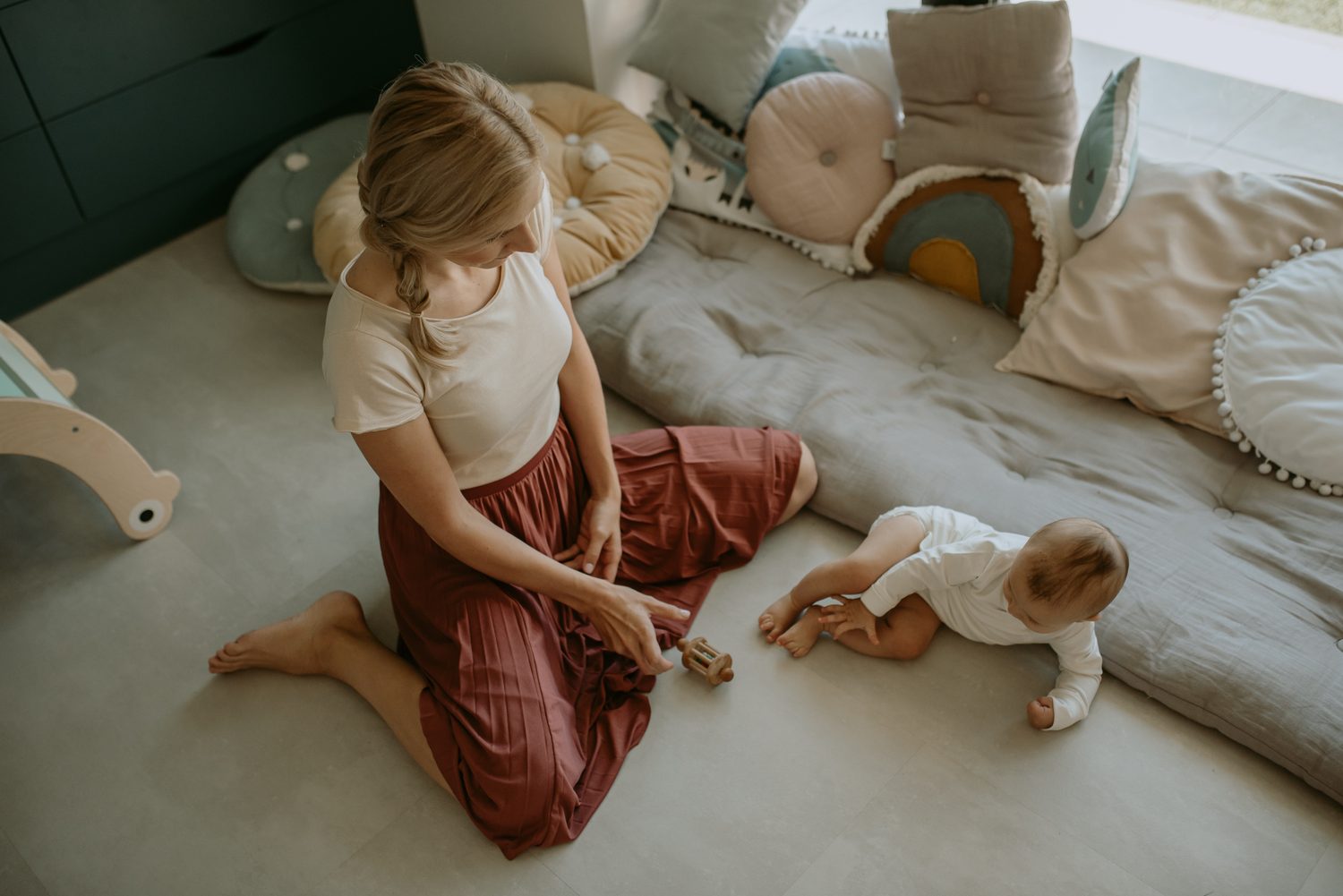
Photo: Michaela Kačírková
After birth, babies mainly make global movements – meaning they move their whole body. They can’t move one limb in isolation; movement always shows up throughout the body. The foot moves together with the entire lower limb. In practice, this means, for example, that your baby pulls the whole leg towards their body and also “pulls” the foot at the ankle; the same applies in reverse. When your baby stretches out the leg, they also “stretch” the foot at the ankle.
At around three months, a baby lying on their back is stable and can bring their hands together in front of their body. Along with this stability, they can also lift their legs off the surface, again pulling the ankles towards the body, and they can spread their toes. When around the fourth month your baby reaches for a toy, you may notice their feet turning towards them too, as if trying to “grasp” the toy.
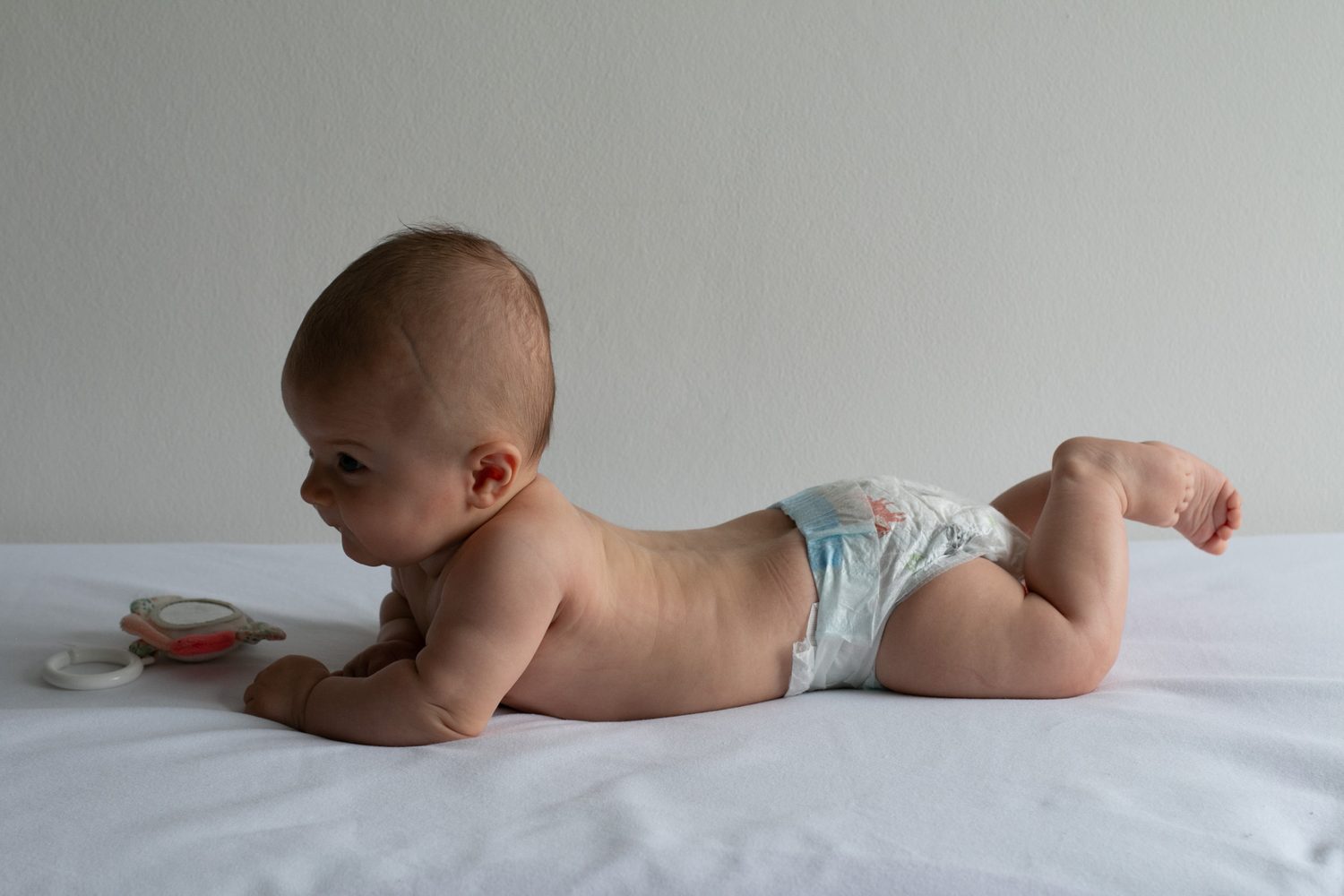
3 months, on their tummy. Photo: Michaela Kačírková
When lying on their tummy, your baby first starts lifting their head – often referred to as “tummy time” – then moves into the second upright position (supporting themselves on straight arms), then gets up onto all fours, where for a few weeks they simply rock back and forth, do high diagonal sits, and later crawl on all fours. Ideally, only after all these movements does your child stand up. Only now is the body ready for good-quality standing; then they start cruising around furniture, let go into open space, and only at the very end comes the “cherry on top” – walking.
We’ve described development in fast-forward. Above all, we wanted to show that it’s essential for your child to go through all movement patterns – that’s how they prepare best for walking. If development doesn’t progress well, it will show in standing, walking and posture.

4.5 months, on their tummy. Photo: Michaela Kačírková
Babies are equipped with a range of primitive reflexes, and one of them is the grasp reflex in the lower limb. You activate it by placing your thumb on the sole just below the toes, gently pressing, and watching the toes. You’ll see the toes “grasp” your thumb. This reflex works until the child stands independently, after which it fades.
Only the reflex disappears, but the foot’s grasping function continues – with the difference that your child’s foot essentially “grips” the ground they walk on. For example, if a child stands on a rounded stone, the foot will wrap around it. This helps the child maintain stability and not fall.
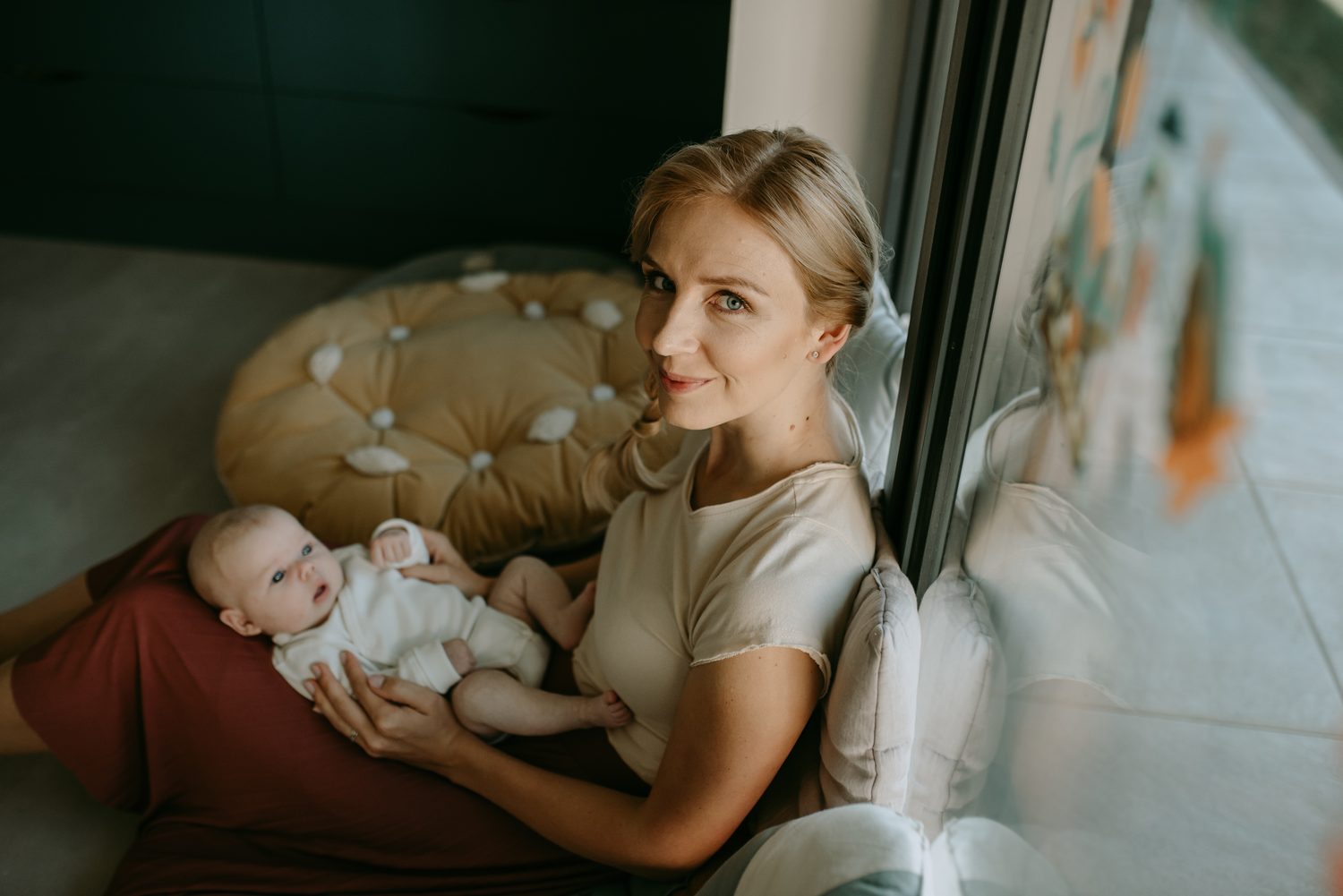
Photo: Michaela Kačírková
Give your baby plenty of time to move. Don’t rush them to do this or that movement; instead, create suitable conditions so they can “practise” development on their own.
Don’t speed up development – don’t sit your baby up, don’t put your hands behind their feet so they can push off and start commando crawling, don’t stand them up, don’t walk them by holding their hands..
Give your baby enough space for free, natural movement. “Practise” movement by positioning them on their back, sides and tummy (tummy only when they’re awake – to help prevent sudden infant death syndrome). Create movement-friendly conditions, such as plenty of time on a non-slip surface that doesn’t stop them trying new movements, etc.
Overall, don’t restrict your child’s movement.

Very few baby products truly support natural development. They tend to help parents more than children – and for babies they often restrict movement.
Reduce the use of products where your baby is in a curled-up position. Avoid chaining products one after another too (bouncer, sling, carrier, car seat…). Use the car seat only in the car and for safe travel from point A to point B – it’s a safety device. Put your baby in a bouncer only for the absolutely necessary time; a Moses basket is a better choice.
We recommend not using products that “don’t do development and the foot any favours” at all. These include, for example, baby seats, walkers, carrying in a sling/carrier facing forwards, commando-crawling aids, etc.
Choose the right sock size – so it doesn’t restrict foot movement, doesn’t pull the toes together, and doesn’t pinch around the ankle. Avoid sock holders: they may keep the sock in place, but they limit foot movement.
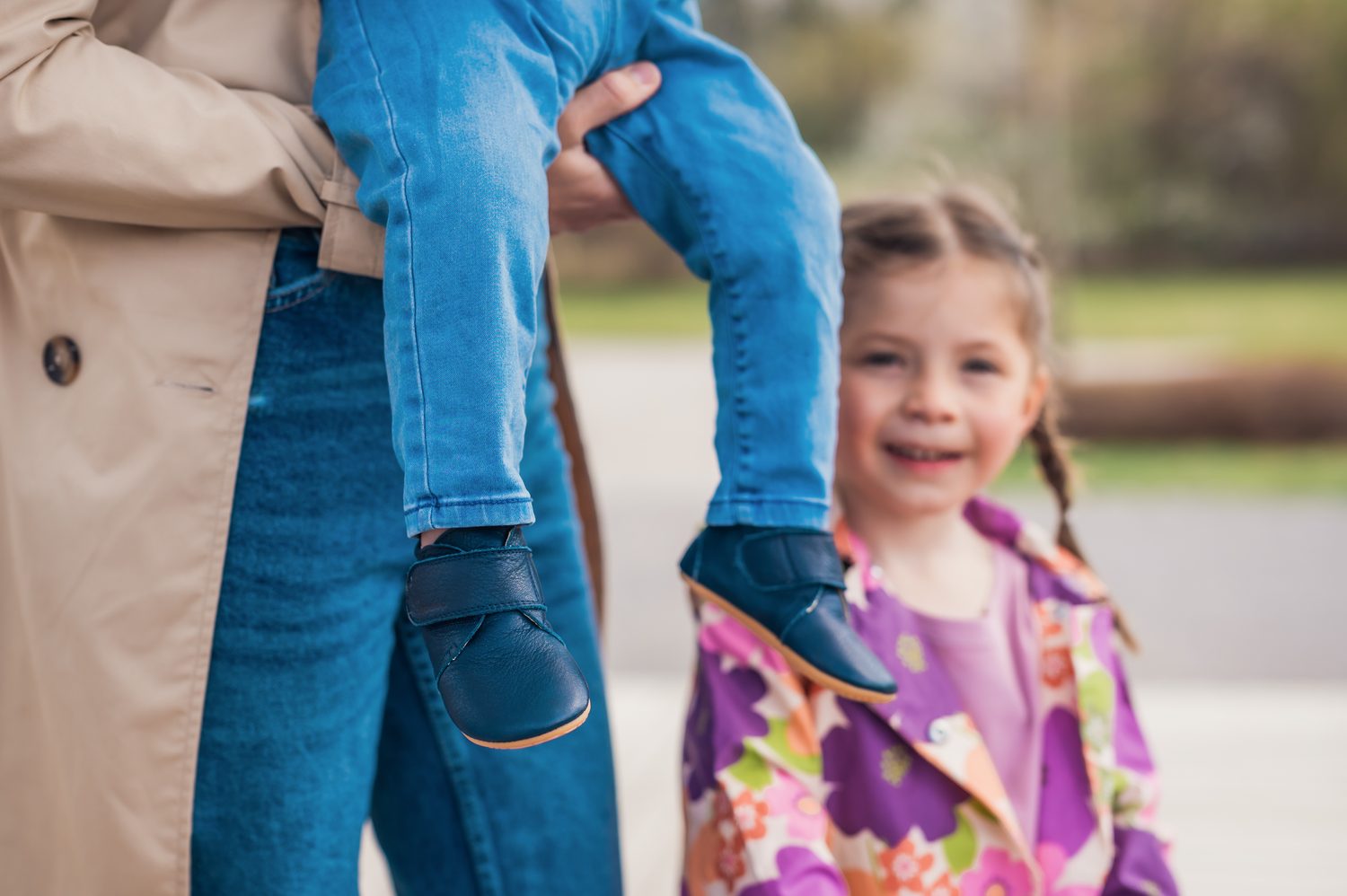
Put shoes on only once your child is walking independently. Until then, there’s no need for shoes in the pram or carrier; footmuffs/booties are enough. Once your child is walking and you’re choosing shoes, it’s important here too to keep movement as natural as possible. Choose shoes that respect the anatomical shape of the foot, and are flexible and lightweight. I recommend soft-sole shoes and then barefoot shoes.
Play with your child – including their feet. Play is important for a child’s overall psychomotor development (in fact, play matters at every age). What I mean is: when you’re looking at your baby, talking to them, playing with their hands, stroking their tummy, don’t forget to hold their feet too – massage them, massage each toe one by one, place your baby’s feet on your face and gently stroke them. Just be careful with tickling – your baby might not enjoy it.

Healthy development of a child’s foot isn’t just about choosing the right shoes. It’s a process that begins in the prenatal period and continues through every movement pattern your child learns during the first year and a half of life. Remember: the foot isn’t an isolated part of the body – it’s part of the whole movement system. When you give your baby enough time and space for natural movement, respect their pace, and avoid unnecessary baby gear, you’re giving them the best possible start for healthy little feet for life.
This article was created in collaboration with Bc. Michaela Kačírková – a paediatric physiotherapist working with children from birth. In practice, she uses knowledge of the Vojta method and the Bobath concept. She is co-author of the book Child motor development with love and respect (Physiotherapists to children), author of the practical course For healthy baby development, and founder of the project Dětská fyzio máma.
* this information applies to children who are healthy; if your child has a neurological or orthopaedic issue, consult your treating doctor or a paediatric physiotherapist for individual advice


 € - US
 Čeština
 Magyar
 Slovenščina
 Română
 български
 English
 Slovenčina
 Polski
 Dansk
 Nederlands
 Svenska
 Suomi
 Español
 Français
 Português
 Deutsch (DE)
 Deutsch (AT)
 Deutsch (CH)

