We’ll be happy to help via online chat or at: orders@premiumbarefoot.com

Walking, Movement and Health Selecting and Maintaining Barefoot Shoes
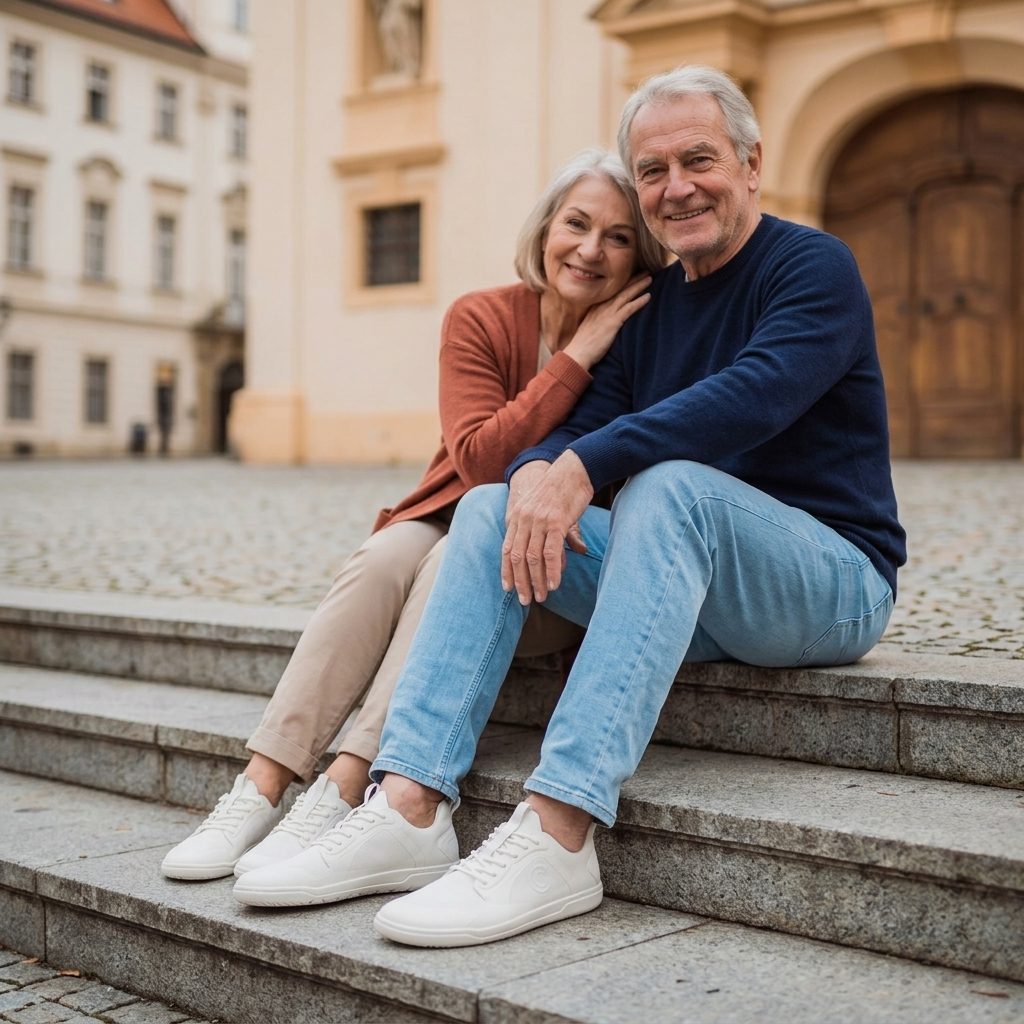
How can you improve your health later in life? Try the benefits of barefoot shoes. Discover how natural movement can strengthen your body, improve stability and bring relief to your feet. It’s never too late to take a step towards better health.
Eating well, keeping active, spending more time in the woods, seeing your loved ones regularly… There are plenty of things we know we “should” be doing, but life has a habit of getting in the way. Still, once you decide to start, don’t give up. These positive changes soon show in your mood, and a smile can become part of every day. Because it’s never too late. And it’s never too late to try barefoot shoes, either. Does walking barefoot appeal to you, even if you’ve already clocked up a few decades? That’s absolutely fine—let’s meet your health halfway and give it a go.

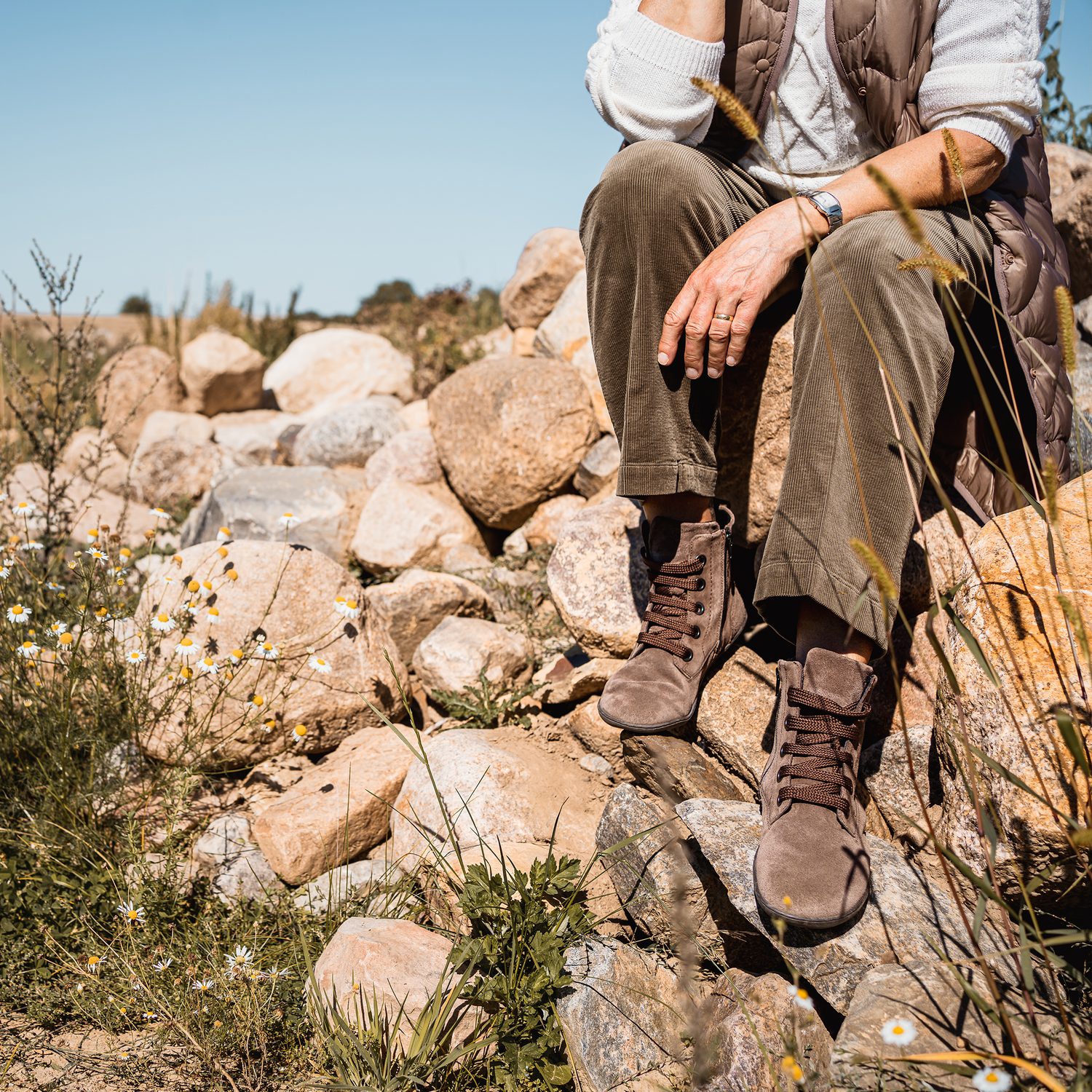
Walking barefoot is something both your mind and body can appreciate. Try stepping outside barefoot first thing in the morning—let the fresh air brush your cheeks and let the morning dew wake up your feet. Now that’s a wake-up call! It’s wonderfully refreshing to let your feet explore grass, soil, stones… and the surface you’re moving on in general. Start in the garden, or anywhere in nature. Simply take your shoes off and take a few steps. Then a few more. And a few more still. You’ll fall in love with it—you’ll see. And when you feel ready, try barefoot shoes. You’ll still feel the ground beneath you, but with the added protection against scrapes, cold and whatever the weather decides to do.

Meeting your health halfway is a good rule to keep in mind throughout life. Let’s do it together—barefoot. Why? Discover the benefits of walking barefoot:
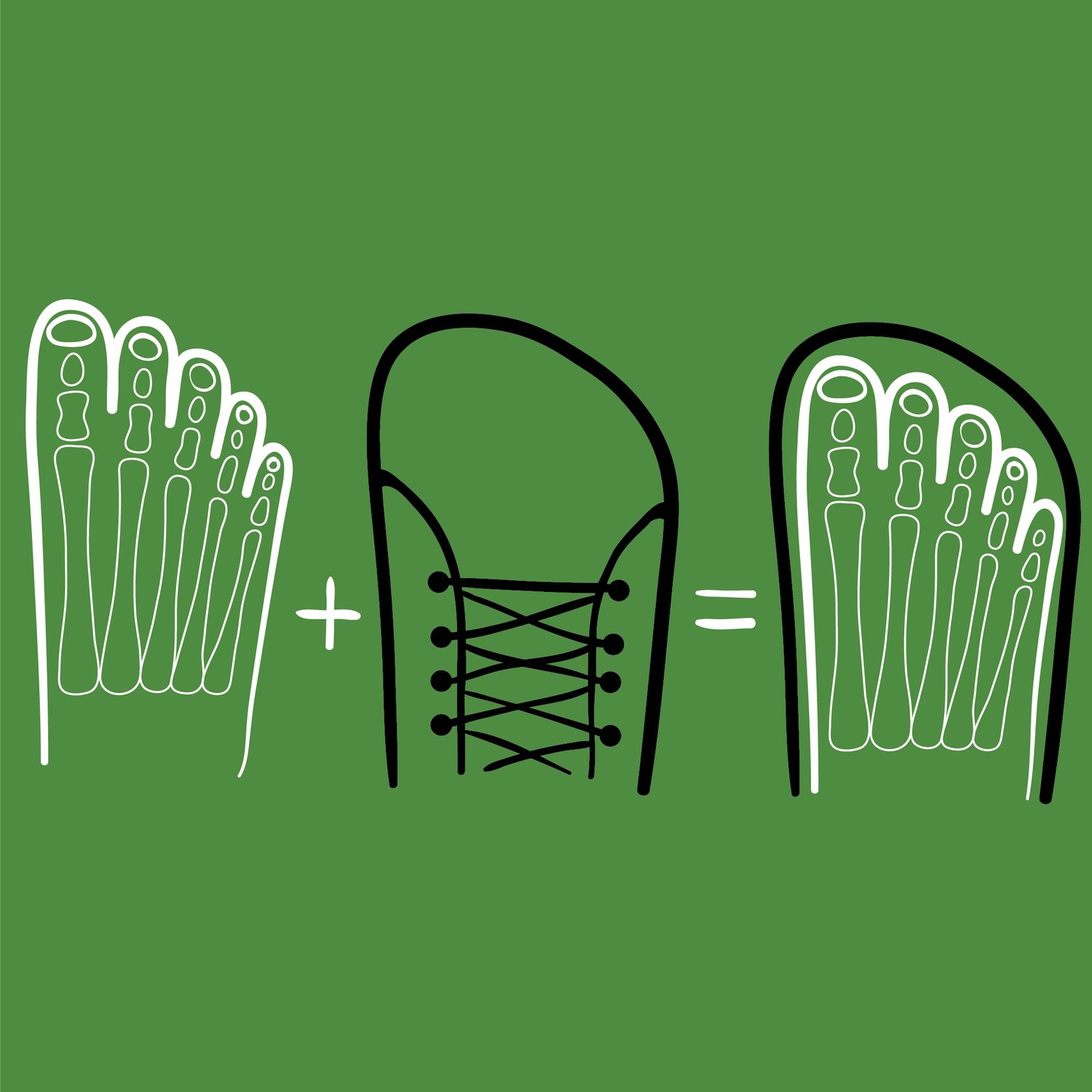
Thanks to the generous width of barefoot footwear—one of its key features—your foot can properly “set” on the ground and use its full width, creating a larger base for stable standing. Good posture takes unnecessary strain off your ankles, knees, hips, lower back, spine and shoulder blades. You can give all these areas relief by learning to stand correctly (and then to walk correctly). A sufficiently wide toe box also lets you use your toes for support, so your feet can respond better to an unexpected loss of balance.
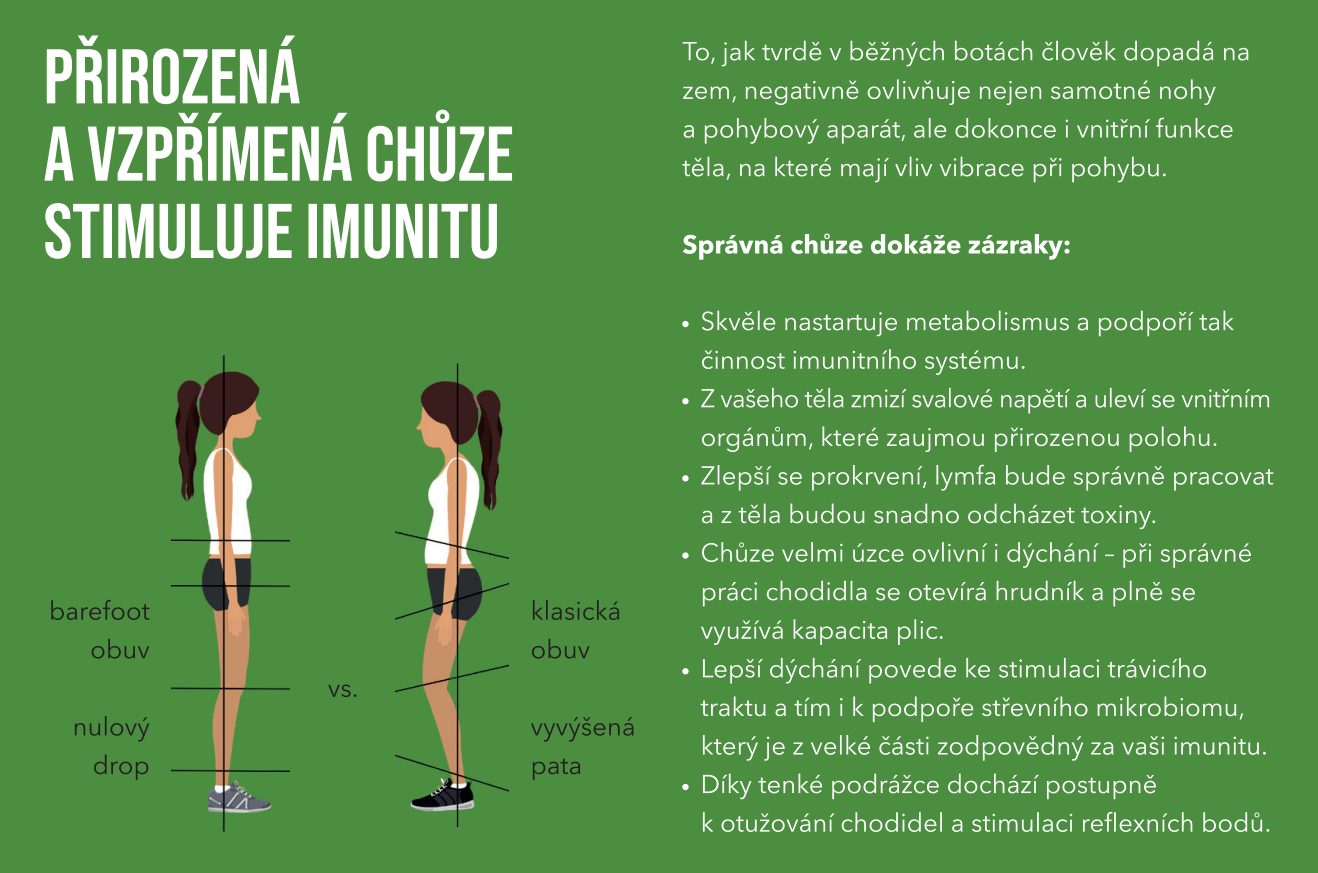
Now imagine trying to keep your balance in high heels… A heel—or drop (the height difference in the sole between the toe and the heel)—has an undeniable (and negative) effect on posture. And the only truly correct posture is the natural one—without “help” and without heels. Zero drop and a thin sole in barefoot shoes support natural, upright walking.
Surprised by this? We’ll probably surprise you even more.
Do you struggle with pressure points on your toes, arch, instep or heel? Or a bunion? All of this can also be caused by the wrong type of footwear. Why wear higher heels, stiff soles and narrow toe boxes that squeeze your toes like sardines in a tin, when comfort is an option? Luckily, it’s never too late to choose shoes that respect the natural shape of your feet and give them enough space.
An anatomical toe box that follows the shape of your foot can also reduce the risk of ingrown toenails. It doesn’t deform your toes or forefoot and leaves room for the transverse arch. Put simply: your feet get the freedom they need for good posture and overall body stability.
An unsuitable shoe shape or type can also be linked to unpleasant diagnoses such as a bunion (hallux valgus) or a heel spur. If these affect you too, we have good news—there are ways to work with them. We’ve covered both topics in detail, and you can read and listen to what can be done. You can hear about hallux in our podcast with podiatrist and physiotherapist Edita Prošková. And on treatment and prevention of heel spurs, you’ll find the article Enjoy pain-free walking again—physiotherapy can help with heel spurs too.
But don’t run off just yet—take a look at more benefits of walking barefoot.

Not only is wearing barefoot shoes more comfortable, putting them on is often easier too. Of course, it depends on the model you choose, but we can confidently say it’s generally true. How so? Another key feature of barefoot shoes is their width—and thanks to that width, you can slip into them as if into a cosy nest. This is also handy if your feet tend to swell; we’ll come back to that.
What not everyone may like (or find comfortable) is the thin sole. But there’s a solution for that too. You can choose shoes with a thicker type of sole, and we also recommend softening the step with a second insole for a gentler landing. You’ll definitely appreciate that on frosty mornings and during winter walks.
Thanks to such a thin sole, barefoot shoes are genuinely light and flexible (even with an insole inside). They don’t burden your feet with unnecessary extra weight, so you can walk as if on a cloud. A classic shoe weighs around 700 grams, while a barefoot shoe is only 250–300 grams. That’s more than half the load off your feet—and you really do notice it.
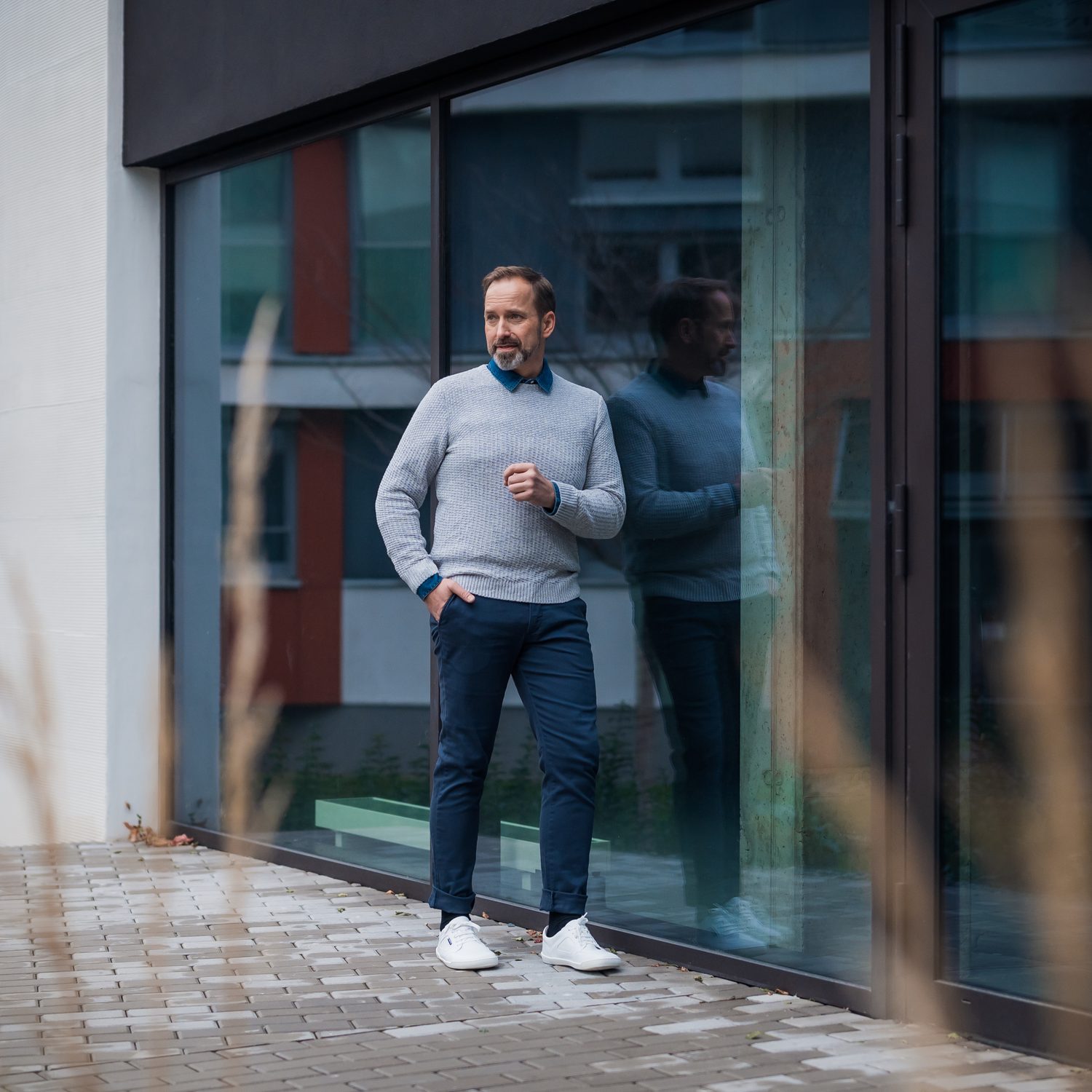
Let’s try a little experiment. If you have shoes or slippers nearby, take them off—ideally your socks too—and walk around the room. Stand on tiptoe, spread your toes, notice every part of your foot. Now put your shoes back on and try the same thing. Can you feel the difference? Absolutely. The hard sole of a conventional shoe simply won’t let you use your feet’s full potential. That’s why another key feature of barefoot footwear is flexibility and maximum bend in every direction. Your feet get enough freedom for natural movement, as if you were barefoot.
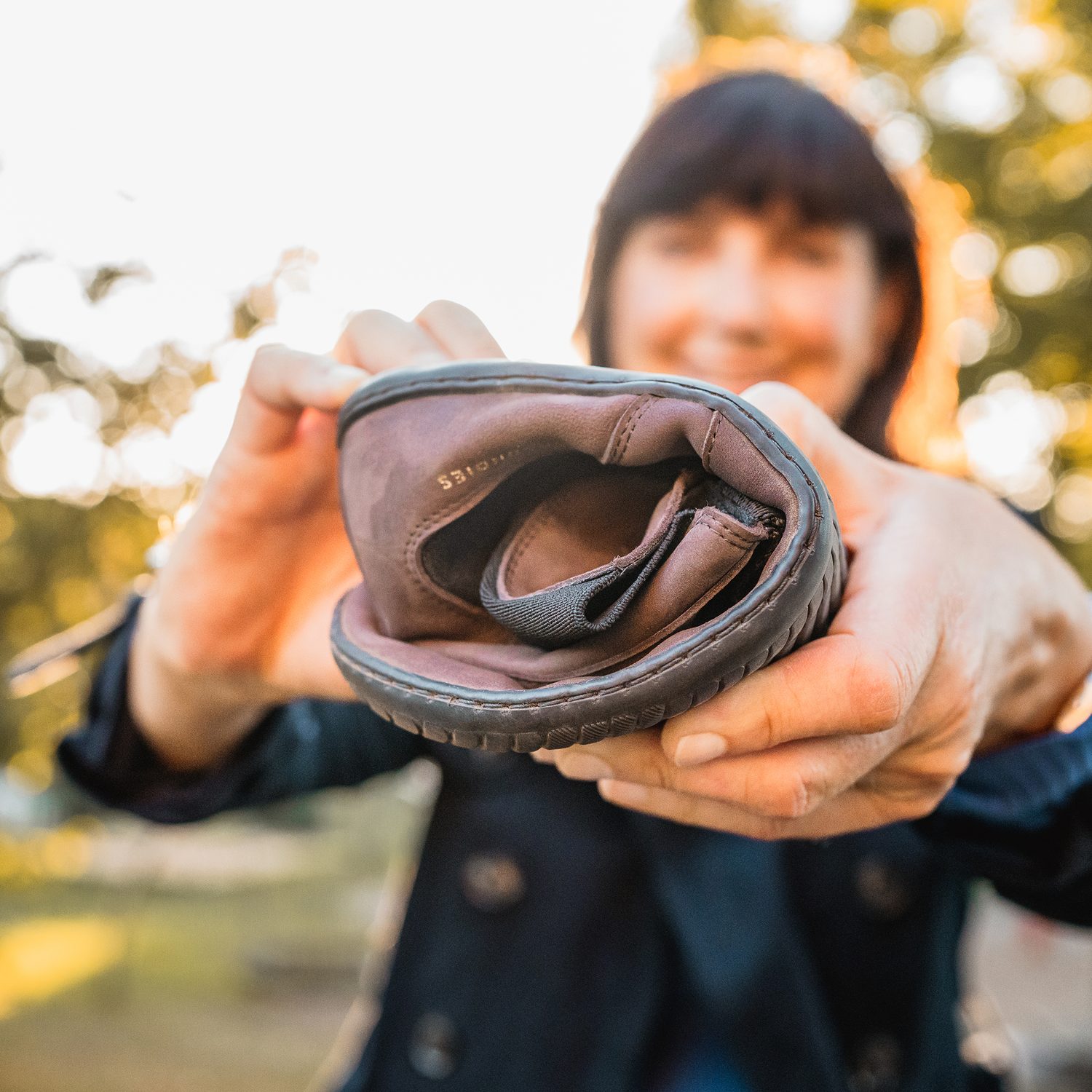
More activity = fewer cold feet. Because where there’s movement and sensory stimulation, there’s also better blood circulation. There’s no doubt it’s easy to get that in barefoot shoes—especially on a walk in nature, where your feet meet varied terrain, stones, roots or tufts of grass.
If you’re only just transitioning to barefoot shoes, your feet may ache at first. Don’t give up straight away—this is a gentle kind of soreness that wakes up muscles you haven’t heard from in a long time. You can read about why the beginnings can be more challenging, and how your body can benefit if you stick with it, in the article A guide to choosing barefoot shoes and taking your first steps.
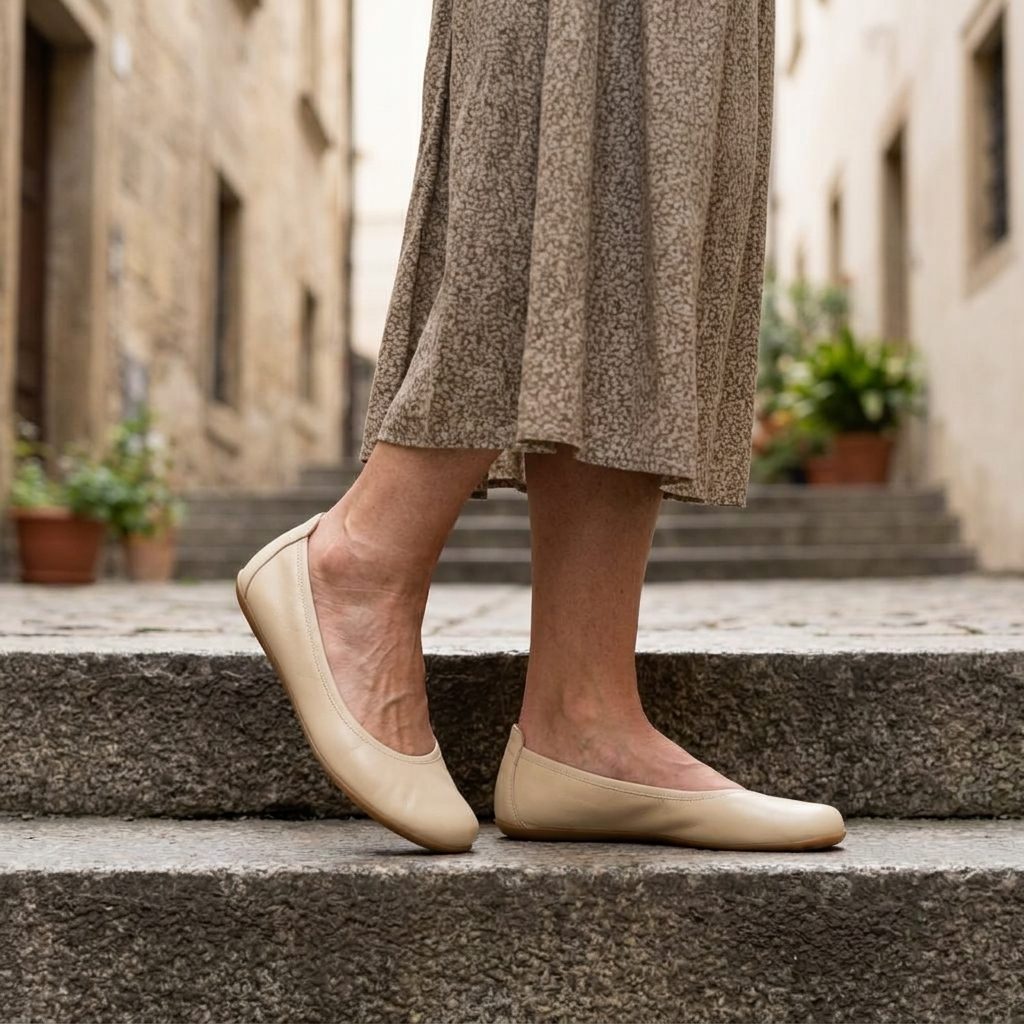
Better circulation in the feet may also have a positive effect on swelling. However, swelling is a tricky topic. There are cases where barefoot footwear or special orthopaedic and sensorimotor aids can help precisely because they improve circulation in the feet (which can have a positive effect on the whole circulatory system). And there are also cases where swelling is caused by a deeper underlying issue that’s not obvious at first glance. Either way, it’s a good idea to visit a specialist and get advice.
A very, very positive effect on circulation in the feet can come from special sensorimotor aids, such as massage mats and balls. For more sensitive people, it can feel like walking on hot coals—and that’s exactly what sensorimotor aids are meant to do: boost circulation and stimulate the feet (and the body) towards better performance.
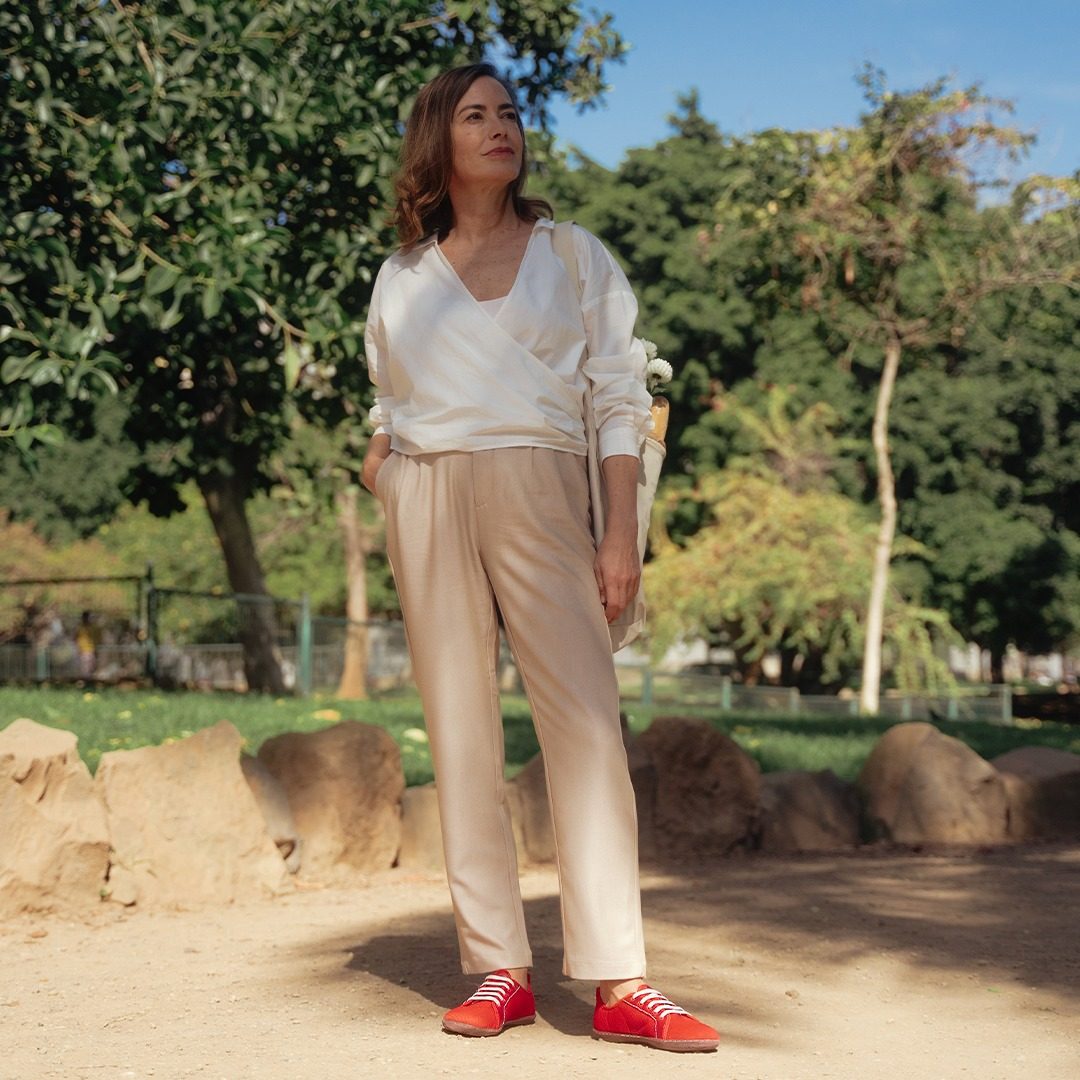
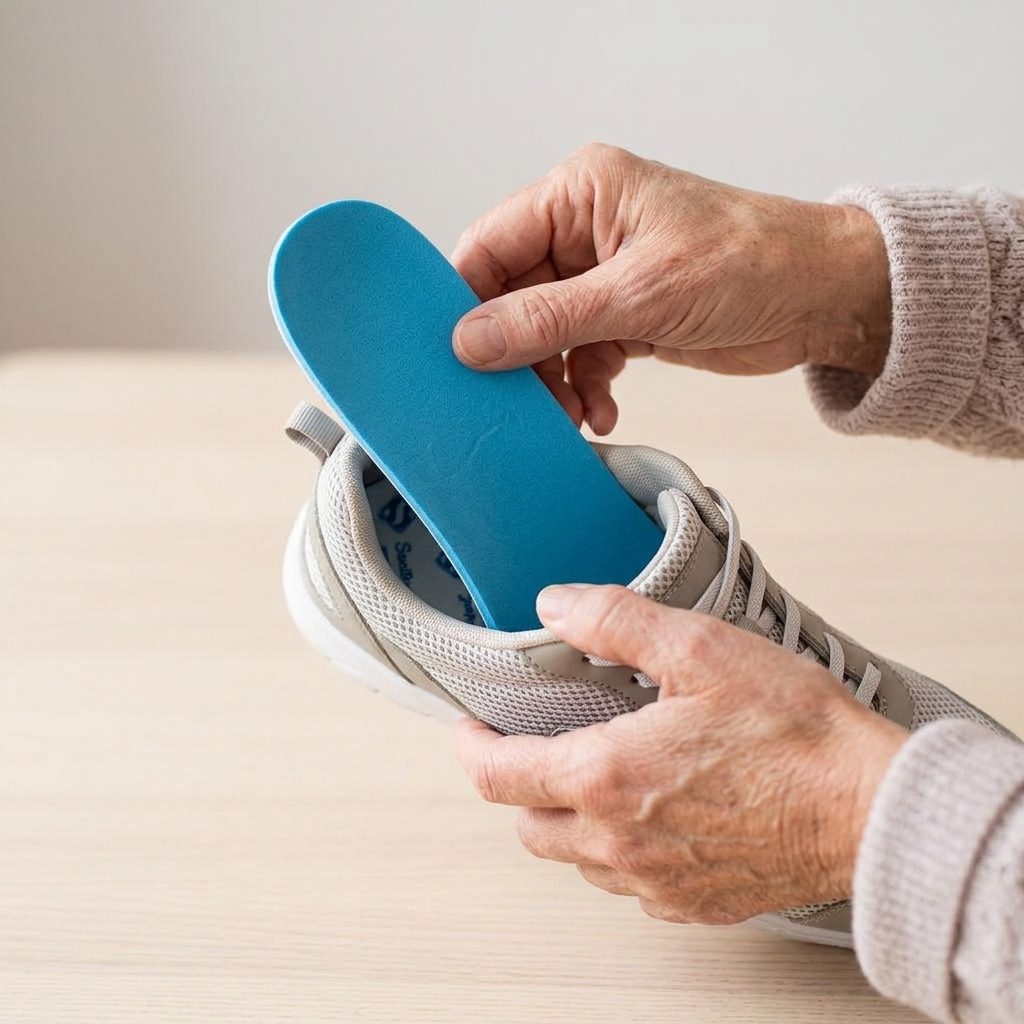
At naBOSo, we believe—and specialists confirm—that the benefits of barefoot shoes outweigh the downsides, and their advantages for the body and health are undeniable. Even so, when choosing your dream pair of barefoot shoes, it’s wise to consider your health. If you’re dealing with any health issues, discuss your decision first with a specialist, doctor or physiotherapist. Extra caution is especially important for people with diabetes. If you decide on barefoot shoes, choose ones with the thickest sole and upper material possible, and consider softening them with a suitable insole.
We can recommend foot exercises and walking barefoot to everyone—no matter how many candles are on the cake. The key is to start slowly, build up gradually, don’t rush anything, and pay attention to what your body is telling you. The way you walk has a big impact on your body’s structure—and you might be surprised, but it’s not that simple. If you’re used to walking barefoot, for example at home, you have a great foundation and a real advantage when transitioning to barefoot footwear. Good walking is a skill, and using the whole sole of your foot—including your toes—makes it much easier. Not convinced? Take a look at the article 7 tips for transitioning to barefoot shoes—easily and without pain.
Transitioning to barefoot shoes later in life is definitely not impossible. Quite the opposite: slip on barefoot shoes and meet your health halfway. We guarantee that after the first few weeks of getting used to them, you won’t want to take them off. Start with short, regular walks in the woods, across a meadow or in the park—perhaps three times a week. Bring a neighbour, a friend, your partner. And as a reward, treat yourself to an indiánek or a věneček at the local cake shop (two classic Czech pastries). Regular movement clears both body and mind—and having happy, warm feet at the same time is pretty much ideal.


 € - US
 Čeština
 English
 Slovenčina
 Magyar
 български
 Polski
 Dansk
Dansk
 Nederlands
 Svenska
 Suomi
Suomi
 Español
 Français
 Slovenščina
 Română
 Português
 Deutsch (DE)
 Deutsch (AT)
 Deutsch (CH)


