We’ll be happy to help via online chat or at: orders@premiumbarefoot.com

Do you get knee pain, shin pain or Achilles pain when you run? Wondering whether barefoot shoes cause injuries — or actually help? Physiotherapist Michael Tichov from FyzioGO looked at what the science says.
If barefoot shoes automatically reduced injury rates, we’d all be running in them. And if they were dangerous, they wouldn’t be backed by so much solid research — and so many happy runners. The truth — as usual — sits somewhere in the middle.
Scientific studies show that barefoot running can reduce some injuries, but may increase others if your adaptation isn’t guided and gradual. In the previous article, we described how barefoot running changes movement mechanics and what happens to your muscles, tendons and arch. Now we’ll look at what that change means in terms of injuries — and who is most likely to benefit from barefoot running.

One of the most common worries among people considering barefoot running is: ‘Will I get more injuries?’ The answer science gives is surprisingly clear — no.
Studies from recent years agree on this. Barefoot footwear in itself doesn’t mean a higher injury rate than conventional shoes. What does change is where injuries tend to show up. In conventional shoes, injuries are more likely to build up around the knees and shins. In barefoot shoes — if you don’t transition well — they can shift towards the foot and the Achilles. So it’s not that barefoot shoes are more dangerous. It’s that they load different parts of the body that may not be ready yet.
Research also shows that people who wear barefoot shoes long-term tend to have stronger feet, a more stable lower limb and a better-functioning arch — and they don’t get injured more often than runners in conventional footwear. The main risk factor isn’t the shoe choice, but increasing mileage too quickly and underestimating foot strength.
So barefoot running can hurt at the beginning. But it isn’t a dangerous running style — it’s a different style that requires a different approach. And that approach can be learned.
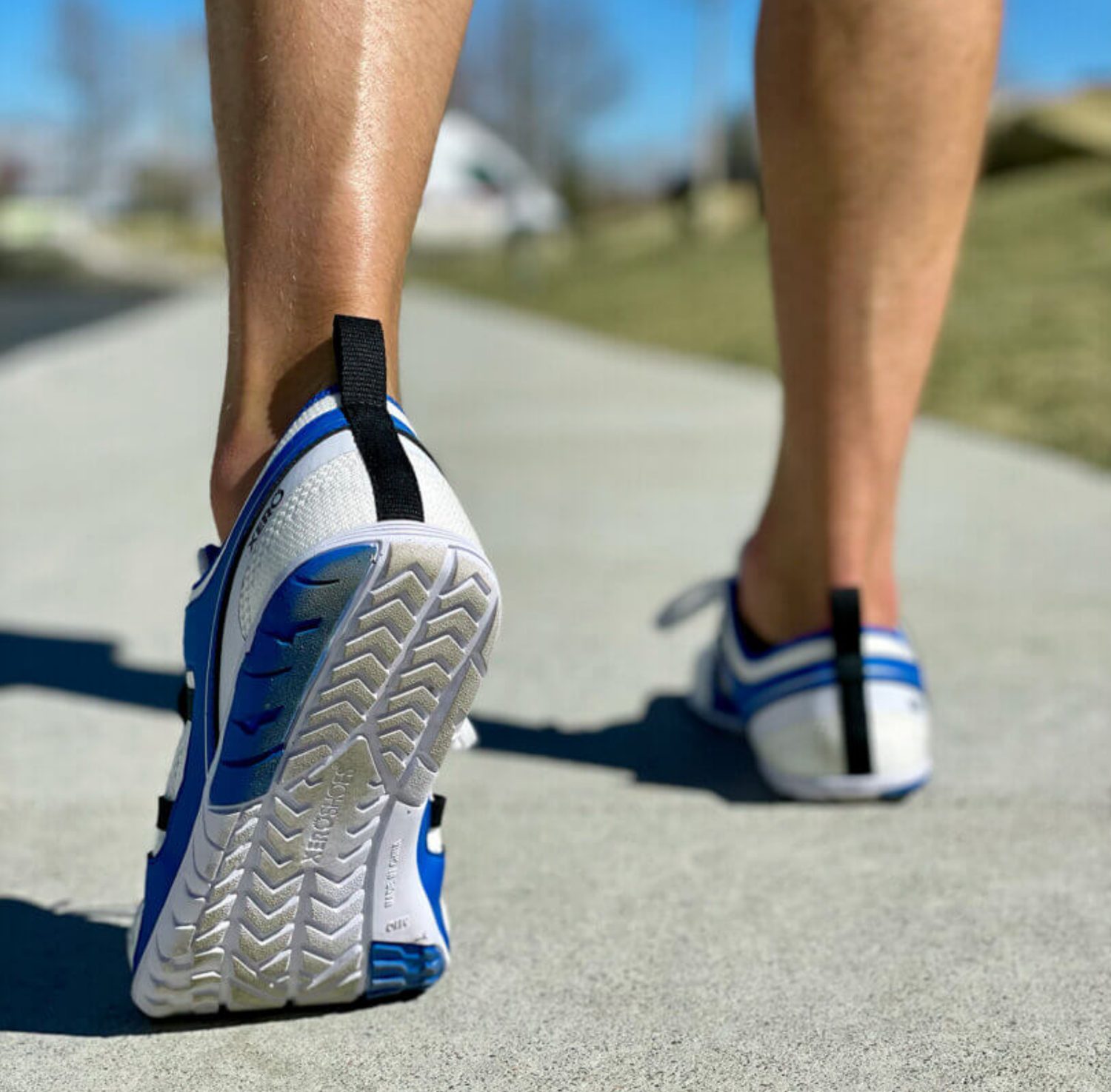
One of the best-documented benefits of running in barefoot shoes is a reduced risk of injuries caused by repeated hard impacts from heel striking. These include:
The explanation is simple. When you land on the whole foot or the forefoot, the load in each step is smoother. The knee is less stressed and forces are distributed into active structures — muscles and tendons — rather than passive ones such as the heel bone or knee cartilage. Your leg uses its natural spring, instead of simply absorbing impact.
A 2012 study supports this too: runners who landed on the forefoot had a significantly lower rate of repetitive injuries than those who landed on the heel.
But shifting the load has another side to it. If you transition too quickly to running in barefoot shoes, the most common new injuries are:
A 2013 study described that ten out of nineteen runners who switched to barefoot footwear too quickly developed stress reactions in the forefoot bones — specifically bone marrow oedema, not a fracture. But the blame isn’t on barefoot shoes themselves. The problem is the speed of the transition. Muscles adapt relatively quickly, tendons more slowly — and bones need the most time of all. Bone adaptation can realistically take several months. And that’s something active runners usually don’t want to hear.

Not everyone responds to the transition to barefoot shoes in the same way. If you fall into one of the groups below, it doesn’t mean barefoot running isn’t for you. It simply means you’ll need a bit more time and attention.
Higher injury risk includes:
The issue often isn’t the barefoot shoes themselves — it’s that the footwear changes, but the training approach doesn’t. New shoes alone aren’t enough. You need to start running differently. And what does that look like in practice? The founders of naBOSo, Andrea and Jirka Souček, also shared their tips and experience with transitioning to barefoot — read their story.
Now that we know where the risks lie, the logical question is: who does barefoot running actually make sense for? There isn’t a one-size-fits-all answer — it depends on where you’re starting from, what you want from running, and how willing you are to approach the transition itself. But both science and physiotherapy practice show there are groups of runners for whom barefoot shoes work particularly well.
The biggest benefits of barefoot running can be expected in runners who:
And this doesn’t apply only to running — it also applies to everyday walking. With walking, the risk of overload is practically minimal, so it’s a great way to start with barefoot shoes in the first place.
Maybe you started reading this article feeling sceptical. Maybe you expected science to either condemn barefoot running outright — or crown it as the ultimate solution. Neither happened. And that’s actually the best news. Barefoot running is a realistic option for anyone who approaches it sensibly. Not as a fashion trend, but as a new movement habit that requires patience. If you respect that, there’s a very good chance barefoot shoes will bring benefits you’ll feel with every step — stronger foot muscles, better ankle stability, relief from chronic knee pain, and more natural movement.

Article author: Mgr. Michael Tichov
An active athlete and physiotherapist who lives by the motto ‘a healthy mind in a healthy body’. His focus is on movement-based exercise — whether that’s sports training or therapeutic exercise aimed at helping people get rid of chronic pain. You can find more physio tips on FyzioGo’s Instagram.
This article is based on findings from the following studies: Daoud et al. (2012) — injury incidence across different foot strike patterns; Ridge et al. (2013) — risk of bone overload with a rapid transition; Altman & Davis (2016) — overall injury rates in minimalist footwear; Hollander et al. (2017) — long-term effects of barefoot footwear on foot strength and stability; Fuller et al. (2021) — injury risk factors in barefoot runners.


 € - US
 Čeština
 English
 Slovenčina
 Magyar
 български
 Polski
 Dansk
Dansk
 Nederlands
 Svenska
 Suomi
Suomi
 Español
 Français
 Slovenščina
 Română
 Português
 Deutsch (DE)
 Deutsch (AT)
 Deutsch (CH)


