We’ll be happy to help via online chat or at: orders@premiumbarefoot.com

Foot position is at the heart of good posture. It influences how your abdominal muscles switch on, how your muscular ‘COREset’ tightens, and it can be a route to a flatter tummy.
Are you dealing with a separation of the rectus abdominis muscles (diastasis), a weakened abdominal wall, lower-back or hip pain, bloating, an overhang, numbness in the lower abdomen, a feeling of tightness, or other discomfort around the pelvis? Then the next few lines are written exactly for you. Give yourself ten minutes just for you: I’ll teach you how to sense your feet as a key component of functional exercise. I’ll show you how to bring life back into your centre — through your feet.
Foot position is at the heart of good posture. The foot is connected to all the joints and muscles of the pelvis. When you use your feet well, you can often notice an immediate response at your sitting bones — have you ever spotted that? Through the ankles, energy transfers to the knees and hips (and their position then influences the natural curves of the spine and the position of the shoulder blades).
In short, the body works as one whole. Do you know what the foundation is for activating your abdominal muscles and tightening your muscular ‘COREset’? A stable pelvis. And where does the secret of pelvic balance (level, tilt, tension, stability, mobility) lie? Of course — in a stable leg, in a lively, active foot. But you do need to have your feet firmly on the ground – either barefoot, or in soft, flexible barefoot shoes. A conventional shoe with a rigid sole, an unnaturally shaped insole, or a raised heel often numbs our feet.
I’ve prepared a few exercises to improve how you sense and use the foot–leg–pelvis chain. Let’s do it together – barefoot, or in barefoot footwear.
Give yourself ten minutes in a calm, quiet room without distractions. Invite a helper (a partner, your mum, your child) to slowly read the following points to you. In an open space, stand upright in a way that feels comfortable, and close your eyes. Use your imagination and scan through your body, bit by bit, with full attention.
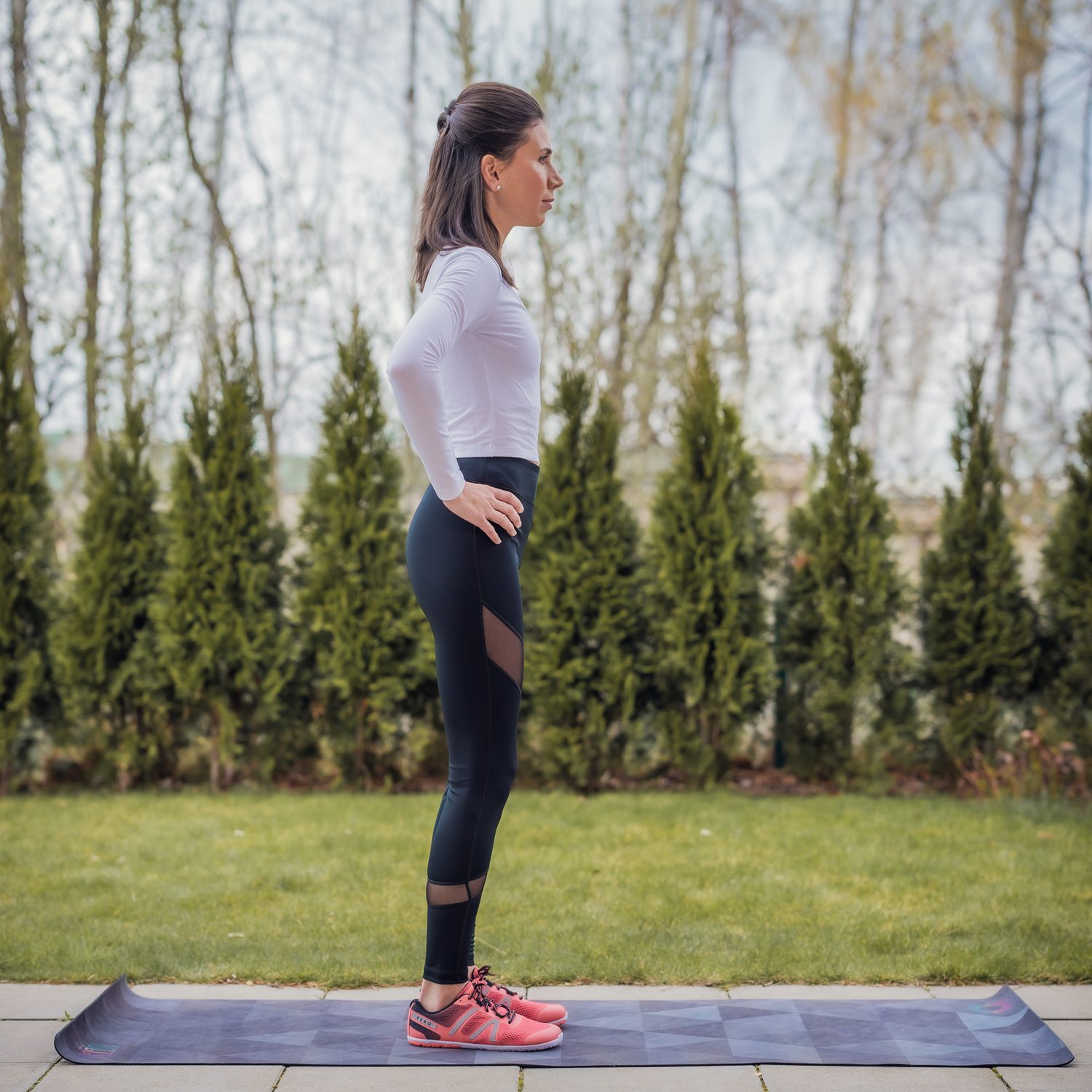
Assess the support of your feet:
Take an inner look at your heels:
Notice the alignment of your lower limbs:
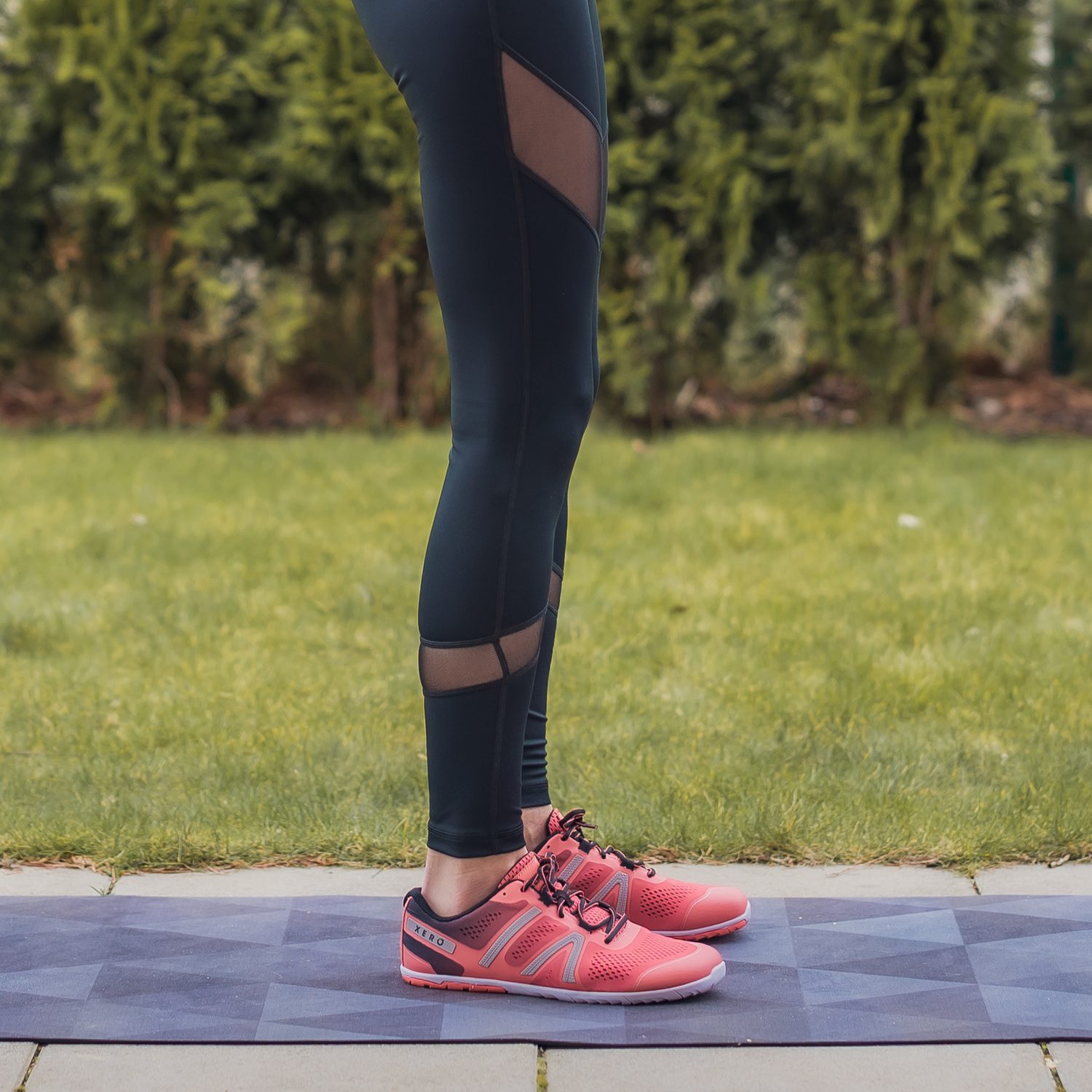
Now imagine your pelvis as a bowl of water (the axis of its base runs through the pubic symphysis at the front and the tailbone at the back). You can also hold it with your palms:
Silently tell yourself how your centre feels:
You’ve just begun the process of ‘the art of sensing your body’. In a moment, we’ll add
awareness of other body positions and movement. Did you know that when you bring attention to a part of your body, the nervous system sends the brain information that something isn’t quite right, and the regeneration process begins?
After a short rehabilitation, try this little experiment again – what has changed? Noticing the difference between your starting point and the state after active work with your body is absolutely essential.
Through your nervous system, you’ve just sent your brain a message about areas that don’t feel completely right. The regeneration process begins.
So — how is your pelvis doing: would your imaginary bowl spill forwards, backwards, or to the side? From today, you’ll keep an eye on that level surface — not only during exercise, but throughout your day. A neutral pelvic position is crucial for your musculoskeletal system, for flattening the tummy, for the ability to conceive and carry a baby, for digestive, menstrual and sexual comfort, and for mental wellbeing too. The pelvis is the centre of our emotions — did you know that?

Let’s try one more supportive exercise. Standing, place your hands around the iliac crests of your pelvis and imagine you’re holding a bead on an abacus. What does an abacus look like? There’s a bead on a wire that rolls forwards and backwards. Close your eyes, imagine that wire running through your hips, and under your palms gently tip your pelvis like a bead forwards and then backwards.
Notice whether the movement is smooth, whether one direction feels easier, and whether you sense any resistance or tightness (the pelvis can be very tense). Move slowly and mindfully — don’t rush. After a few tilts, try to find a pelvic position where you feel a similar stretch at the front and the back of your torso.
Let’s use an image again — your back will feel nicely long (you feel length through the lower back near the pelvis, and length through the neck near the head), your abdomen will feel long and active (the pubic symphysis gently draws towards the navel, and you lengthen up through the crown of your head towards the ceiling).
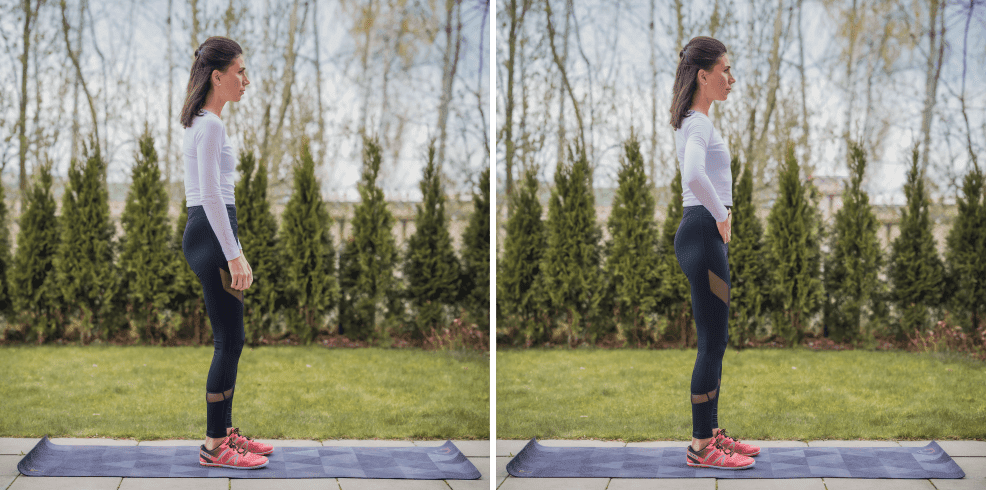
Stand in a relaxed stance and notice how much weight your feet have to carry. They’re probably bearing your entire body weight and are overloaded. What if you tried it differently? Now slightly bend (or ‘unlock’) your knees, bring your pelvis level (for example using the ‘bowl’ or ‘bead’ visualisation), and lengthen up through the crown of your head towards the ceiling — as if someone were pulling you up by a bun. How do your legs feel now? Where has the activity shifted? Exactly — into your centre.
The domed arch of the grasping foot evolved long ago into a spiral arch. The spiral is an old, proven structural principle of life — think of the brilliant DNA helix, the strength of twisted antlers, the stability of a snail shell, the practical winding of plants, a functional umbilical cord, and so on. Our feet ‘screw’ in the same way as when you take a towel and twist it. Let’s wring out your feet a little too.
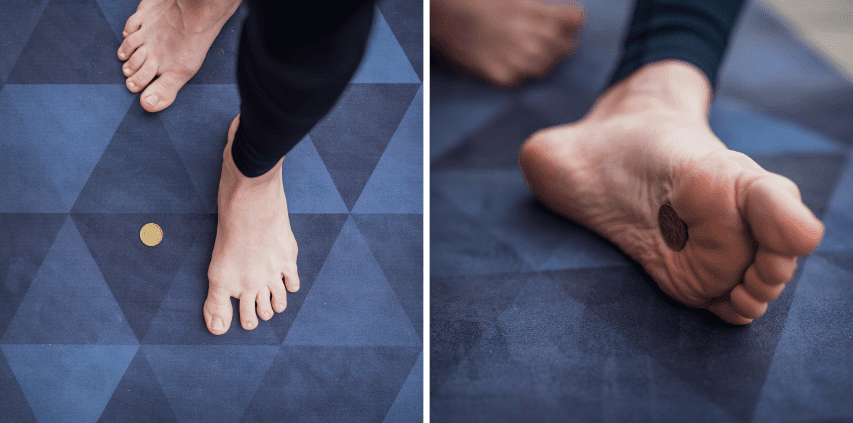
In an upright stance (pelvis level, body lengthened through the crown), without socks, spread your toes — big toe and little toe move away from each other — and try to widen the foot. Only the joints under the big toe and little toe stay in contact, and a 10-koruna coin could fit under the other joints. Keep this set-up and lift all your toes off the ground.
Practise moving your toes away from each other and back towards each other (watch that they don’t turn into ‘claws’ as they come together — keep your toes long). When you finish the movement, place only your big toes on the floor and lift them, then only your little toes and lift them again. Can you do it on each foot separately? And now you can already ‘suction’ and lift a 10-koruna coin off the floor with your bare foot.
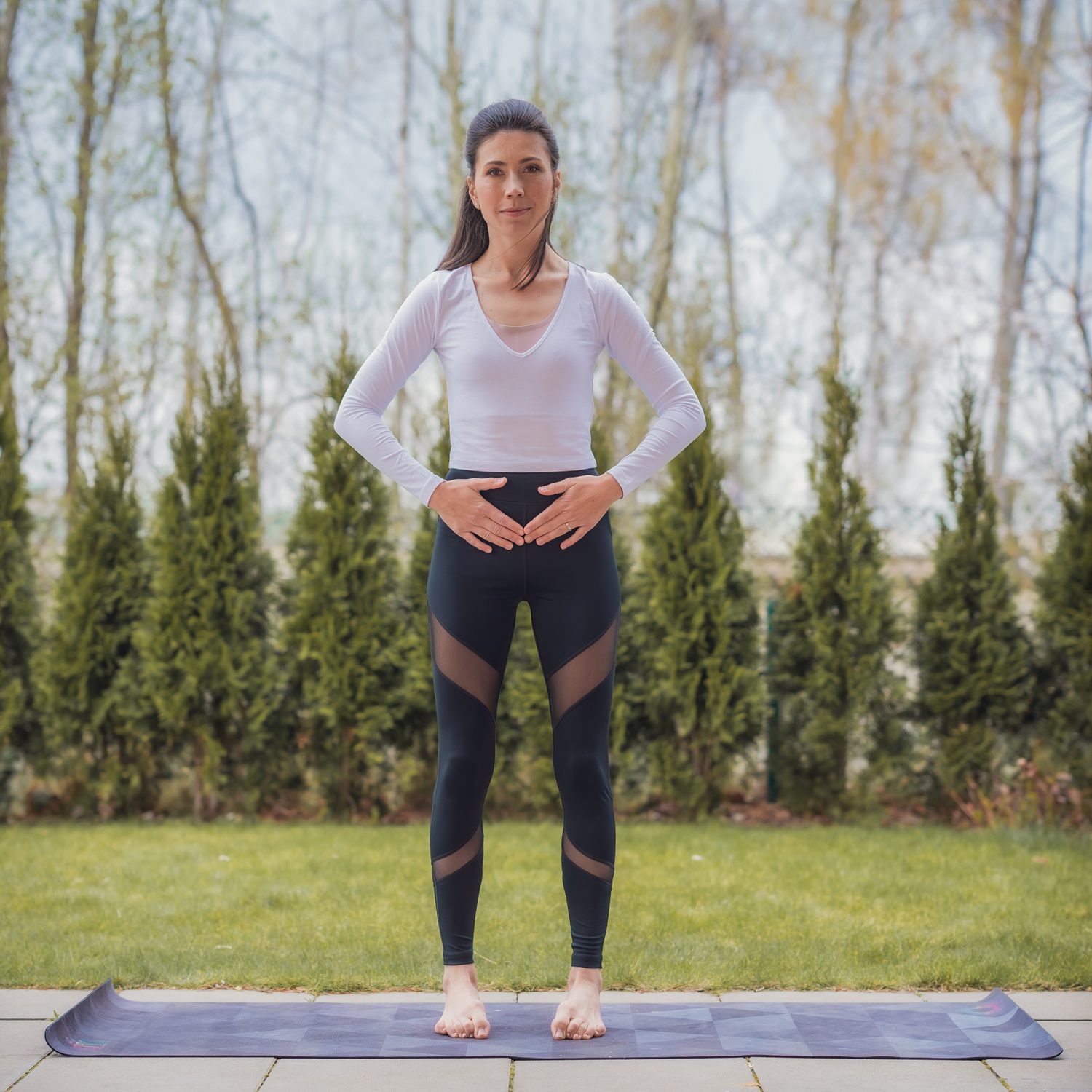
In an upright stance without support (pelvis level, body lengthened through the crown), remove the big-toe support by curling your toes down into the ground — your feet will form an arch. Turn the heel slightly outwards, and the midfoot and forefoot inwards and down into the floor. Feel the ‘screwing’ (rotation) and the play with length. Feet screwed in like this will shift the pelvis backwards and gently rotate it downwards — can you feel it?
Don’t forget that your knees must face forwards. Breathe freely and, in this body set-up, try slowly lifting your arms up towards your ears, or with a stable pelvis rotate your chest to one side and the other (for example, as if passing a cup of coffee). What’s happening in your centre?

If you have a soft inflatable ball at home, get it ready and let’s give your (centre) body a nice little workout. Stand in an open space, place the ball a few centimetres in front of you, step onto it with your right foot, reach your arms forwards (as if holding an imaginary ball in front of you), and relax your shoulders.
Press the left foot into the floor with an active arch; the right foot will be lightly supported by the ball — imagine you want to ‘suction’ it up and lift it. With a deep exhale, shift your weight onto the right foot and push off the ball. The left heel stays firmly grounded. On an inhale, return to the starting position and ‘suction’ the ball again. Exhale, step. Imagine you’re a bouncy ball that springs high up towards the ceiling.
To finish, let’s see for yourself how your active work with the arch affects your pelvis and abdominal muscles.
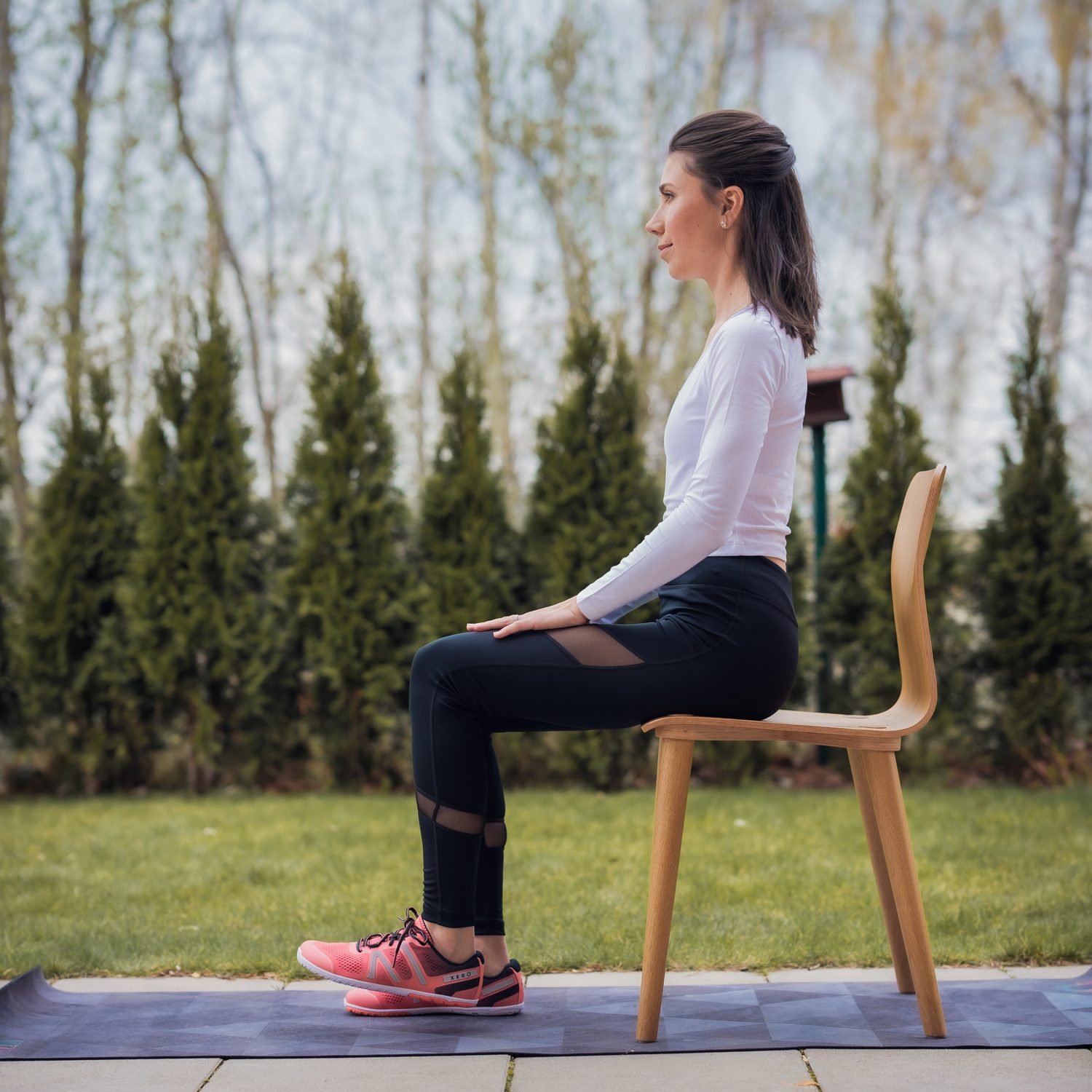
Sit on the front edge of a chair, ideally a straight chair without armrests. Notice your sitting bones pressing into the seat, align your torso, and lengthen up towards the ceiling as if by an imaginary bun. Place your feet on the floor hip-width apart, with your knees directly above your ankles. Put your palms on your lower abdomen and notice what’s happening there. In the starting position, your heels and toes are relaxed on the floor.
Now imagine again that you have a 10-koruna coin under the midfoot and you want to lift it — the joints under the big toe and little toe press into the floor, as does the centre of the heel. And what happened to your sitting bones? What did you feel under your palms? With each inhale while keeping an active foot arch, the sitting bones draw closer together and your pelvic floor activates. The deep abdominal muscles naturally respond and switch on too. Try to keep this set-up and alternately lift the right and left foot off the floor. But be careful — the 10-koruna coin mustn’t fall out.
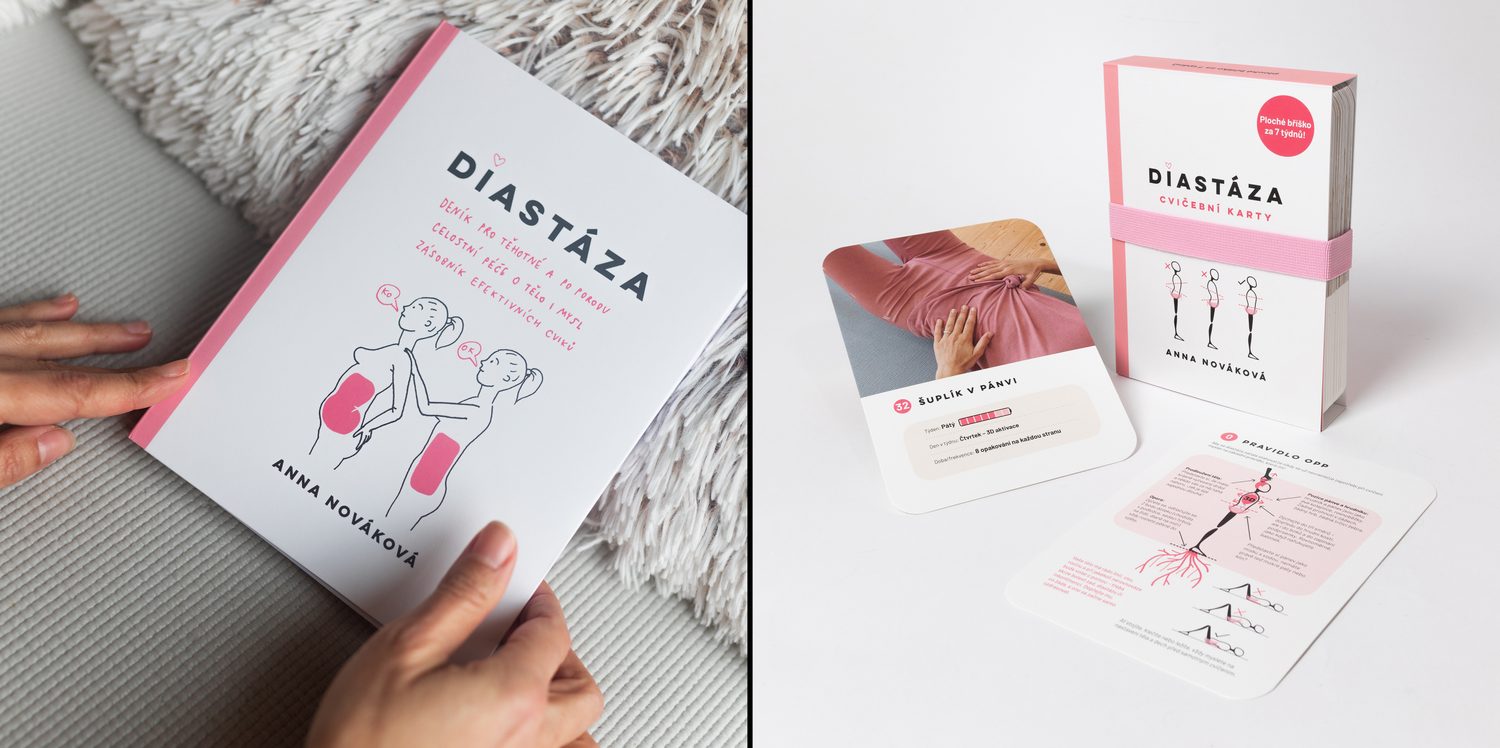
More tips for a flatter tummy can be found in the article Diastasis – how to get rid of it once and for all. A great guide is also the book Diastáza, packed with information, practical exercises and beautiful illustrations, or the set of exercise cards.
We often observe our bodies, but we don’t truly feel them. We’ve lost the ability to sense connections, feel changes, and adjust conditions for self-healing. Today you may have tried something new — something that motivated you to step into your body’s functions in a harmonious, healthy way. And playfully, too.
May your feet carry you lightly along your path through life.
Anna Nováková
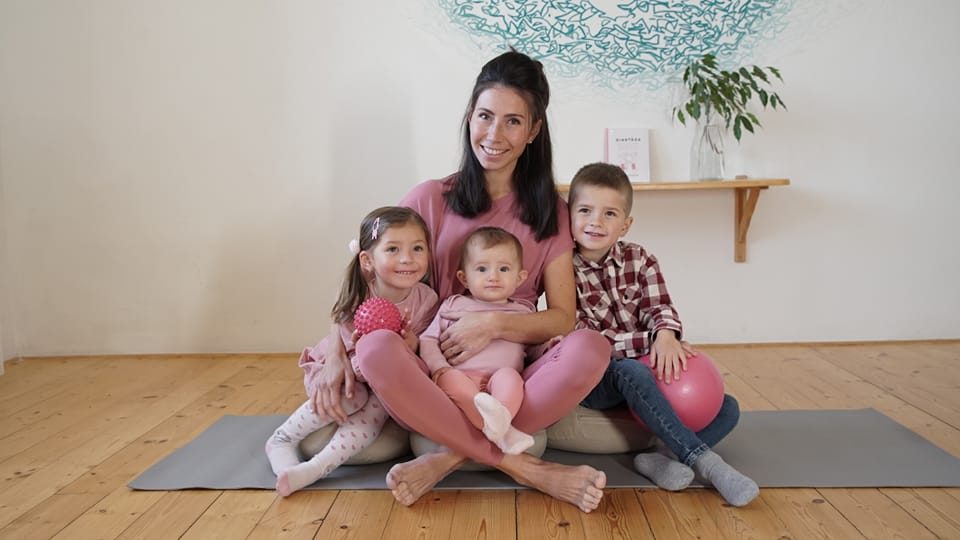
Certified instructor of healthy movement, yoga and spiral dynamics, specialising in women before pregnancy, during pregnancy and after birth. Mum of three children born by caesarean section, who has faced many physical challenges. After years of study, she now collaborates with maternity hospitals, gynaecological and physiotherapy organisations to help raise awareness of caring for the female body after childbirth. Author of a book, exercise cards and an online therapeutic and exercise programme Diastáza.


 € - US
 Čeština
 English
 Slovenčina
 Magyar
 български
 Polski
 Dansk
Dansk
 Nederlands
 Svenska
 Suomi
Suomi
 Español
 Français
 Slovenščina
 Română
 Português
 Deutsch (DE)
 Deutsch (AT)
 Deutsch (CH)

