We’ll be happy to help via online chat or at: orders@premiumbarefoot.com

Have you bought barefoot shoes and you’re not sure how to walk in them? We’ll teach you the right technique in just a few steps. Listen to your body and enjoy the benefits of barefoot footwear.
Walking well is a real skill. Any physiotherapist, orthopaedic specialist, coach – and really anyone dealing with health issues linked to walking or posture – could tell you that. Because walking properly isn’t as simple as it sounds. Think about when you last truly noticed how your body moves, focused on engaging the right muscles, kept your back tall, shoulders gently back, chest open, your breathing steady and your feet aligned…
Was it today? Then congratulations – you should be proud of yourself.
Can’t remember? No worries. Let’s go over the basic rules of good posture while walking so you can get back on track. And we mean walking in barefoot shoes, because that’s the healthy choice for your feet and your whole body.
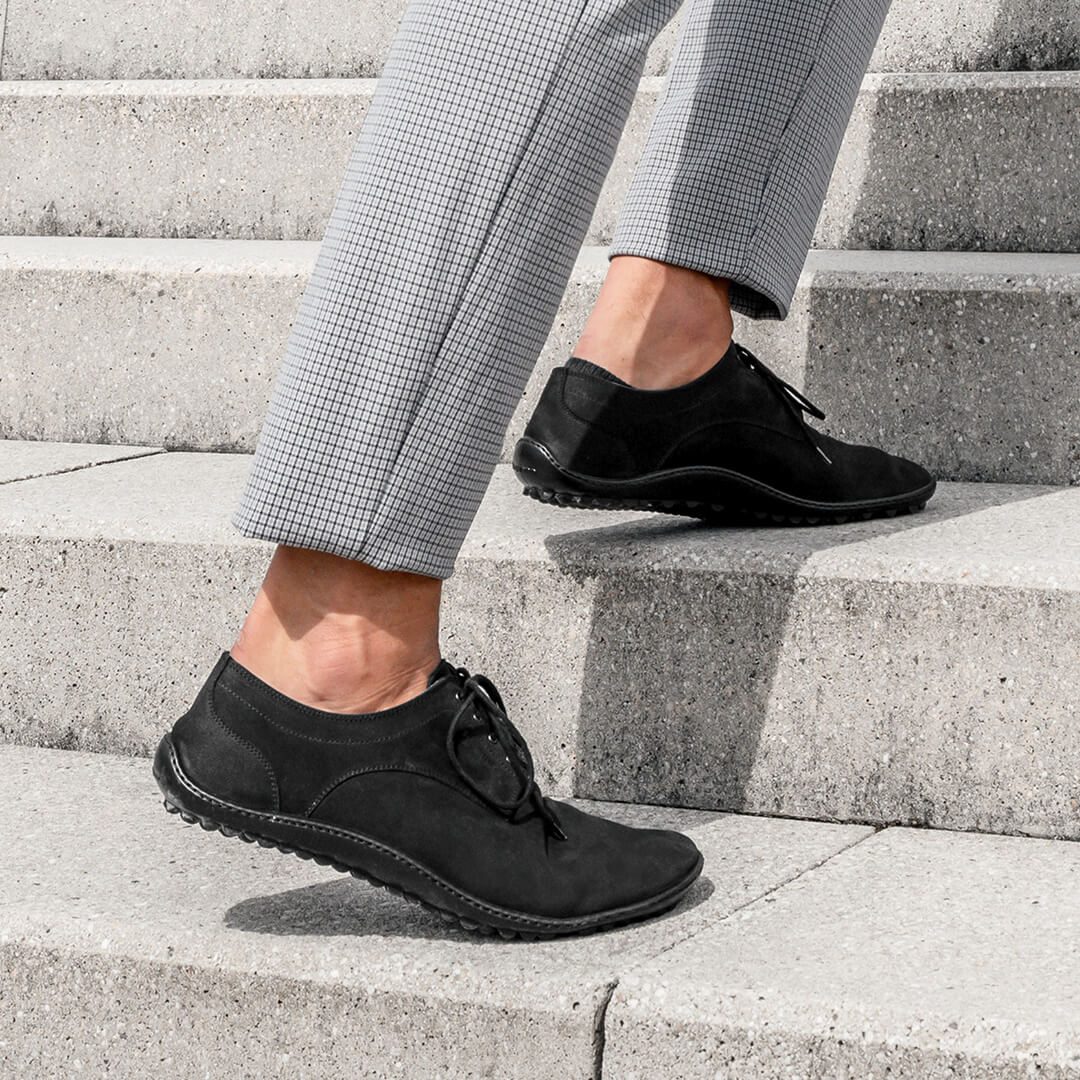
If you’ve decided to try barefoot shoes, you’re on the right path to becoming aware of your (good and not-so-good) movement patterns and waking up muscles that have been asleep – not only in your feet, but throughout your whole body. You’ll feel it soon enough, even in the very first steps. You’ll realise how many muscles have been underused when walking in conventional shoes. Walking barefoot (or in barefoot footwear) wakes them up and makes them work again.
That’s why your feet may ache after the first few kilometres – and that’s OK. They’ll get used to it soon, don’t worry. And you’ll gain a completely new perspective on how you experience the world through the ground you walk on. You’ll notice the change most in the woods. You’ll feel it on stony paths too – just don’t rush that part.
The transition from conventional shoes to barefoot shoes doesn’t need to be strict. Take your time. Get a feel for your new shoes – and with them, a new way of walking. Start with shorter distances, ideally in nature. Give your feet time to build strength in muscles that haven’t been used much. Your body will thank you, and you’ll enjoy walking even more.
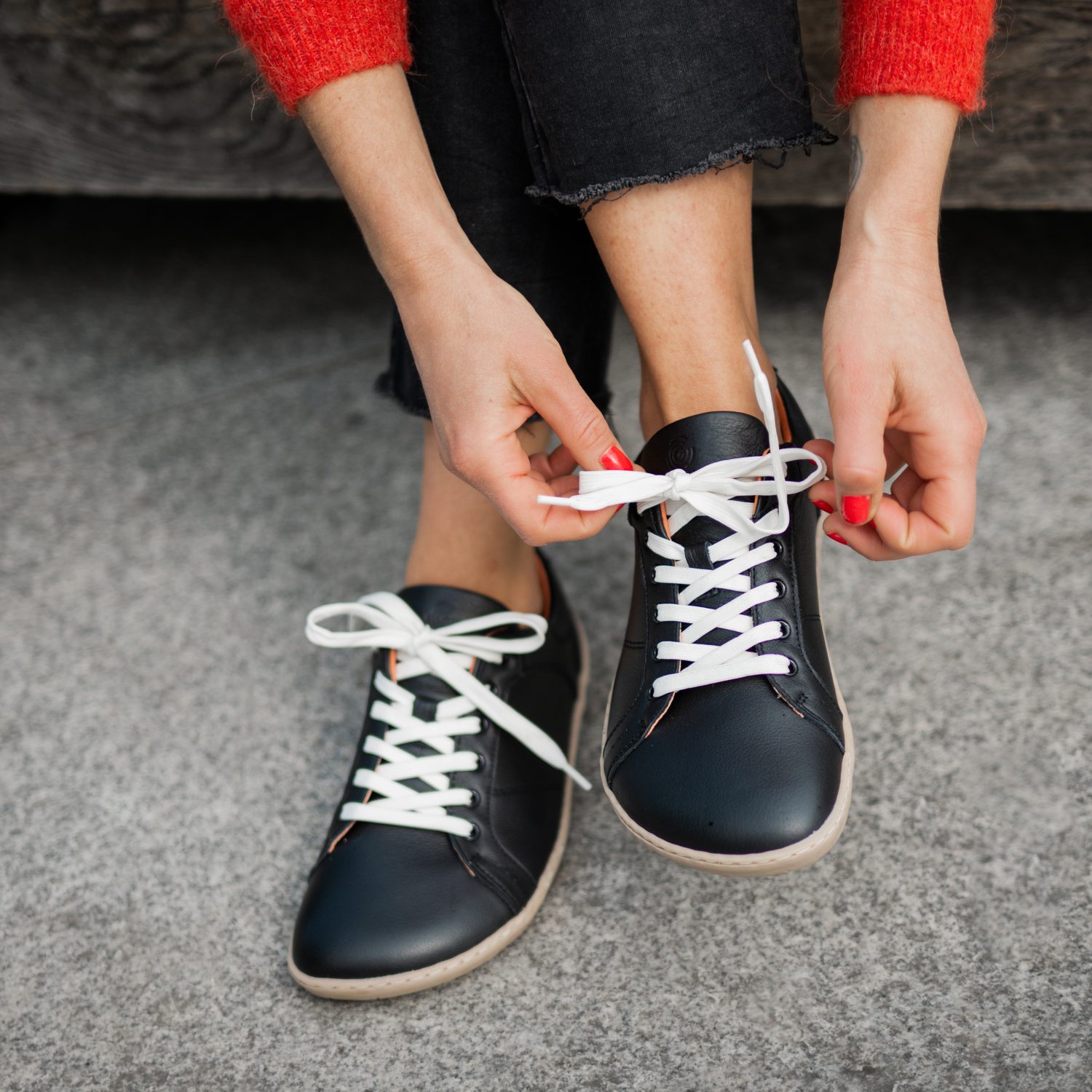
If you’re only just flirting with the idea of barefoot shoes or choosing your first pair, this article may help: A guide to choosing barefoot footwear.
Our tip: Massage your feet. Foot stimulation helps not only with the transition to barefoot shoes, but can improve your day (honestly, any day). Your feet are a gateway to your nervous system, which constantly sends signals to the brain. The brain uses them to evaluate what’s happening and to direct the musculoskeletal system – shaping how we move. The more input the brain receives from nerve endings in the feet, the more precisely it can coordinate the body. Foot stimulation is a key focus of the brand NABOSO Technology.
You’ve heard this a thousand times, and maybe even tried it: ‘Walking in barefoot shoes is different from walking in conventional shoes.’ But have you ever thought about how, and why? Our movement patterns carry years of habits from walking in conventional footwear, which doesn’t give the foot as much space and doesn’t offer the same flexibility of sole as barefoot shoes. Learning to walk well in barefoot shoes is a bit like learning to breathe differently. At first, you need to try, practise, think and listen to your body – it will guide you in the right direction.
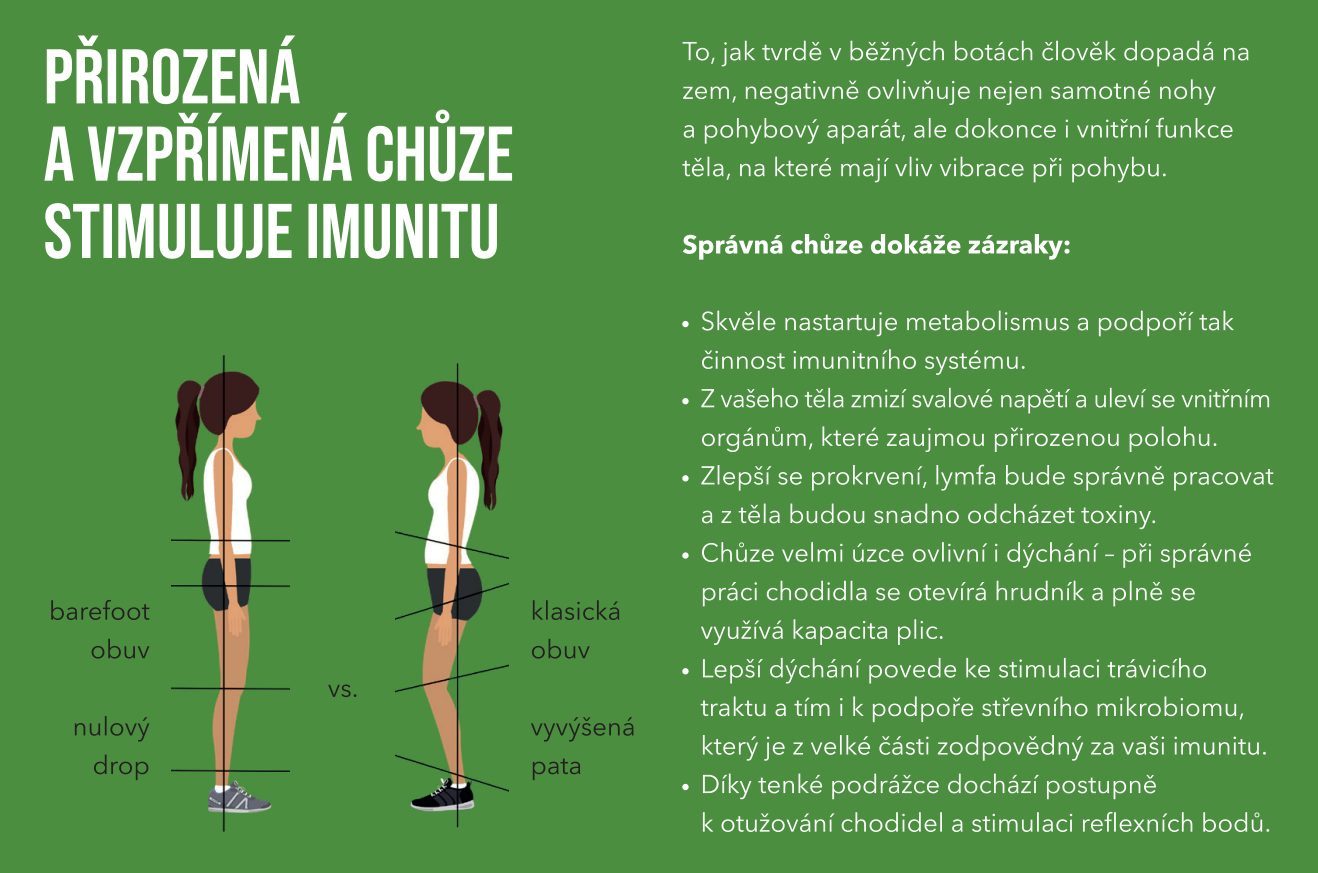
Let’s go through a few basic rules worth keeping in mind:
In other words: everything starts at the head and ends at the heel. In yoga classes you often hear, ‘Reach the crown of your head up towards the ceiling.’ Try it. It’s as if you had a balloon tied to the back of your head, gently lifting you upwards. It also naturally tucks your chin slightly down. Focusing on this head position will subtly guide you into standing tall through your whole body.
So: align your head, lengthen your spine, roll your shoulders back, open your chest slightly, engage your core (draw your belly button in), tuck your pelvis, align your legs and feel those four ‘magic’ activation points of support on the foot:
Did it work? Did you automatically straighten up, whatever you’re doing right now? It only takes reminding yourself a few times a day. By the way, this four-point support system will help you whether you’re lifting 100 kg in the gym, waiting for the bus or standing in the queue at the till.
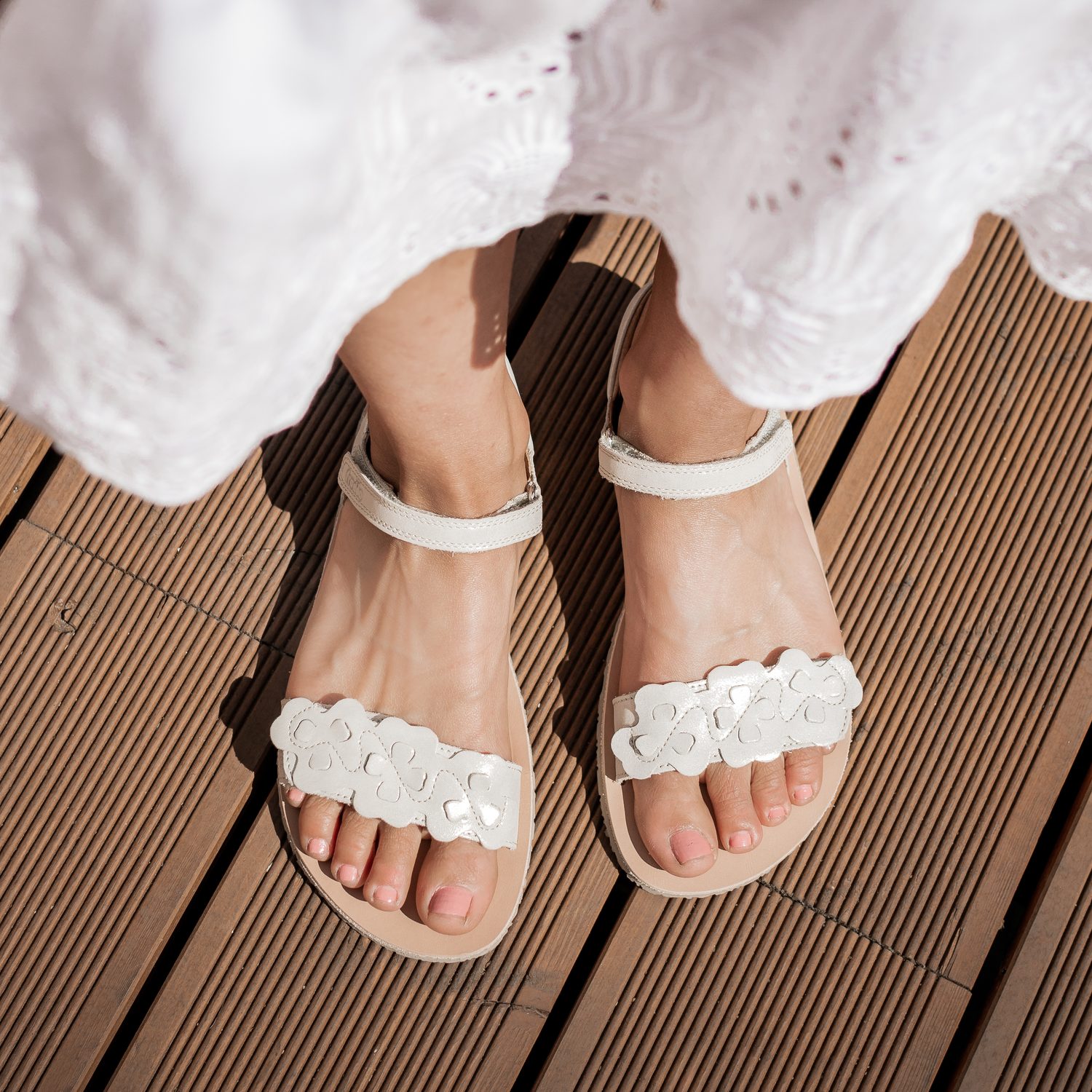
Why are four points of support on the foot better than the three you hear about more often? Because your heel deserves more. With greater support in the heel – where your weight is distributed not into one central point but into two outer points – the foot can work better and feels more stable. Give it a try.
If everyone thought about good posture during everyday activities, it would be a huge step for humanity – it would prevent countless visits to orthopaedic specialists, physiotherapists and podiatrists. But that’s a big goal. Let’s start gently: try finding this full-body alignment every morning, take a few deep breaths in and out, and smile. A perfect morning ritual. A pleasant morning sets you up for a pleasant day.
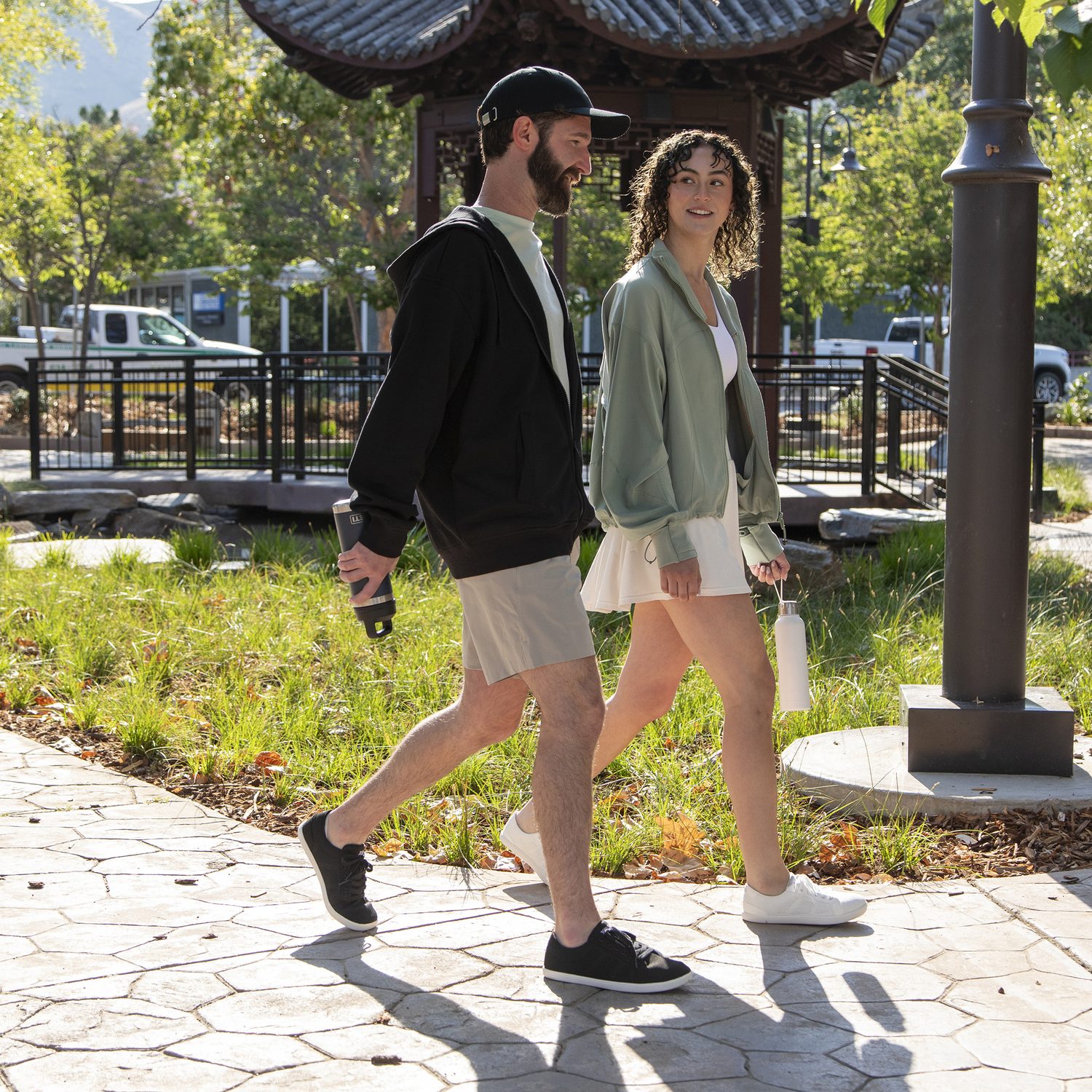
‘Adjusting stride length is very important for proper foot strike. The longer the stride, the worse the foot position at contact, and the first contact happens in places outside the fat pad. This fat pad sits under the heel bone and is designed to absorb impacts and vibrations when walking. Conventional shoes have a drop or a thicker sole, which does cushion, but also takes away the foot’s natural properties. It also changes how vibrations are transmitted. Once you take your shoes off, the foot has to adapt back to its natural shock-absorbing function, and that isn’t always easy,’ says Bc. Edita Prošková.
The difference between a short and a long stride is easiest to notice when running. Longer strides practically invite a heel strike. On the other hand, shorter strides kept under your body leave room for a proper landing through the cushioning heel pad (sometimes directly through the midfoot) and a roll-through all the way to the tips of the toes.
Barefoot shoes won’t let you stomp for long. You’ll soon realise it hurts. Or a bit later, your knees may start complaining. So it’s better to learn a proper foot strike with shorter steps.
‘A small tip for barefoot beginners is to place your feet under your body as you walk. This automatically shortens your stride and the body will tend to land on the heel pad and the whole foot,’ says Bc. Edita Prošková.
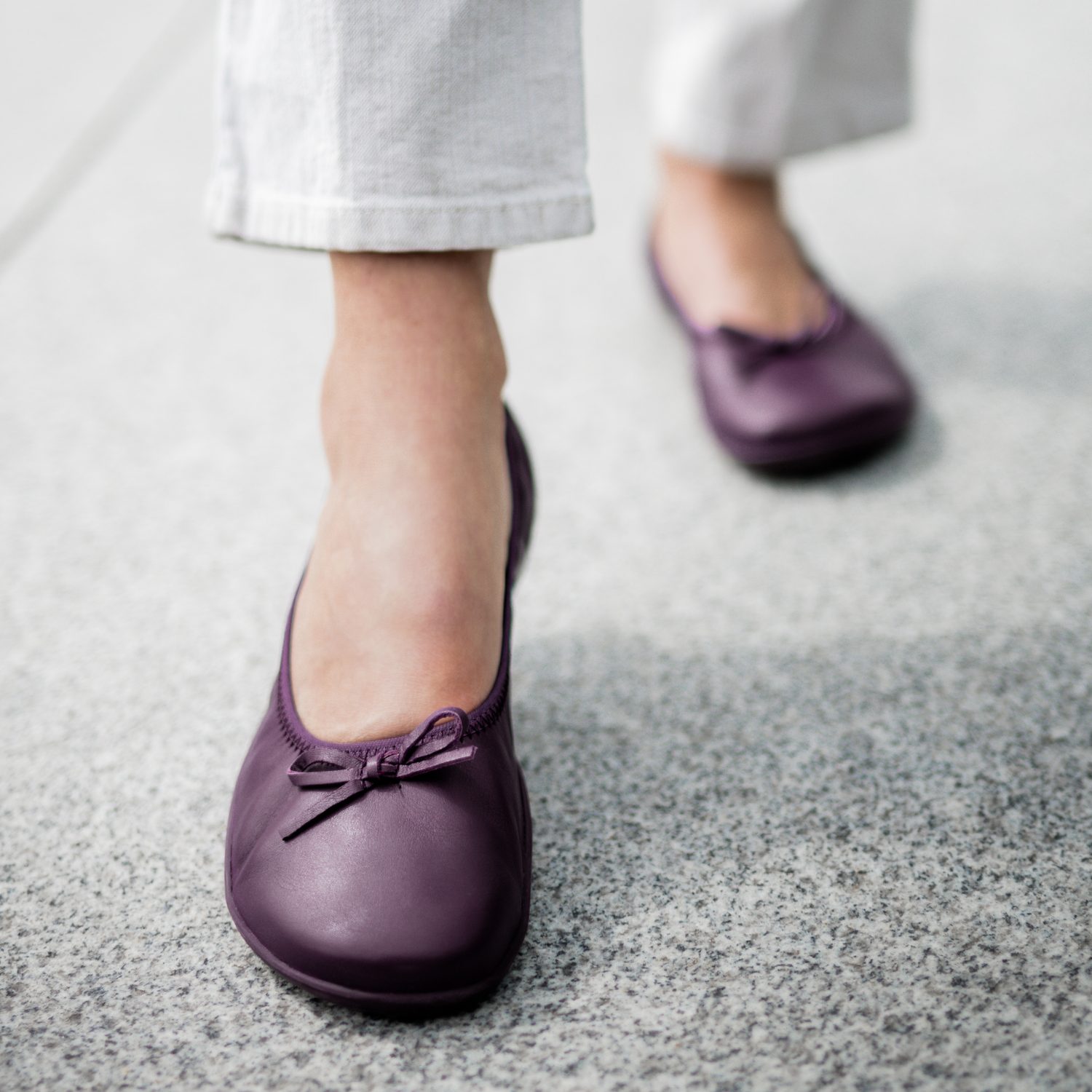
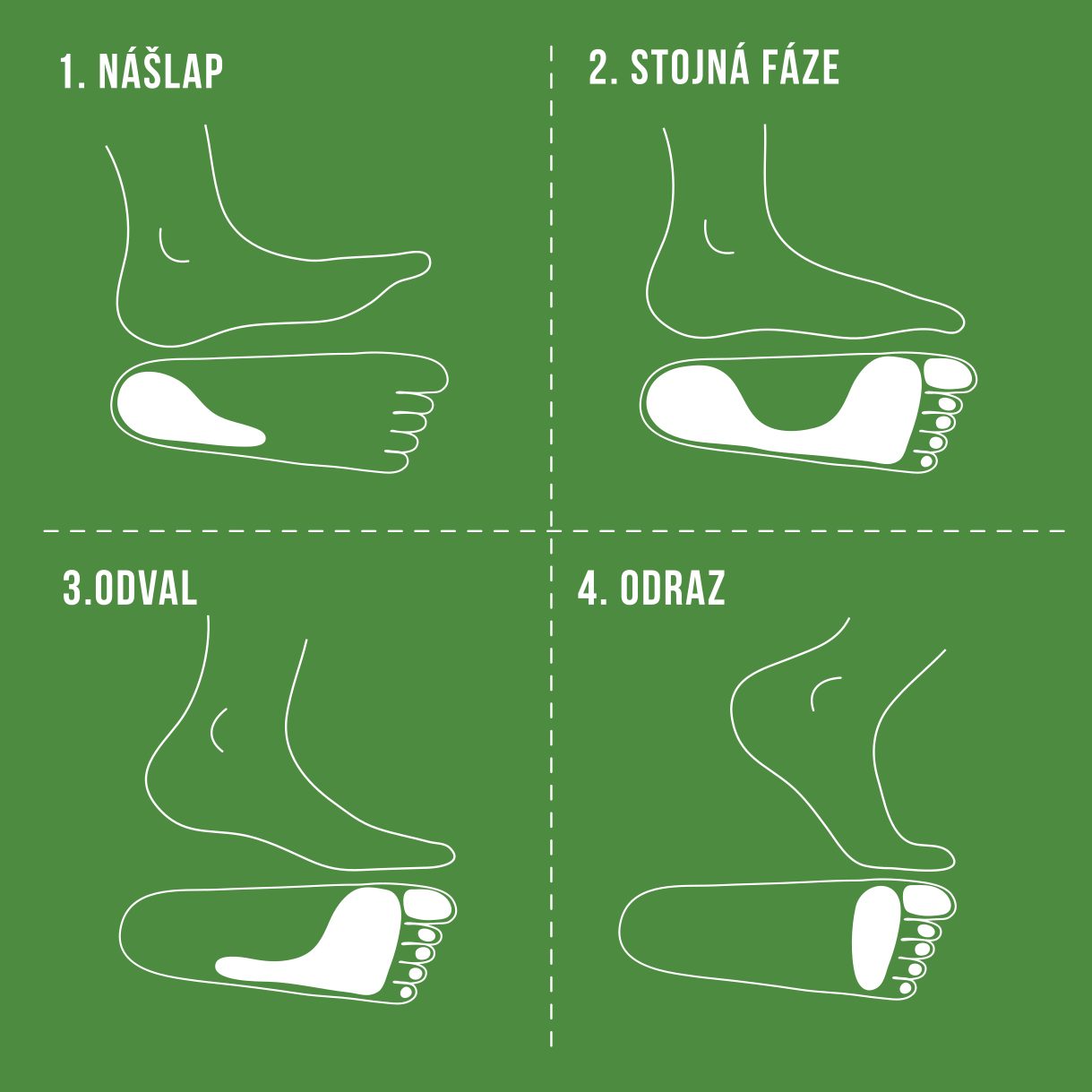
The claim ‘in barefoot shoes you should land on your forefoot’ is a myth. When weaving between branches in the woods, maybe – but on normal ground, no. You won’t turn into a ballerina. When walking in barefoot shoes, you do land on your heel – but carefully and evenly across the whole heel pad. Then gradually transfer your weight through the midfoot forwards to the toes, press them into the ground and push off into the next smooth step. Your toes point straight in the direction you’re walking. The push-off goes through the toes.
Barefoot and in barefoot shoes, your toes also join the three support points on the foot. When they have enough space, they become brilliant helpers both when standing and when walking. Can you remember the last time you focused on using your toes? In conventional shoes it’s often difficult simply because there isn’t enough room.
Unfortunately, yes. Even though barefoot shoes are designed for natural walking, it can happen that someone is so used to walking poorly that they carry those mistakes into their barefoot beginnings too. It’s not enough to change your footwear – you also need to change your movement patterns and, at least at first, pay attention to how you move, walk mindfully. Your body will soon adopt the new habits.
A big topic is ankle valgus and knock knees. We covered this carefully in our naBOSo mluVÍ podcast.
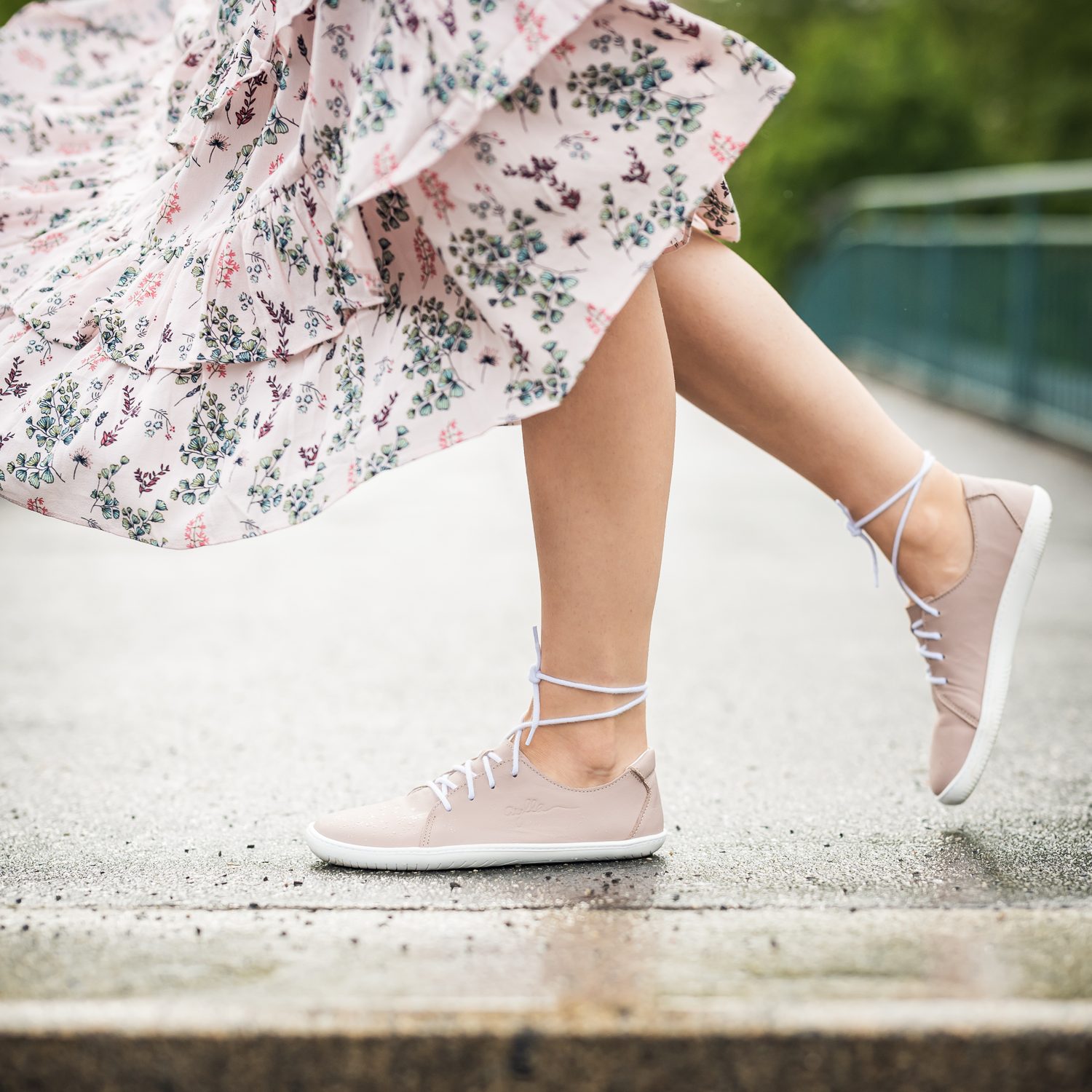
Now you know all the essentials about walking in barefoot footwear. Hopefully this flood of information hasn’t put you off. Take it as guidance and recommendations – your body will show you what to do. In your first barefoot steps, first kilometres, first hills and woodland trails, or on concrete – always pay attention to your body, your legs, your feet. Notice how your body learns to work with a long-forgotten way of walking and with varied terrain.
Discover. Explore. Enjoy it.
If something starts to hurt, do look for the cause. It may be an ingrained walking habit. Changing established patterns isn’t easy. Your body needs time to adapt and learn. However, if it’s unpleasant or long-lasting pain, it’s better to speak to a professional. Perhaps there’s someone near you that naBOSo has been working with long-term, and who you may have already heard in our naBOSo mluVÍ podcasts.
We wish you lots of happy barefoot kilometres!


 € - US
 Čeština
 English
 Slovenčina
 Magyar
 български
 Polski
 Dansk
Dansk
 Nederlands
 Svenska
 Suomi
Suomi
 Español
 Français
 Slovenščina
 Română
 Português
 Deutsch (DE)
 Deutsch (AT)
 Deutsch (CH)

