We’ll be happy to help via online chat or at: orders@premiumbarefoot.com

Wondering what happens to your body when you lace up barefoot shoes? Physiotherapist Michael Tichov from FyzioGO takes a look at what science says about running in barefoot shoes.
Thinking about switching to barefoot shoes, but not sure what to make of it? You’re not alone — enthusiastic runners on one side, sceptical orthopaedic specialists on the other, and a pile of half-truths on social media. Some say running “barefoot” is a return to what’s natural. Others warn it’s the quickest route to injury.
Physiotherapist Michael Tichov from FyzioGO puts it plainly: over the last fifteen years, science has done a huge amount of work on this topic, and it gives us fairly clear answers to most questions. Researchers have tracked how foot strike changes, how joints are loaded, how the foot muscles work, what the injury risks are, and how running efficiency shifts. And the conclusion? Barefoot shoes are definitely not a miracle fix that solves everything for you — but at the same time, it’s hard to ignore that the findings are consistent, and runners who manage the transition with good technique and gradually do genuinely benefit. So let’s look at what we actually know.

Running in barefoot footwear isn’t just about the shoes. It’s mainly a different way of loading your feet — and, by extension, your whole body. When you take a runner who’s spent years in cushioned shoes and put them on a thin sole, their technique almost always changes. And science describes exactly how.
In conventional running shoes, around 75–90% of runners land on their heel. It’s natural — the thick cushioning under the heel allows it and, in a way, encourages it. But once that cushioning is significantly reduced, heel striking suddenly feels uncomfortable, and within a few steps your body will ask for a change.
Barefoot runners naturally move towards a midfoot or forefoot strike. And that has a major impact on what happens in your body with every step. Changing your foot strike doesn’t remove impact forces, but it significantly changes how they build up:
That reduction in impact loading rate is one of the most important factors in preventing running-related pain — especially shin and knee pain, which are exposed to lower forces in barefoot running.

Barefoot shoes don’t guide the foot, support it, or otherwise “help” it. That may be their biggest advantage — your foot simply has to do the work itself. Measurements of muscle activity confirm this, showing:
This is why some physiotherapists see barefoot shoes as a training tool. The foot simply has to work. And that brings us back to the well-worn saying: “barefoot shoes are a gym for your feet”.

The last change may not be as obvious — but it has a big influence on your overall movement. Switching to barefoot naturally shortens your stride length and increases your steps per minute. This brings:
So the changes in running mechanics triggered by barefoot shoes are real and well described. But what happens next — inside your body? A different foot strike and a different step rhythm directly affect what’s happening in your muscles, tendons and bones in every training session. And that’s where it’s decided whether barefoot running helps you — or harms you.
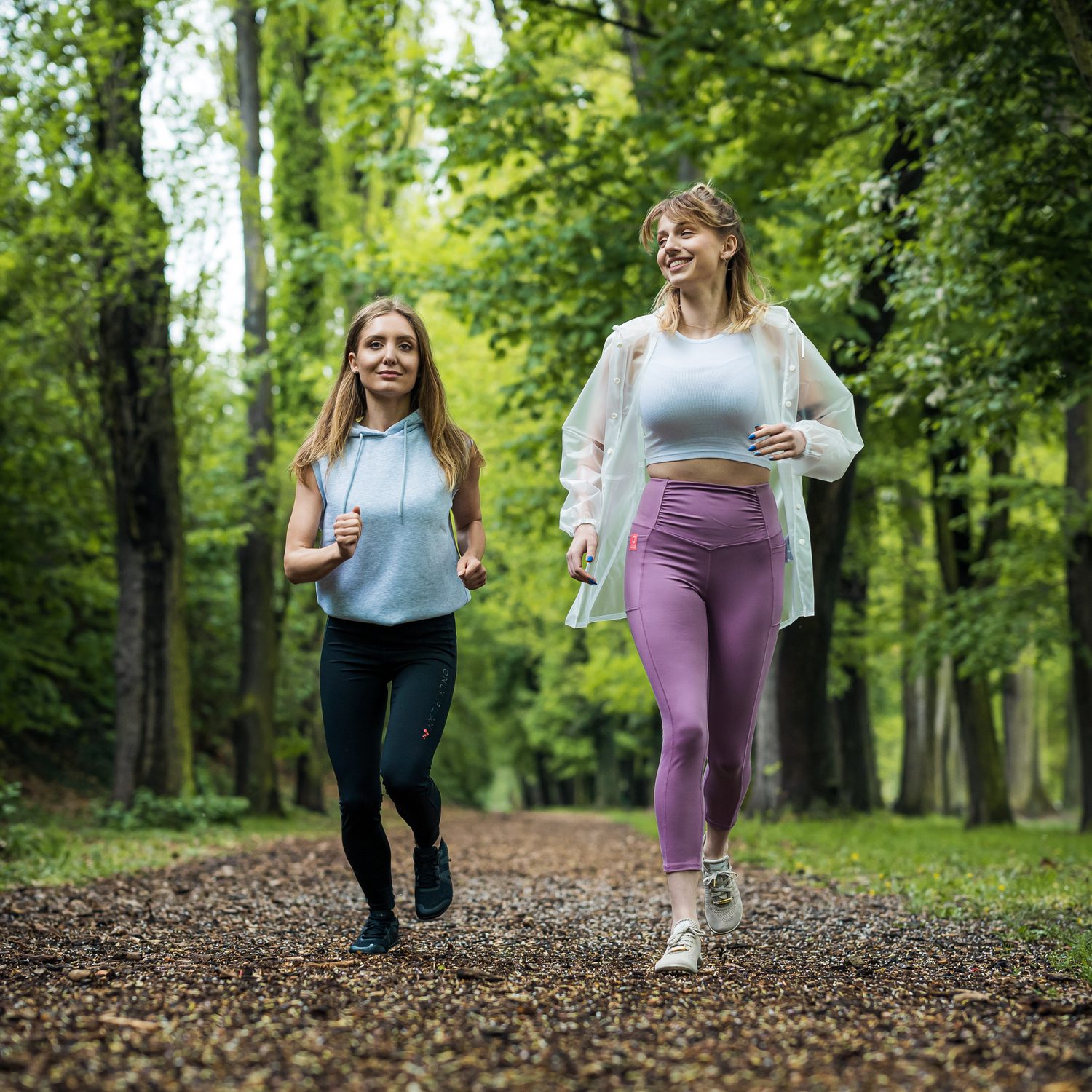
When you start running in barefoot shoes, it’s not just your foot strike that changes. The biggest transformation happens deeper — in the structure of the foot itself, the arch, and the calf complex. Science already has a fairly good idea of what’s going on there.
One of the most commonly mentioned benefits of barefoot running is relief around the knees. That’s no coincidence — by changing your foot strike, most of the load is redirected into the foot and calf, which naturally reduces load on the knee and hip joint. That’s why many runners who have battled knee pain for years feel noticeable relief after switching to barefoot shoes.
Interestingly, even though greater forces pass through the ankle in barefoot running than in a conventional shoe, the entire lower limb is paradoxically more stable. The ankle deviates less side-to-side, moves in a more solid line, and load is transferred more effectively into the calf muscles. The result is better overall stability of the lower limb.

Barefoot shoes don’t support the arch — so all the muscles in the foot have to do their job fully. Research shows:
A 2014 study even demonstrated a measurable change in arch height after just six weeks of training in barefoot shoes — precisely because the muscles that support the arch became stronger.
A midfoot or forefoot strike shifts significantly more load into the calf muscles and the Achilles tendon.
This comes with both positives and risks:
Calf muscle soreness often appears — that’s normal, but you can’t overdo it. It’s like typical muscle soreness after a gym session. Your body simply needs time to adapt.

The arch of the foot works like a natural spring. In barefoot footwear it has to work more, because the cushioning isn’t taken over by a thick, shock-absorbing sole.
Study results show:
But watch out for one thing — ligaments and tissues adapt more slowly than muscles. A 2017 study confirms that barefoot shoes have a positive effect on the arch — but only in people who transition gradually and slowly.
Overloading the small bones in the forefoot is the best-known risk of switching to barefoot too quickly. A 2013 study described that in runners who transitioned too fast, early signs of stress reactions appeared in these bones — without an actual injury occurring. The problem wasn’t barefoot shoes themselves, but the speed of the transition.
Bones adapt more slowly than muscles, which is exactly why gradual progression matters so much. The good news is that patience pays off — bones that gradually get used to the new load can increase their density over time and become significantly more resilient than before.

Heavily cushioned shoes smooth out a lot — impacts, instability, uneven ground. But at the same time, they take something important away from your feet: information about the surface you’re running on. Barefoot footwear changes that.
This leads to:
This effect is often underestimated in discussions about barefoot shoes — yet it’s one of the biggest benefits, not only for running but also for everyday walking.

All the changes described above have one thing in common: they take time. Here are a few tips to help you manage the transition without unnecessary aches and pains.
Start slowly. Don’t begin by wearing barefoot shoes for your usual training run. For the first few weeks, use barefoot as an add-on — a walk or an easy jog in the park. Your body needs weeks, not days, to adapt.
Choose the right shoes. The key parameters are zero drop, a sufficiently wide toe box, and a thin but functional sole. Most importantly, the shoes must fit brilliantly. Beginners may benefit from shoes with a slightly thicker sole or a removable insole — it makes the transition more gradual.
Listen to your body. Mild fatigue in the calves or feet is normal. Sharp or long-lasting pain in the Achilles, the forefoot, or elsewhere is a signal to slow down. The difference between healthy adaptation and overload is usually how quickly you increased your volume.
Look after your feet. A great helper is a massage ball— regularly rolling your foot over the ball releases tension in muscles and tissues. Just a few minutes a day is enough, for example in the morning after getting up or in the evening before bed.

To sum it up — switching to barefoot is a bit like learning to run again. Not because you’ve forgotten how, but because your body has to rewrite movement patterns it’s built over years. A different foot strike, different joint loading, muscles working differently, a different step rhythm. Together, it creates a completely new style of movement. And like any new skill — it takes time, repetition and gradual progression. If you respect that, there’s a good chance barefoot running will bring the benefits you’re looking for: stronger foot and arch muscles, less load on the knees, better ankle stability, and overall more natural movement.

Article author: Mgr. Michael Tichov
An active sportsperson and physiotherapist who lives by the motto “a healthy mind in a healthy body”. His focus is on physical exercise, whether that’s sports training or therapeutic exercise aimed at helping people get rid of chronic pain. You can find more physio tips on the FyzioGo Instagram.
The article is based on findings from the following studies: Lieberman et al. (2010) — foot strike kinematics and reduced impacts; Daoud (2012) — injury incidence across different strike patterns; Bonacci et al. (2013) — movement pattern changes during transition; Ridge et al. (2013) — risk of bone overload; Miller et al. (2014) — changes in arch height; Roper et al. (2016) — metabolic load on the calves; Hollander et al. (2017) — long-term effects of minimalist footwear on the foot arch.


 € - US
 Čeština
 Magyar
 Slovenščina
 Română
 български
 English
 Slovenčina
 Polski
 Dansk
 Nederlands
 Svenska
 Suomi
 Español
 Français
 Português
 Deutsch (DE)
 Deutsch (AT)
 Deutsch (CH)


