We’ll be happy to help via online chat or at: orders@premiumbarefoot.com

How are breathing, posture and foot support linked to the function of the temporomandibular joint?
When your jaw starts to hurt, most people look for the cause in their teeth. They think of teeth grinding, a misaligned bite, or an issue with the temporomandibular joint (TMJ). In some cases, however, the problem can also be linked to how other parts of the musculoskeletal system are working.
Modern physiotherapy sees the jaw as part of a wider functional whole. So, alongside the jaw joint itself and the chewing muscles, it also assesses head posture, the function of the cervical spine, breathing patterns, trunk stability, tongue function, and the quality of foot support. These factors can influence the load on the jaw system and contribute to the development or persistence of symptoms.
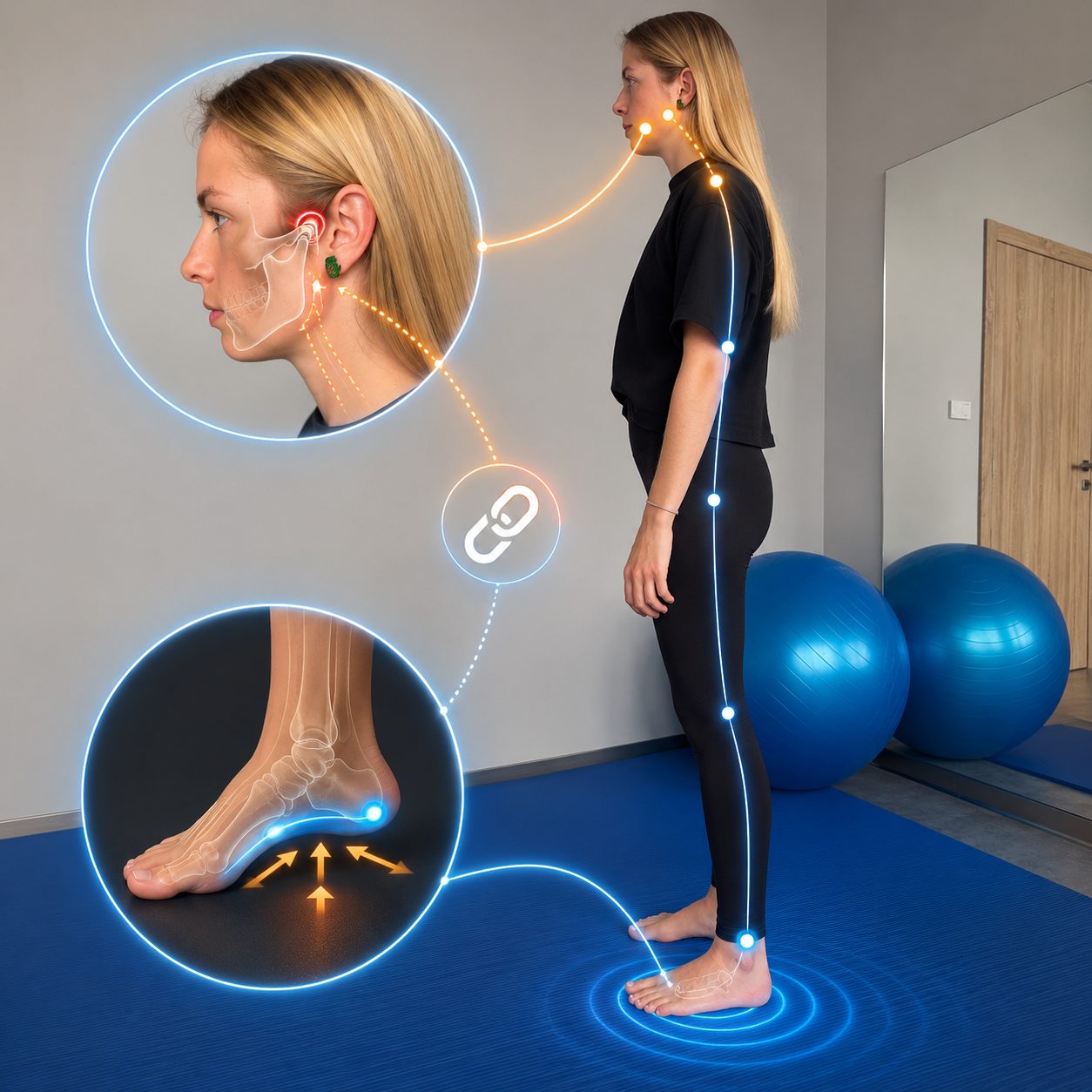
At first glance, it might seem there’s no connection between your feet and your jaw. From a physiotherapy perspective, though, the human body works as a connected system, where individual segments don’t operate in isolation.
Your feet are the body’s main contact surface with the ground. They provide the brain with continuous feedback about body position and play a role in controlling stability and movement coordination. The quality of this sensory information affects how the body distributes load during standing, walking and everyday activities.
If foot support is altered over the long term, it can, in some people, show up in overall postural alignment. This can then lead to changes in how the muscles that stabilise the pelvis, ribcage or cervical spine work. That’s why during an assessment, a physiotherapist often looks not only at the painful area, but also at how the patient moves and how they use support from the surface beneath them.
This doesn’t mean jaw pain is caused by the feet. It does, however, show why it’s important to assess the musculoskeletal system in a broader context.
A key part of jaw function is the way you breathe. People who rely long-term mainly on upper-chest breathing, or who often breathe through the mouth, tend to be more prone to increased muscle tension in the neck and shoulders. This tension can also transfer into the chewing muscles and the area around the temporomandibular joint.
So breathing isn’t just about relaxation or fitness. It’s an important part of overall movement coordination and body stability.
Tongue position also plays an important role. In a resting position—when we’re not eating, speaking or swallowing—the jaw system should be relaxed. The lips are gently closed without unnecessary tension, breathing happens through the nose, and the tongue rests lightly on the roof of the mouth. The tip is usually just behind the upper front teeth, without pressing on them. In this position, the upper and lower teeth shouldn’t touch—there should be a small space between them. This keeps the chewing muscles only minimally active and avoids unnecessary strain on the temporomandibular joint.
If this function isn’t optimal, the coordination between muscles can change, which may then increase the load on certain structures of the jaw system. For this reason, physiotherapists often work with myofunctional therapy specialists, dentists or orthodontists.
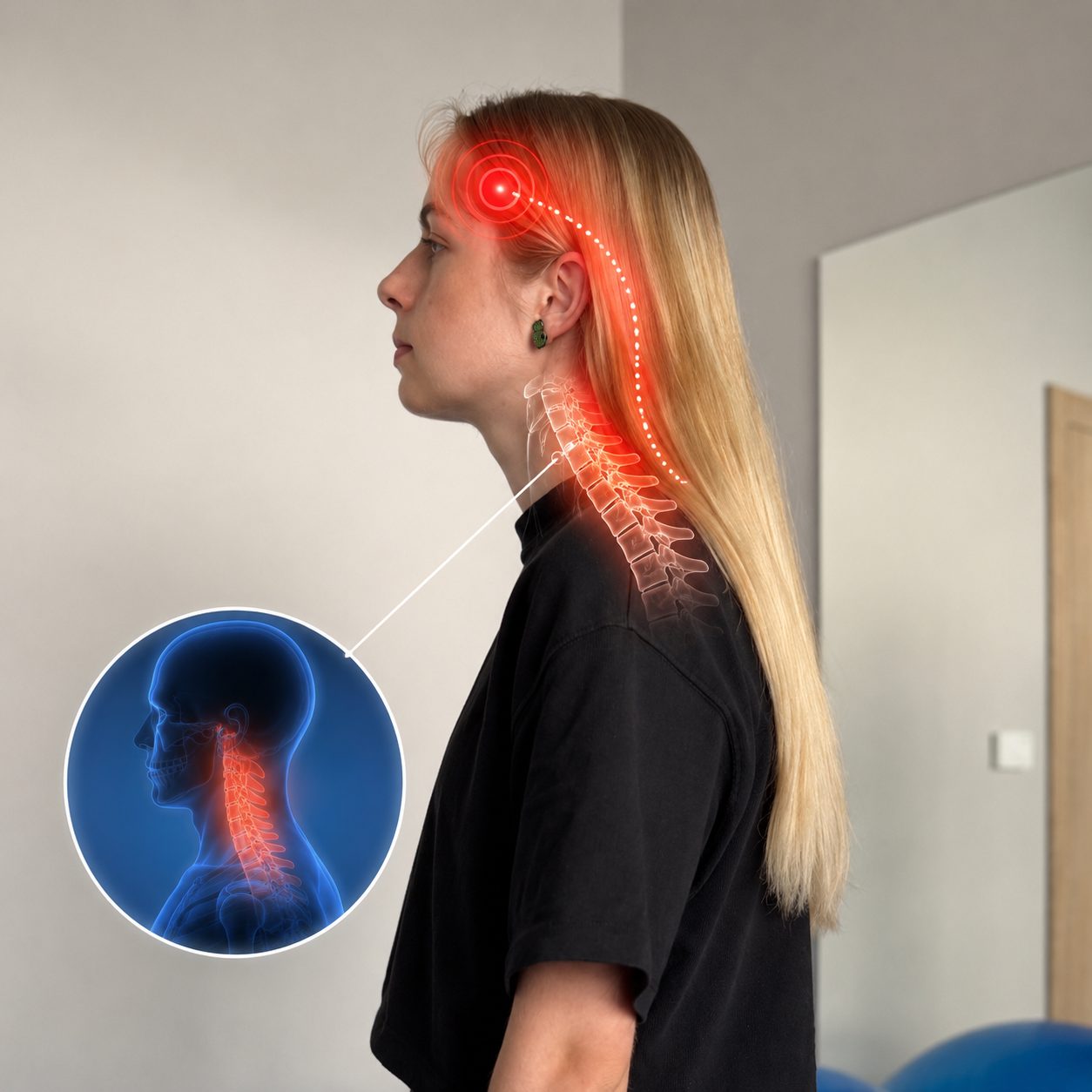
One of the most common findings in patients with jaw pain is altered head posture and increased tension in the cervical spine area.
The human head weighs roughly 4 to 6 kilograms. If it’s held forward for long periods, the muscles of the neck and upper back have to work harder to maintain that position. Long-term overload can show up as headaches, a feeling of pressure behind the eyes, limited mouth opening, or increased tension in the chewing muscles.
The link between cervical spine function and the temporomandibular joint area is well recognised today and is one of the key areas a physiotherapist will assess.
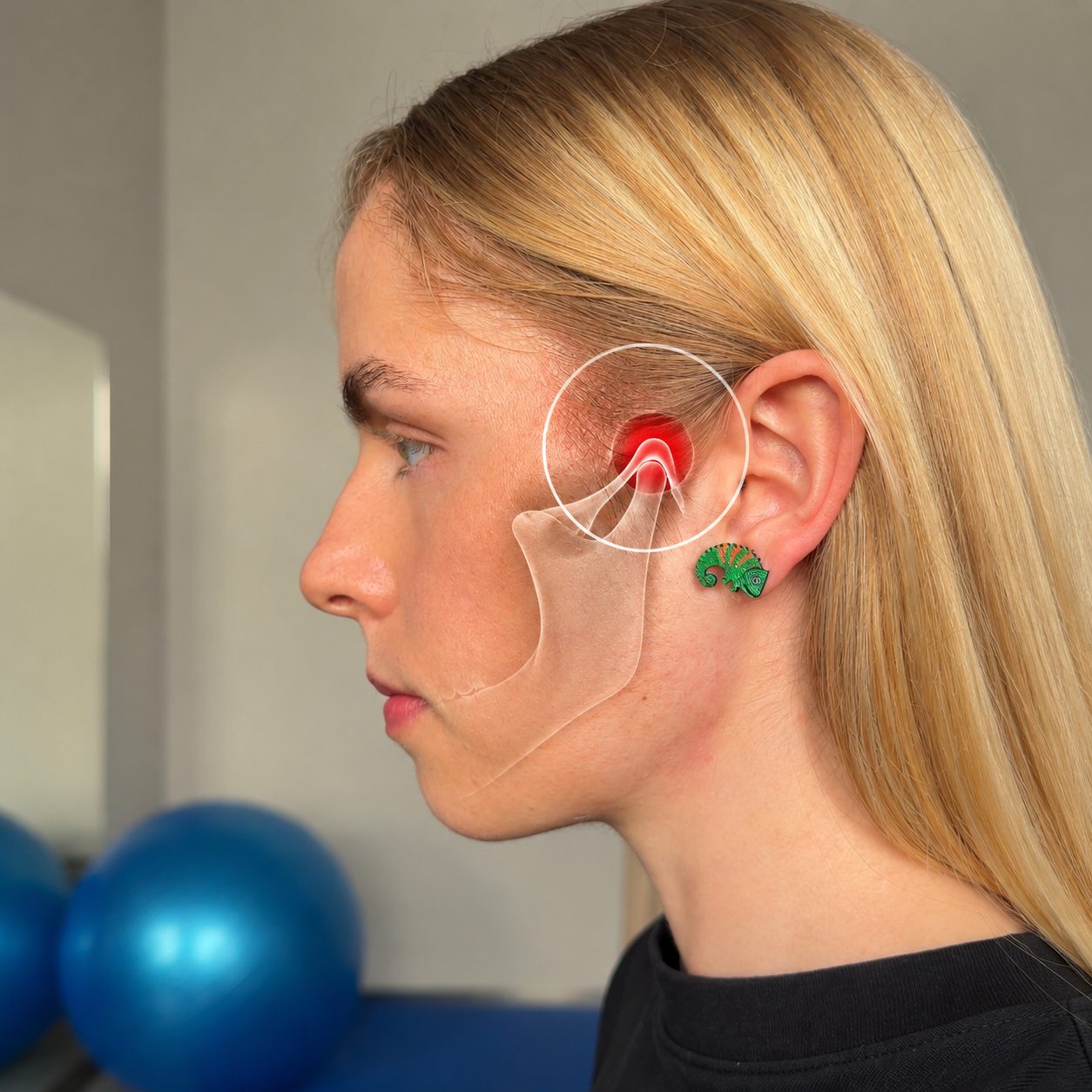
Jaw pain isn’t influenced only by mechanical factors. Psychological stress can also play a significant role. For many people, stress shows up as increased muscle tension or unconscious clenching of the teeth during the day. Often, they don’t even realise their jaw is clenched even when they’re not speaking or eating.
Long-term overloading of the chewing muscles can contribute to pain, fatigue in the jaw system, or unpleasant sensations around the temples and cheeks. Physiotherapy doesn’t address the cause of stress itself, but it can help you become more aware of unnecessary muscle tension.
A physiotherapy assessment of the temporomandibular system includes evaluating jaw joint function, the chewing muscles, the cervical spine, breathing patterns, postural control and orofacial muscle coordination. The assessment often also includes analysing standing, walking and the quality of support, which all contribute to overall posture.
The aim isn’t only to pinpoint where it hurts, but to identify functional relationships that may influence the load on the temporomandibular system. Based on the findings, therapy is then designed to restore optimal function, reduce overload and improve neuromuscular coordination.
If you’re dealing with jaw pain, try noticing a few simple things during the day:
Your answers to these questions can hint at whether factors beyond the jaw area itself may be contributing to your symptoms.
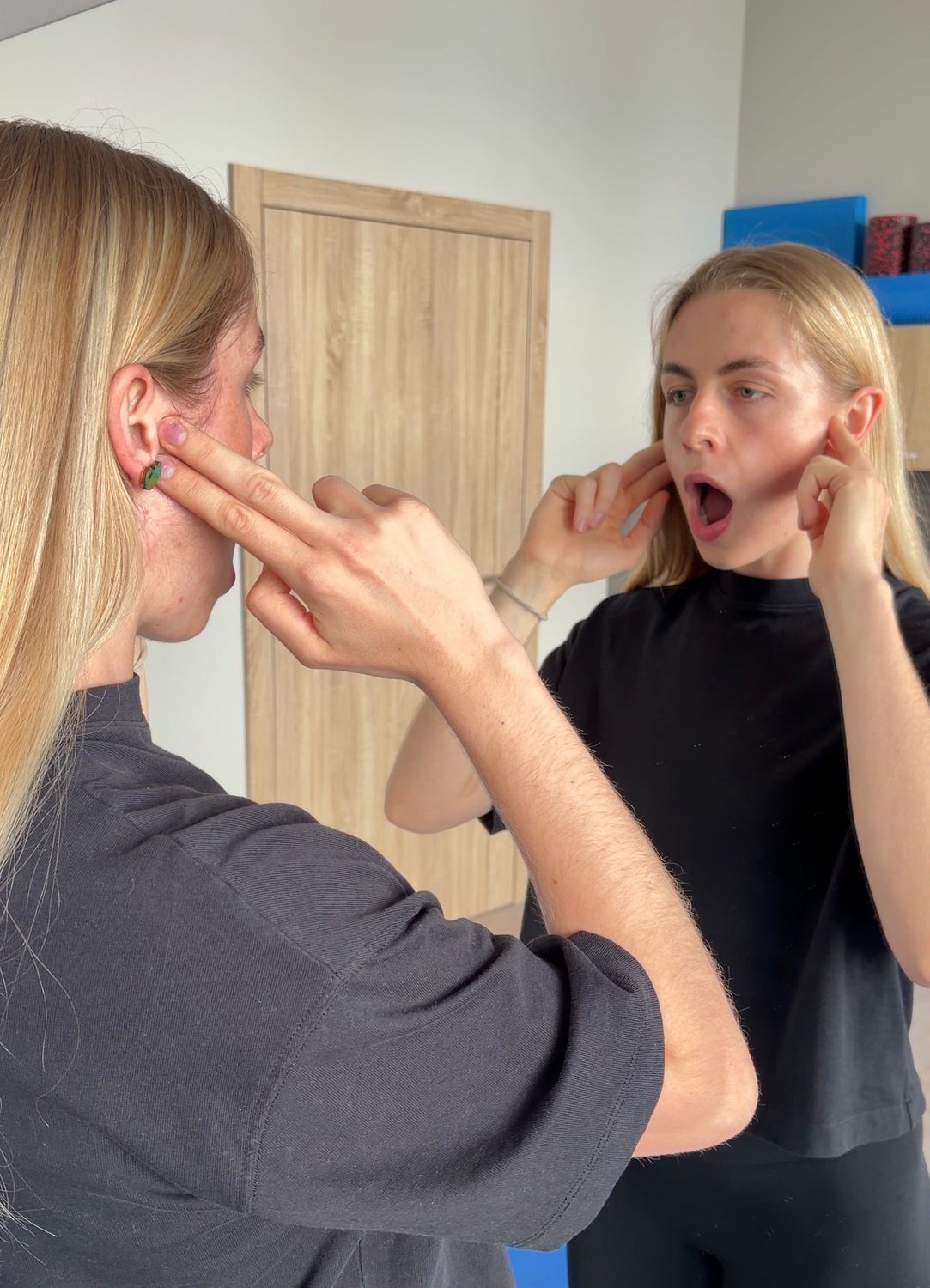
Ask yourself a simple question a few times a day:
“Are my teeth touching right now?”
Many people unconsciously keep their teeth clenched even when they’re not eating or speaking. In a resting position, there should be a small space between the upper and lower teeth. If your teeth are in contact for most of the day, the chewing muscles may be overloaded unnecessarily.
This simple test often reveals a habit that someone hasn’t noticed for years.
When treating patients with jaw pain, they don’t focus only on the temporomandibular joint itself. They’re interested in how the entire musculoskeletal system functions and in the factors that may influence the load on the jaw system. The goal isn’t just short-term pain relief, but understanding the causes of overload and helping the patient create the conditions for long-term improvement.
Because real change often doesn’t start where we feel the pain most. It starts with understanding the connections that led to it.
This article was created in collaboration with Lenka Vojtovič from the KINISI Physiotherapy Centre, which combines the professional approach of experienced physiotherapists with top-of-the-range modern equipment. KINISI’s main mission is to help clients overcome acute and chronic musculoskeletal issues using current scientific knowledge and the most modern physiotherapy methods. The centre focuses on a wide range of services, including physiotherapy for adults and children, women’s health physiotherapy, acute and post-operative physiotherapy, functional physio training and device-based care—helping to restore disrupted body functions that have a major impact on the condition of the entire musculoskeletal system.
What else might interest you on this topic?


 € - US
 Čeština
 English
 Slovenčina
 Magyar
 български
 Polski
 Dansk
Dansk
 Nederlands
 Svenska
 Suomi
Suomi
 Español
 Français
 Slovenščina
 Română
 Português
 Deutsch (DE)
 Deutsch (AT)
 Deutsch (CH)

